


Symptoms of Low Blood Sugar and How to Balance It
First off, what do we mean by "blood sugar levels," anyways? That term is used a lot, and often in the context of diabetes (maybe that's where the panic sets in).
The term "blood sugar" refers to the amount of glucose (sugar in its basic form) molecules in your blood stream at any given time. For instance, when a person who is diabetic tests their "blood sugar levels," they are measuring how much glucose is in their blood at that moment. Most often we notice signs of low blood sugar, as opposed to high.

Blood sugar symptoms
A nutritional assessment client recently, showed a strong need for support with their blood sugar handling. After I sent the results, the client responded with something to the tune of, "I freaked out and am now tracking all my sugar intake!"
No, no, no, no, no, friends....
There is nothing to be scared of, here.
Let's talk this out.
First off, what do we mean by "blood sugar levels," anyways? That term is used a lot, and often in the context of diabetes (maybe that's where the panic sets in).
The term "blood sugar" refers to the amount of glucose (sugar in its basic form) molecules in your blood stream at any given time. For instance, when a person who is diabetic tests their "blood sugar levels," they are measuring how much glucose is in their blood at that moment. Most often we notice signs of low blood sugar, as opposed to high.
health effects of poor blood sugar levels
Let’s start with Blood Sugar 101…
Glucose in the blood is shuttled into cells by insulin (a hormone produced by the pancreas) to be used to make energy. Any glucose remaining after the cells have gotten their fill, is sent to the liver where it is converted into triglycerides (fat), or glycogen, which is the storage form of glucose in the liver and muscles.
When all glucose in the blood has been used, and there is none left in our blood (this is low blood sugar), our body views this as an emergency because our cells cannot produce the energy they need in order to function.
Our body's response? It releases cortisol. Cortisol is a stress hormone secreted by the adrenal glands. In this case, it stimulates the pancreas to secrete another hormone (called glucagon), which stimulates the breakdown of stored forms of glucose (glycogen), to put more glucose in the blood to be shuttled into cells, etc., etc., etc.. This type of process is called a feedback loop.
When we have low blood sugar and our body goes into stress response, this causes us to feel shaky, on edge, heart racing (because our body wants us to flee danger). Ever been "hangry?" This is why.
How do we "balance" our blood sugar levels?
By eating less sugar? By eating more frequently? By eating less frequently?
Let’s take a look.
what blood sugar balance is…
minimizing intake of processed foods
eating adequate protein + fiber each meal
minimizing intake of sweets, refined grains, & starches
exercising regularly (increases the utilization of glucose by cells)
what blood sugar balance is not…
eating foods marked "lite," "sugar free," or "zero calorie"
calorie counting (quality counts far more than quantity)
cutting out every sweet, all the time
ONLY cutting sweets (grains, starches, sugar, caffeine - they all impact blood sugar)
Blood sugar regulation involves these components:
what you eat
pancreas function
adrenal glands function
liver function
cellular health
thyroid (not mentioned yet, but the thyroid regulates how quickly the cells turn glucose into energy)
various micronutrients (think vitamins & minerals) involved in these processes
You could be eating all the right things, but, say, your adrenal glands are dysfunctioning. Or maybe your cells have lost their ability to receive insulin (known as insulin resistance).
These components will change how sugar is metabolized in your body. This is why blood sugar balance is dependent on your body. It may not look the same for two people, even if they eat the same foods.
Yes, there are things you can do that generally will help (and we will talk about these in this post!).
But at the end of the day, understanding WHY your body is not functioning as it should is the only effective way to address the problem and get REAL RESULTS.
It's why Nutritional Therapy is successful, and why people come to see me to help them with signs of low blood sugar.
how to improve blood sugar levels
A person whose organs are well-functioning will manage their blood sugar by generally following these food guidelines:
eating in a relaxed state
eating foods in their whole form as much as possible
eating a generous amount of quality fiber from fresh foods with each meal
eating a small fist size portion of quality protein each meal
regularly consuming quality fats from cold-pressed oils, nuts, seeds, avocados, and grass-fed dairy
By consuming protein, fats, and fiber, especially in conjunction with sugar or carbs, this slows the breakdown of sugars into glucose molecules.
Refined sugars (this includes starchy foods & grains), and sugars consumed in the absence of fiber, fat, and protein, will break down much more rapidly, causing a sudden "spike" in blood sugar.
And we can see from this diagram that glucose spikes lead to suddenly low blood sugar levels.

The trick is to keep it steady. Turn those sharp spikes and drops into a shallow, wavy line.
But, how do we do that?
Here are some ways to improve blood sugar balance:
eat while seated + screens OFF - eating in a relaxed state ensures all of your digestive organs can function properly.
fill half of your plate with quality, raw vegetables (lightly steamed if you have trouble digesting), each meal.
include 3-4 ounces of quality protein from wild, pasture-raised, and grass-fed sources, each meal
if grains are tolerated, include <1/2 cup quality grain, like wild rice or quinoa, each meal.
don't shy away from the fats - drizzling a cold-pressed olive oil, or grass-fed butter over your rice or vegetables is a great way to incorporate fats
stop snacking - this may be tricky during a transition period - LISTEN TO YOUR BODY. You may NEED snacks to help keep you feeling well between meals, and that's okay. If so, choose quality, whole-food snacks, complete with protein and fiber.
over time, as you incorporate more quality fats, fibers, and protein into meals, you will find you stay more full between meals, naturally nixing the need for snacks.
intentionally move for >20 minutes daily - this can be a speedy walk, weight resistance, HIIT, yoga, Pilates, sports - whatever floats your boat. Resistance movement is especially good at increasing the uptake of glucose into cells.
What do balanced blood sugar levels look like?
steady energy throughout the day
no more shaky, "hangry" feelings
long-term cellular health (goodbye diabetes!!)
clearer skin
reduced allergy symptoms
reduced inflammation (can look like less frequent headaches, reduced joint pain, etc.)
where things can go wrong
If you're eating all the right things, and you still feel low energy, hangry, irritable, or other symptoms of low blood sugar, further assessment may be needed to determine what else is not working properly.
Here’s a few things to consider.
Adrenal Glands
You already know that your adrenal glands are responsible for much of our body's response to stress.
But stress nowadays is much different than it was 1,000 years ago.
Stress back then meant fleeing a tiger, hungrily trying to catch your food, or lack of shelter from cold or hot weather.
Stress now is traffic, rushing kids around, meetings with the boss, or arguments with your partner.
The problem is our body response to stress is the same whether we are fleeing danger, or running late for a meeting. It releases stress hormones, constricts blood vessels to organs that are unnecessary when fleeing danger (eg. digestive organs), and increases blood flow to muscles, heart, & lungs. This is your Sympathetic Nervous System (SNS) in action.
We have a lot more instances of "stress" than we used to. This causes our adrenal glands to get overworked and our hormones out of balance. Our bodies simply cannot keep up.
The fix:
Taking several moments throughout the day to intentionally sit and breathe, especially when eating, will go a long way to addressing adrenal stress. Enjoying these moments outside is especially effective at doing this.
Adaptogenic herbs that have been used for centuries in Ayurvedic medicine that have a potent impact on adrenal function. Having a trusted health care provider administer proper testing to determine whether your adrenal glands are over functioning (hyper adrenal), or under functioning (hypo adrenal) will help you to know which of these herbs is best suited for your adrenal health.
Liver
The liver wears a lot of hats. It is responsible for filtering out toxins (this includes alcohol and caffeine) from our blood, preparing excess hormones for excretion, converting sugars into fats and glycogen (and converting fats and glycogen back in to sugar)...
It is BUSY.
Depending on your lifestyle, your liver may be prioritizing the filtering of certain toxins over metabolizing sugar.
When we are in the habit of consuming refined carbohydrates, refined sugars, and alcohols, this causes fatty deposits to build up in the liver, blocking detox pathways, and causing liver damage.
The fix:
Easing the stress on our liver by consuming balanced portions of macronutrients (fats, carbohydrates, and protein) is one way we can ease the stress.
Minimize use of drugs and stimulants. To give you an example, when we consume alcohol, our liver will stop all other processes in order to metabolize the alcohol. Our body views it as the highest priority, and it can take up to 8 hours for the liver to process one alcoholic drink.
Regularly consuming liver-cleansing foods, like artichoke, dandelion root, milk thistle, and turmeric, as well as liver supporting nutrients, like broccoli, brussels sprouts, and avocados, will effectively allow your liver to function better.
Insulin Resistance
Often when we've been in a habit of regularly consuming refined foods, the receptors on our cells that are supposed to recognize insulin and allow it to enter, begin to desensitize.
Think of it this way (based on what we've covered so far):
insulin is secreted when glucose is present
if glucose is present OFTEN, insulin is also present OFTEN
when glucose stores are full, and cells have all the glucose they need, our cells begin to say, "WE'VE HAD ENOUGH!" and slam the door to insulin, blocking it out.
This is called Insulin Resistance, and it is common in people with diabetes, but can also occur in non-diabetics.
The problem is, rather than addressing the insensitivity, doctors will often give these patients MORE insulin. More insulin leads to further DECREASED insulin sensitivity, causing the doctor to INCREASE the dose of insulin, and so on, and so on...
It is a vicious cycle.
The fix:
First and foremost, changing the diet is crucial. Cutting out all forms of sugar, grains, and starches, in addition to following the blood sugar balancing guidelines mentioned earlier, will effectively prevent the problem from getting worse.
There has been some great research on the effects of Intermittent Fasting (here’s a great article about Fasting) on the insulin resistance, and in some cases has even reversed diabetes.
I do not advise undergoing Intermittent Fasting (not to be confused with Time-Restricted Feeding, wherein a person will "fast" for 12-16 hours between dinner and breakfast) unless under the supervision of a qualified health professional.
In my personal experience, as a person predisposed to insulin resistance due to PCOS (PolyCystic Ovary Syndrome), I used to suffer from hypoglycemia (rapid drops of blood glucose). I not only defeated hypoglycemia, but also improved PCOS symptoms (menstrual cycle regulation, difficulty losing weight, acne). I attribute those changes to the use of Intermittent Fasting.
While I do not condone Intermittent Fasting without the supervision of a qualified health care practitioner, a great resource I would recommend if wanting to learn more about it is this book by Jason Fung.
Pancreatic Dysfunction
It's possible the pancreas is having trouble producing and/or secreting the hormones, insulin & glucagon. If that is the case, there won't be enough fight in your body to utilize glucose, and its function should be further assessed.
One possibility of this dysfunction could be the effects of Type I Diabetes, wherein the cells of the pancreas are being attacked (autoimmune disorder), and they are too damaged to function properly.
If this is suspected, I recommend seeing your PCP as soon as possible to begin assessment.
Additional Support
Many improvements to blood sugar management can be made by making simple lifestyle changes, like the ones mentioned above. Although in some cases when the symptoms of blood sugar imbalance are more severe or more noticeable, temporary supplementation can also help while your body heals.
This guide will help you to determine which supplements would support you while you work to get in balance.
was this helpful?
Have something to share about managing your blood sugar levels?
Drop it in the comments below.

NUTRITION SERVICES
MORE RESOURCES


The Best Tools for Meal Planning and Meal Prep for a Healthy Lifestyle
Let’s face it - we make poor decisions when we are hungry.
We can have the best intentions for making healthful food choices, but the moment hunger sets in… food cravings, convenience, and oh, the growling… it can be difficult to keep your head clear. (I know - I am a human, too!)
This is exactly why I am a big fan of Meal Planning & Meal Prep (AKA: Batch Cooking).

Meal Prep Ideas and Instructions
Let’s face it - we make poor decisions when we are hungry.
We can have the best intentions for making healthful food choices, but the moment hunger sets in… food cravings, convenience, and oh, the growling… it can be difficult to keep your head clear. (I know - I am a human, too!)
This is exactly why I am a big fan of Meal Planning & Meal Prep (AKA: Batch Cooking).
Sound daunting?
I promise it’s simpler than you think.
After years of experience with meal prep ideas and batch cooking for my own family, I am going to share with you the tools I recommend most, and tips for doing it successfully, especially for beginners.
You’ll be a pro in no time.
why meal prep ideas are important for healthy living
First off, let’s define the difference between “meal planning” and “meal prepping.”
Meal Planning is the process of outlining your meals & snacks for the week, and shopping specifically for that outline, to help you stay on track. I typically do this one week at a time.
Meal Prepping (or Batch Cooking) - you’ll hear me use these interchangeably. This is the process of completing the more arduous, time-consuming tasks for meals ahead of time, and even portioning meals out, to facilitate Grab-and-Go healthful food choices. This could include preparing an entire meal, or certain components, like chopping vegetables or meats.
Benefits I have seen from Meal Planning & Prepping:
Saves money (less takeout!)
Saves time (more on this later)
Takes the decision-making out of daily meals
Allows you to better control what goes into your food and into your body
Reduces fixation on foods (e.g. feeling “bad” or “good” for food choices)
Helps achieve health goals that are easier to keep!
easy meal prep ideas: the basics
It’s difficult to batch cook without first making a Meal Plan. If this is a new concept to you, it might take some getting used to.
Give yourself some space and time to establish what works well for you and your family.
Either way, there are many tools to help you sort it out. We’ll get to strategy in a bit.
I’ve listed the main components to Meal Planning, in addition to some ideas for each, below:
Recipe source/library
Pinterest
Favorite recipe book
Favorite recipe blogger/website
Calendar
Good old-fashioned weekly or monthly wall calendar
Weekly desk/tear-off calendar (this one is my favorite)
Google, iCloud, or other digital calendar
Google Keep
Shopping list
Notepad or notebook
Apple Notes app (default in most Apple products)
Google Keep
Excel Sheet/Google Sheet (if you’re into that)
Trello boards
Since my spouse helps prepare our meals, it was important to our family to create resources that we both had access to, and we both understood.
We tried a variety of methods over time and ultimately landed on Google Keep to organize our Meal Plan and Shopping List. I use a combination of Pinterest and my favorite recipe books for my recipe sources.
Your system might look different, depending on what works for you and your family.
My weekly Meal Planning routine:
Same day every week (Fridays work best for my family)
Gather my latest favorite recipe book, and open my meal prep ideas on Pinterest & Google Keep on my computer
Pinterest: I have a board called “This Week’s Menu,” in addition to all my pinned recipe boards, categorized how I like them
Google Keep: I pin two lists to the top - “This Week’s Menu,” and “Grocery List.” Both are “shared” with my spouse so that he can also do this on any given week (and he does!).
Begin outlining my menu:
If using a recipe from a book/magazine, I note that with the meal (ex: “Monday - Farro Salad (Six Seasons p.374)”). The idea is to make it easier on yourself, right?
If the recipe is from Pinterest, I pin it to “This Week’s Menu”, and note it in my outline (ex: “Tuesday - Shredded beef taco bowls (Pinterest)”)
I often plan meals to last for two nights (less cooking!). When this is the intention, I note in my outline/calendar which day’s meal we are eating (ex: “Wednesday - (see Tuesday)”)
Create my Shopping List: One recipe at a time, I review the ingredients and create my list.
easy meal prep ideas: the tools

NOW - the juicy details you came here for.
These are just the tools you need to help you begin making healthful choices EASIER for you and your family.
SIX ESSENTIAL TOOLS FOR BRINGING YOUR MEAL PREP IDEAS TO LIFE
Meal Prep can be as complex or simple as you want it to be. I recommend these tools as a baseline for anyone wanting to begin a Meal Prep routine (I have provided links to products or brands I prefer, but am in no way affiliated with any of them):
Chef’s Knife - You do not have to have an array of fancy knives to be proficient in the kitchen. Chef’s knives typically range from 8-10inch blades. Use what feels comfortable to you. (this free knife skills course is a great resource to get you comfortable with a knife)
Knife Sharpener - You do not need to be generationally trained to sharpen your knife (although, I know some people who enjoy it!). Additionally, you do not need a fancy, expensive knife, as long as you keep it sharp. Dull knives are a safety hazard. This brand makes great quality sharpeners that are very affordable.
Cutting Board - you really only need one good cutting board, as long as it is properly taken care of. However, I prefer to have one solid, teak cutting board (less maintenance - here is my favorite), and one non-wood board for onions, garlic, and raw meats.
Bench Scraper - arguably, this is an essential tool for meal prep. This inexpensive, simple tool, has changed my world! It makes clean-up a breeze and helps me transfer prepared ingredients more efficiently, to a bowl, skillet, or pot.
Kitchen Scale - These are inexpensive, and help to portion out your ingredients more accurately. Also, the best baking recipes reference the weight, vs. volume, for the ingredients. Here is the one I use.
Glass Food Storage Containers - From a nutrition perspective, these glass meal prep containers are essential to ensure you are minimizing harmful toxins from plastic in your body. Most come with plastic lids, so it is important that if you are using these for food that is warm, allow the food to cool completely, before placing the lid. This is the brand I prefer.


helpful tips for easy meal prep ideas
We’ve got our tools, now it’s time to get cooking! (see what I did there?)
Whether you’re batch cooking, or preparing a one-time meal, below are some techniques I use to ease stress, and reduce waste when cooking:

Measure/chop all ingredients prior to cooking the meal. When executing my meal prep ideas for the week, I always chop and measure all my ingredients before I even begin to cook. I find this makes the process less stressful, especially when you’re not comfortable in the kitchen. Review the recipe to determine when and with what ingredient will be added, and combine them ahead of time. (ex: If the recipe step says “Add the onions, garlic, and salt to the skillet…,” combine the prepared onions, garlic, and pre-measured salt in one dish)


Save your scraps. Unless you’re composting, save the tops of carrots, onions, the woody parts or broccoli, etc., in the freezer. These are great to have on hand when making stocks or both broth (more on bone broths in another blog)
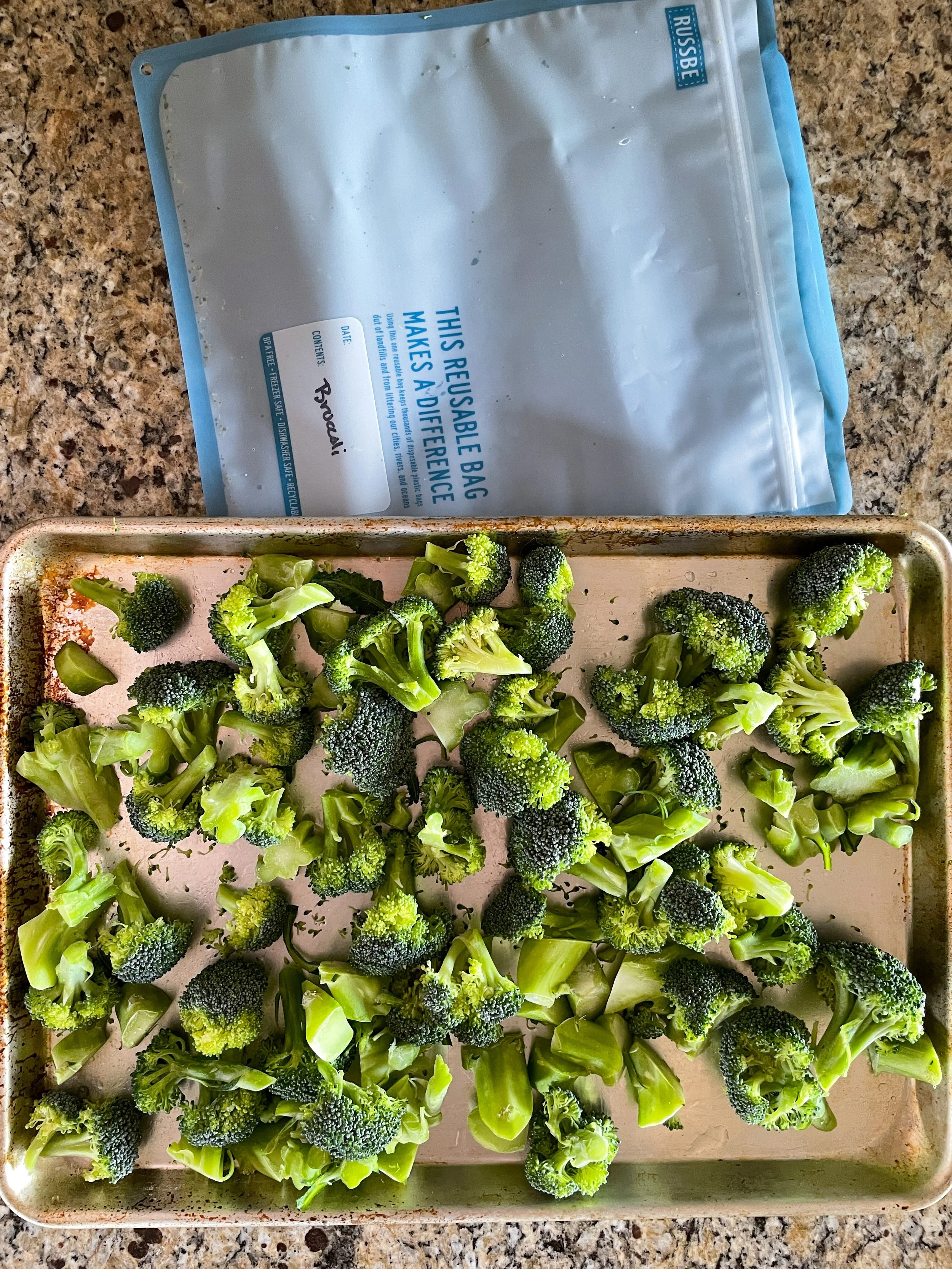
Freeze the Extras. Once in a blue moon, I don’t get around to using my produce, In those cases, I freeze the extras to use later. (ex: the broccoli pictured above was beginning to wilt, and I knew I would not be able to use it before it went bad. So I chopped it up, and froze. I later was able to grab a handful and steam it as part of another healthy meal prep idea down the road.)
Tip for Freezing Extras: To ensure the goods don’t clump/stick together, place them on a tray or cookie sheet, and freeze until solid. Then place it into your preferred storage container.
what’s your technique?
Have you tried any of these techniques?
Sharing your feedback will help others who are looking for meal prep ideas. Tell use about it in the comments below!
NUTRITION SERVICES
MORE RESOURCES