


Stress Reduction Techniques and PCOS Treatment - Why Your Nervous System Matters
The human body responds to all stress as though it is a tiger. We modernized so quickly, rapidly creating far more subtle and frequent forms of stress than the stressors of our nomadic ancestors, and our nervous systems have not been able to keep up evolutionarily. As it is, our brains cannot differentiate between the threat of being hunted by a large animal and the looming stress of an approaching work deadline - it’s all tigers.
Your brain perceives stress as a threat to survival
The human body responds to all stress, whether beneficial or not, as though it is a tiger. We modernized so quickly, rapidly creating far more subtle and frequent forms of stress than those of our nomadic ancestors, and our nervous systems have not been able to keep up evolutionarily. As it is, our brains cannot differentiate between the threat of being hunted by a large predator and the looming stress of an approaching work deadline - it’s all tigers.
This is why stress reduction techniques, bubble baths, and meditation are not enough to mitigate the impacts of stress. When fighting a tiger, we don’t need to rest - we need to run. In this post, we will explore how the nervous system works, what the brain recognizes as a threat, and how that impacts hormone health, digestion, inflammation, and sleep.
Hello, my fellow warriors. I’m Hilary Beckwith, ex-dieter and functional health expert. Women with PCOS/PMOS, IBS, and autoimmune conditions come to see me with signs of adrenal stress, insulin resistance, and inflammatory conditions, and my job is to find the root causes so we can address their symptoms more effectively and fill in the gaps between their lab values and how their body actually feels. Before you continue, click here to read my Medical Disclaimer.
In this article, you’ll learn:
What is the autonomic nervous system
What your brain recognizes as a threat
What systems and functions are paused when your stress response system is activated
How to ditch the focus on “staying calm” amid stress, and instead, work with your body’s natural response system to support whole-body health
your body’s innate response to threats
As a species, we’ve evolved different ways of surviving as the world changes. Doing so increases our chances of outliving anything that could potentially kill us - it’s what all species do. The autonomic nervous system is our body’s way of helping us to survive when a threat presents itself. Simply put, the autonomic nervous system has two modes:
Sympathetic (AKA fight-or-flight)
Parasympathetic (AKA rest-and-digest)
In reality, the autonomic nervous system is far more complex and nuanced than this, but for the sake of this post, I want to keep it accessible.
As the names imply, Sympathetic (SNS) is activated when a threat or danger is present. When activated, it triggers a cascade of events that enhance our ability to fight or flee the threat, including:
shifts blood flow to large muscle groups
increases heart rate
increases lung capacity
releases adrenaline, noradrenaline
releases cortisol to pull glucose out of storage and turn it into energy
Parasympathetic (PNS) is primarily activated when we are not in the presence of a threat - put differently, it is active when the priority is not survival. When active, our body is able to prioritize:
digestive function, including motility, digestive juices, detoxification, and elimination
tissue and cell repair
detoxification through liver, lymph, urine, and feces
protein synthesis for muscle building
sex hormones production and metabolism

here’s where it can go wrong
1) STRESS = THREAT
As we discussed earlier in the post, our brains cannot differentiate between bigger threats and smaller stresses - in both cases, the SNS is activated, and survival becomes the main priority. The SNS will continue to stay activated as long as the stressor is still present, in order to keep you alive, putting other functions on hold.
This is why stress reduction techniques, supplements, and manifestations will always miss the mark. More is needed to address threats than simply avoiding them or calming them down.
2) MODERN STRESSORS ARE MORE ABUNDANT AND LESS NOTICEABLE
Our nomadic ancestors encountered avalanches, exposure to extreme heat or cold, food scarcity, and yes, being hunted by large animal predators. I think we’d all agree these are all inarguably threats to our survival.
Modern stressors don’t feel like much of a threat to survival, but according to our brains, they are all tigers. Modern stressors might include relationship conflicts and stress, excessively busy work and play schedules, traffic, meetings, deadlines, appointments, conflicting personalities at work or in families, social media comparison, inaccessible healthcare, caregiving of family members who live much longer than anyone used to.
The above are the more obvious stressors, but we also encounter things we don’t realize are activating our SNS, such as undiagnosed gut infections (candida, SIBO, parasites, viruses), unprocessed developmental or emotional trauma, people-pleasing behaviors, food sensitivities, and adrenaline-seeking activities (overexercising, restricting calories or foods, thrill-seeking).
3) WE FOCUS ON STAYING CALM, RATHER THAN ALLOWING STRESS TO RUN ITS COURSE
Think of it this way:
If you encountered a bear in the woods, would you take a nap? A bath? Start journaling?
NO - you’d run like hell, which is what your body has prepared to do in that moment.
You run, the energy that gets created gets released, your brain recognizes the threat is gone, and naturally returns to a state of rest and repair.
Our focus on staying calm all the time works against our body’s natural ability to move stress through our body and return to a state of calm.
You don’t need more stress reduction techniques - you need more release.
what can you do about it?
You can see from this post that survival physiology is far different from recovery physiology. You don’t need me to give you a list of stress reduction techniques.
If you are being honest with yourself, you already know what and who in your life are causing unnecessary stress threats..
What you do need is to learn how to release, when to release, and how to find and address those hidden threats that are keeping your SNS activated.
If you are ready to get to the bottom of your PCOS/PMOS symptoms, metabolic health, chronic pain and stiffness, and digestive symptoms, and make changes that actually stick, THIS ONLINE COURSE needs to be your next step toward whole-body healing.
Not sure if that’s right for you?
learn something new?
What was your most profound takeaway from this post?
I hope you’ll share your thoughts in the comments below!




Nutrition Support for GLP-1 Weight Loss Protocols - How to Minimize GLP-1 Side Effects
As promising as GLP-1 weight loss protocols are, for both weight loss and cardiometabolic markers, the research is starting to come back on long-term use of GLP-1s, and long-term discontinuation without functional support. What’s clear is that the benefits of GLP-1 weight loss protocols are not long-lasting on their own.
Unfortunately, the harmful effects caused by a drastically slowed digestive system on inflammation, hormone balance, and metabolic health last long after stopping a GLP-1… that is, unless the individual also receives guidance and functional support to address the systems being impacted.
The Research is Clear
As promising as GLP-1 weight loss protocols are, for both weight loss and cardiometabolic markers, the research is starting to come back on long-term use of GLP-1s, and long-term discontinuation without functional support. What’s clear is that the benefits of GLP-1 weight loss protocols are not long-lasting on their own.
Unfortunately, the harmful effects caused by a drastically slowed digestive system on inflammation, hormone balance, and metabolic health last long after stopping a GLP-1… that is, unless the individual also receives guidance and functional support to address the systems being impacted.
It comes down to this - Long-lasting success without the harmful side effects of GLP-1 use is possible. The key is proactivity.
Hello, my little muffin tops. I’m Hilary Beckwith, ex-dieter and functional health expert. Women with PCOS/PMOS, IBS, and autoimmune conditions come to see me with signs of adrenal stress, insulin resistance, and inflammatory conditions, and my job is to find the root causes so we can address their symptoms more effectively and fill in the gaps between their lab values and how their body actually feels. Before you continue, click here to read my Medical Disclaimer.
In this article, you’ll learn:
How GLP-1s work
What the research is saying about GLP-1 use - during and after
Steps to mitigate side effects and get lasting results
the desire to feel seen…
For decades, women have been taught to stay small - both in size and in expression. As absurd as it is to see it typed out, the truly infuriating part is that many of us live in a constant state of belief that we are, indeed,too much.
Right or wrong, this belief and its ever-present desire to shrink is exactly what drives us to dangerous health trends like restrictive diets and weight-loss meds (remember Fen-Fen?). We develop eating disorders, we grasp at every diet, supplement, and workout protocol that promises a bikini body, all with the hope that we will finally become small enough to be seen and accepted. (I’m not crying, you’re crying!)
I see you, friend. And as infuriated as I am that we live in a world that works hard to keep us so small, I also understand the realities of navigating these expectations and beliefs. That’s why, instead of staying silent in my anger, I want to help you get the most benefit out of your GLP-1 weight loss protocol, without the harmful long-term effects.
how GLP-1s work
So here we are in a skinny-obsessed era, and GLP-1s are playing a major role. They’re touted as a miracle drug because, in addition to easy weight loss, they also improve cardiometabolic markers and blood sugar stability markers.
But those improved markers come at a big cost - the negative health impacts of drastically slowed digestion, if not mitigated with functional health support, can lead to increased intestinal permeability (leaky gut syndrome), damaged and inflamed intestinal tissue, bowel toxicity, sex hormone imbalances, and increased risk of SIBO, candida overgrowth, parasites, and gallstones. Not to mention a major disconnect from your body’s intuition and relationship with food. I go into more detail about the negative health impacts of GLP-1 weight loss protocols here.
This post is focused on practical steps you can take to stay proactive in your GLP-1 weight loss journey to support functional health and enjoy lasting benefits of GLP-1 use that would otherwise disappear with time.
In order to understand how to support functional health while undergoing a GLP-1 weight loss protocol, it’s important to understand how GLP-1s work.
HOW DO GLP-1S WORK?
GLP-1, or Glucagon-Like Peptide, is a naturally occurring hormone produced in the body after meals to stop the release of stored glucose from the liver, fat, and muscle; it also stimulates insulin release and slows gastric emptying (the rate at which chewed food enters the intestinal tract). The effects of endogenous GLP-1 last for 1-2 minutes.
GLP-1 agonists are a synthetic form of GLP-1 that can be injected to simulate the effects of endogenous GLP-1s. The effects of exogenous GLP-1s (GLP-1 medications) typically last for one week.
When using GLP-1 agonists (going forward, I will refer to GLP-1 medications as “GLP-1s”) for weight loss, the goal is to drastically slow digestion in order to keep individuals feeling full for longer periods of time, in order to eat fewer calories, and thus, lose weight.
during and after GLP-1 weight loss
The clinical research has been largely unanimous in showing GLP-1 weight loss protocols improving cardiometabolic markers (inflammatory markers, HbA1c, blood pressure, and cholesterol, in addition to rapid and steady weight loss.
For this reason, GLP-1s have been touted as a miracle drug, as these improved markers can significantly lower an individual’s risk for cardiovascular disease. But patients are not being told the whole story.
The research is finally starting to surface on the long-term health impacts of GLP-1 weight loss protocols.
HERE’S WHAT RESEARCHERS ARE FINDING:
MOST OF THE WEIGHT IS REGAINED - In a recent systematic review, it was found that roughly 60% of the weight lost using a GLP-1 weight loss protocol was regained within about 1-2 years.
INCREASED RISK OF SARCOPENIA - Sarcopenia is a loss of muscle mass. Because most of the weight lost with GLP-1s is lean mass (i.e. muscle tissue), this results in a drastic loss of muscle which can be dangerous, and unsupportive of long-term metabolic health. Muscle mass is essential to maintaining insulin sensitivity, bone density, and mobility.
Additionally, it’s been found that much of the weight regained after discontinuing a GLP-1 weight loss protocol returns as adipose (fat) tissue, not the lean mass that was lost. This causes downstream issues with hormone imbalance, increased inflammation, and metabolic issues.
CARDIOMETABOLIC MARKERS RETURN - Similarly, a recent meta-analysis showed that most pre-GLP-1 cardiometabolic markers returned after discontinuing a GLP-1 weight loss protocol.
INCREASED RISK OF GALLSTONES - Slowed digestion and motility, paired with an increased movement of fat, double the likelihood of gallstone formation, which can lead to inflammation, increased toxicity, and impaired fat digestion.
INCREASED RISK OF SIBO (SMALL INTESTINAL BACTERIAL OVERGROWTH) - While the GLP-1 itself can reduce certain inflammation markers, slowed motility greatly increases fermentation of food in the small intestine, feeding both harmful and beneficial bacteria, and giving them the perfect environment to thrive. This increase in harmful bacteria will ultimately lead to intestinal inflammation, bowel toxicity, and increased intestinal permeability, not to mention the discomfort of bloat, fatigue, suppressed immune activity (if unaddressed for too long), and constipation and/or diarrhea.
INCREASED RISK OF GUT PATHOGENS - A healthy digestive system acts as a frontline defense against pathogens ingested by food - yeast, bacteria, viruses, and parasites, mainly. Drastically slowing digestion reduces your body’s ability to disinfect food with sufficient levels of stomach acid, and the damaged mucosal lining of the intestines due to increased fermentation (see above) no longer carries the immune cells needed to further fight off and eliminate such pathogens.
DEHYDRATION - Sufficient, and even optimal, hydration is essential to blood volume, lymphatic flow (carries waste from tissues, carries immune cells to areas of need, etc.), nutrient transport throughout the body, and lubrication of muscle tissues and joints. GLP-1s significantly decrease thirst cues, leaving individuals on GLP-1 weight loss protocols dangerously dehydrated.
INCREASED RISK OF OSTEOPOROSIS - More research is needed to confirm this hypothesis, but an interesting paper published recently by UC Davis pointed out that reduced food intake leads to undernourishment, and undernourishment puts individuals at risk for bone loss, as the body cannot maintain bone density without the necessary dietary nutrients.
minimizing negative health effects of GLP-1s
Medications like GLP-1 and even nutritional supplements will only go so far if the root-causes of the symptoms you are addressing are left untouched.
A GLP-1 weight loss protocol might drop scale numbers, improve metabolic markers, and reduce inflammatory markers for a time, but unless you also address the underlying causes of the dysfunction that got you to that point - the research is clear - the results will not last.
YOU CAN HAVE THE BEST OF BOTH WORLDS
If you have made the decision to use GLP-1s to help you lose weight, and you want to enjoy the benefits for many years without creating a new onslaught of health problems - you must stay proactive. Here’s how to do that:
1) OPTIMIZE GUT HEALTH:“Gut Health” is more than just digestion and probiotics. It is the health of your intestinal tissues, the state of your microbiota, and the ability of your mucosal immune system to fight off harmful infections.
HOW TO DO IT: Gut health is highly individualized - there are no magic gut-support foods or probiotic supplements, because your gut has its own unique microbiome, mucosal health, and motility ability.
Seek out a functional practitioner who is trained to assess and address microbiome imbalances, dysbiosis, and inflammation. Address any findings and optimize inflammation, tissue health, and beneficial bacteria before disrupting it with slowed motility. (Click HERE to connect with me)
2) OPTIMIZE DIET: The weight lost on a GLP-1 weight loss protocol is primarily lean mass. Consuming good-quality protein and developing a strong routine for strength training will help to counter this. But when digestion is slowed, as it is with a GLP-1, there is little appetite for protein.
HOW TO DO IT: Prioritize protein-forward meals. If all you have the appetite for is a few bites of food, prioritize good-quality proteins. Click HERE to learn how to choose good-quality proteins. Most mild-to-moderately active individuals require 1.2-1.8 grams of protein per 1 kilogram of desired body weight.
3) OPTIMIZE HYDRATION: Sufficient hydration is important for bowel movements, blood pressure, and detoxification, but thirst cues are stunted when on a GLP-1.
HOW TO DO IT:Most individuals with normally functioning kidneys require a minimum of 0.5 fluid ounces per 1 pound of body weight daily. Electrolyte minerals are also essential to fluid balance within cells and tissues, especially if you may be undernourished from GLP-1 use. Click HERE to get a free pack of my favorite electrolyte supplement.
4) ADD RESISTANCE TRAINING: GLP-1 breaks down lean mass (muscle tissue), and most weight lost while on a GLP-1 weight loss protocol comes back as fat mass. Staying proactive in your strength training routine can help mitigate this loss. The best time to start this routine is before starting your GLP-1 weight loss protocol. The second best time is now.
HOW TO DO IT: Add 30 minutes of resistance training to your routine, at least 2-3 times per week. Building muscle supports insulin sensitivity long-term and will help you build up a reserve of lean mass. Working with a trainer who is knowledgeable in GLP-1 use is essential, as it may be unsafe to work out too intensely without proper nourishment. Start small, listen to your body’s cues.
5) MAKE A PLAN FOR PLEASURE: Suppressing appetite with GLP-1 use can potentially eliminate a major source of pleasure if you are a food lover like myself. Food releases dopamine and endorphins that block pain. Without this resource, you might risk seeking out other, potentially harmful sources of pleasure and comfort, such as recreational drugs, prescription pain medications, alcohol, scrolling, self-harm, video games, or unsafe sexual behaviors.
HOW TO DO IT: Make a list. Name 3-5 easy-to-access things that bring you comfort or joy, besides food. No need to reinvent the wheel, just keep it simple and fun, and try to avoid more addictive behaviors like scrolling or substances.
In the moment - When you find yourself reaching for those more harmful behaviors, or just wanting something to “take the edge off”, pick something from your list that feels accessible in that moment, and do it. “Catching” yourself in these moments and counteracting with a more positive behavior can help create new neural pathways, allowing the brain to learn new coping skills.
Staying proactive - Sometimes when we reach for these more harmful behaviors, it’s because we feel depleted - in the red, so-to-speak. Keeping your bucket full on a daily basis can help prevent those empty feelings. One way to do this is to schedule 1-3 of these items from your list into your day, every day.
Your list might include:
reading a chapter of a book
single-song dance party
gratitude journal
sitting/walking in nature (without headphones)
grab a coffee or tea at your favorite shop
jumping on a trampoline
tell yourself a silly joke (really!)
tell someone else a silly joke
was this helpful?
What’s your story navigating GLP-1 use? Has it been helpful? What’s been challenging about it, and how did you navigate it?
I hope you’ll share your thoughts in the comments below!
What They Didn’t Tell You About GLP-1 | GLP 1 Weight Loss and Functional Health
As you’ve seen here, the research is very clear - GLP-1s at higher doses help people improve cardiometabolic markers, support the function of insulin, and help people lose weight.
The research is also very clear that slower motility and rapid weight loss have many negative health effects, and that benefits seen while on a GLP-1 nearly reverse after discontinuing.
These are risks worth considering when exploring a GLP-1 weight loss protocol.
What is a GLP-1, really?
My biggest concern is not the GLP-1 medications themselves - my concern is with the absence of informed consent. It’s true that GLP-1s can improve markers of cardiac and metabolic health - but it is not a magical unicorn 🦄. Every health decision has its risks, and you deserve to be informed of those risks in their entirety.
As a functional health practitioner, part of my job is to question everything - especially in a world drowning in oversimplified health advice on TikTok and docs who won’t (or can’t) address anything that doesn’t fit neatly into a 15-minute appointment.
I’ve scoured the research and listened to what my own GLP-1 clients are saying, and I’m here to share the nuances and risks of being on a GLP-1 weight loss protocol.
Hello, my little love handles. I’m Hilary Beckwith, ex-dieter and functional health expert. Women with PCOS/PMOS, IBS, and autoimmune conditions come to see me with signs of adrenal stress, insulin resistance, and inflammatory conditions, and my job is to find the root causes so we can address their symptoms more effectively and fill in the gaps between their lab values and how their body actually feels. Before you continue, click here to read my Medical Disclaimer.
In this article, you’ll learn:
What is a GLP-1 agonist?
Short- and long-term effects of GLP-1 for weight loss
Things to consider before undergoing a GLP-1 weight loss protocol
How to minimize harmful effects if you are already on a GLP-1 weight loss protocol
Root causes of weight gain that are often overlooked
what is a GLP-1?
THE SCIENCE-Y BITS
To understand what a GLP-1 is, it helps to understand receptor sites. Every cell in your body has receptor sites for various hormones, molecules, and proteins. A common example of this that you may already be familiar with is insulin - insulin is a hormone that binds to insulin receptor sites to allow glucose to enter and be metabolized.
Think of the receptor site as a lock, and the hormone/molecule/protein is the key meant to fit into that lock. Receptor types vary from cell to cell, depending on what the cell’s function is.
The difference between a door lock and these receptor sites is that, to unlock a door, you would need a specific key, or an exact replica of that key, and both keys would both have the outcome of opening the lock. But in the case of receptor sites, there are many types of keys that will fit, and each produces a different action, depending on which key is used.
SO, WHAT IS A GLP-1?
Glucagon-like peptide, or GLP, has a similar structure to glucagon (a hormone produced by the pancreas) that enables it to bind to glucagon receptor sites on cells. Put differently, GLP is one of the many types of keys that can unlock the glucagon door, but has a different outcome than glucagon itself.
The number ‘1’ is simply a differentiation between this GLP and other GLPs that stimulate a different action when binding to receptors. GLP-1s are made naturally by the body and are released after eating, binding to glucagon receptor sites. Here’s what that does:
inhibit glucagon release
stimulate insulin release
slow the rate at which your food empties from your stomach into your intestines (called gastric emptying)
SO, WHAT IS GLUCAGON?
Glucagon is a hormone produced by the pancreas in times of low blood sugar or stress, that stimulates the release of stored glucose from the liver and fat tissue. Blood glucose levels rise, insulin is released, and shuttles glucose into cells to be converted into fuel called ATP (adenosine triphosphate). This is the same glucose metabolism that we referred to earlier.
I don’t want to minimize the “stress” component I just mentioned - it is a very important consideration in blood sugar management, but too complex to get into for this post. If you want to learn more about how stress impacts blood sugar, hormone balance, sleep, and inflammation, click HERE.
OKAY, SO WHAT IS A GLP-1 AGONIST?
A GLP-1 agonist is the medication we are discussing in this post - exogenous sources of GLP-1 that have been shown to lower cardiac risk, improve A1c values, and, yes, help people rapidly lose weight. Common examples of GLP-1 agonists include semaglutides, liraglutides, tirzepatides, and exenatides.
The biggest difference between a GLP-1 agonist (exogenous), and GLP-1 produced by your body (endogenous), is that the impacts of endogenous GLP-1 are meant to last only 1-2 minutes, whereas the impacts of exogenous GLP-1 last for about 1 week.
Chances are, your prescriber has only told you that the benefit of exogenous GLP-1 is that it will cut “food noise” and help you feel full for longer so that you’ll eat less (yay?).
What they didn’t tell you is how that prolonged effect negatively impacts digestion, inflammation, gut health, and causes undernourishment, impacting a wide range of body systems.
LET’S SUMMARIZE:
GLUCAGON: a hormone produced by the pancreas in times of stress or low blood sugar, that stimulates the release of stored glucose from the liver and fat tissue, and to some extent, muscle.
ENDOGENOUS GLP-1: a molecule released after meals that binds to glucagon receptor sites to inhibit glucagon release, stimulate insulin release, and slow gastric emptying for about 1-2 minutes, helping to jumpstart glucose metabolism after eating.
EXOGENOUS GLP-1: a synthetic form of endogenous GLP-1 that has the same effect, but for a much longer period - about 7 days.
For the sake of simplicity, I will refer to exogenous GLP-1s (GLP-1 medications) as “GLP-1s” throughout the rest of this post.
GLP-1 weight loss protocols have their downsides
GLP-1 meds are not new. They’ve been used for 10+ years at much lower doses than they currently are for weight loss, to help those with Type II Diabetes manage blood glucose levels more effectively.
They’ve become trendy in recent years because it was discovered that at higher doses, a patient can lose weight rapidly without even trying. And isn’t it our goal, especially as women, to be as small as we can be? (where is the sarcastic font?)
Sarcasm aside, the fact is that people want to lose weight, and they want it to be easy - and GLP-1s make weight loss easy. I get why that’s appealing. For those who have tried ALL the diets, and ALL the workouts, ALL the supplements, this might seem like a dream come true.
Let’s look at the research and talk about what to consider when starting a GLP-1 weight loss protocol.
health effects of GLP-1 weight loss protocol
IMPROVES CARDIOMETABOLIC MARKERS
YAY! For someone who is at severe, or even moderate, risk for cardio events, suffers from chronic illness that can make preventative actions more difficult, or for someone who has limited capacity to understand and execute this process - great!
HERE’S WHAT’S MISSING:
Cardiometabolic markers include markers like blood pressure, HbA1c, and lipid markers (cholesterol, triglycerides). For someone who is not at severe or even moderate risk for a cardiac event, these markers can be improved more effectively by addressing early signs of metabolic dysfunction. A GLP-1 might stabilize those numbers while actively taking a GLP-1, but it all falls apart once you discontinue the GLP-1 and have made no changes to your diet or lifestyle.
Early signs of metabolic dysfunction include:
“hangry” between meals
trouble falling asleep, or staying asleep
sugar cravings
inflammatory conditions (acne, eczema, persistent pain, autoimmune diagnoses)
hormone imbalances (PCOS/PMOS diagnosis, irregular periods, mood instability, PMS symptoms.
Addressing these early signs through a functional health lens will ensure the results last beyond the duration of the GLP-1 meds.
QUIETS “FOOD NOISE”
YAY! Many of us are drowning in social media posts and marketing that uses fear-based tactics to get us to eliminate certain food groups, or that one superfood ingredient or supplement will change. our. lives. - this gets us overthinking about food - and that sh*t gets noisy! So, yeah, a medication that cuts that noise is appealing to those of us who feel overstimulated and confused.
HERE’S WHAT’S MISSING:
The mechanism by which GLP-1s eliminate “food noise” is by increasing and prolonging the feeling of satiety. One method it uses to do this is by delaying gastric emptying and slowing digestive motility - for an entire week!
Slowing down your digestion is a BIG problem. A healthy digestive system is wired to disinfect your food, move waste out of your system, and absorb nutrients that come from the food you are ingesting. Here’s what happens when your digestion moves too slowly:
Constipation - Feces are an important elimination pathway for toxins. When you are constipated, toxins become reabsorbed into your bloodstream, and can then become reactivated. It’s not just toxins from your food that are eliminated by feces - many toxins that are deactivated by the liver, also use feces as an elimination pathway, including:
excess steroid hormones that your liver has deactivated in order to maintain balance (estrogen, progesterone, cortisol, etc.)
debris from harmful viruses, bacteria, or other pathogens that your immune system has fought off
Increased SIBO risk (and other harmful microbes) - Stomach acid and motility are the two primary mechanisms your digestive system uses to eliminate harmful microbes, including opportunistic bacteria (leading to SIBO), parasites, candida/yeast, and viruses. The proliferation of these microbes leads to increased inflammation, increased cortisol levels, and a damaged gut lining (leaky gut, intestinal permeability). The longer food sits in your intestines, the more it will ferment and give these microbes the perfect environment to proliferate.
WEIGHT LOSS
While it may not be true across the board, weight loss is the main appeal for GLP-1 use in the populations I work with. And at higher doses, GLP-1s have been effective for weight loss ultimately by decreasing appetite and thereby restricting calorie intake.
HERE’S WHAT’S MISSING:
Calorie restriction over time actually slows metabolism. While the pounds practically melt off during a GLP-1 weight loss protocol, the research shows that calorie restriction over time will actually slow your body’s natural ability to burn calories. And since the primary weight loss mechanism of GLP-1 meds boils down to calorie restriction - it’s worth considering what life looks like after you stop taking it.
Liver congestion, toxic burden, chronic stress, and underlying infections are common non-calorie causes of weight gain.
If you are someone who really struggles to lose weight even though you’re doing all the “right” things - then calories are likely NOT the reason you can’t lose weight. Your body will hold onto fat stores and inhibit fat breakdown in cases of infection, stress, and hormone imbalances. Click HERE to read more about non-calorie causes of weight gain.
UNDERNOURISHMENT - I cannot overstate how important this topic is. While your scale numbers are going down, your lack of appetite will eventually lead to a body that is using its resources faster than you can replenish them.
Every function in your body requires nutrients. To name a few examples, glucose metabolism requires magnesium and many B- vitamins. Liver function and detoxification requires B vitamins, amino acids, cholesterol, and many minerals. Mood regulation largely relies on amino acids. “Full” does not equal “fueled”.
what the research shows
We’ve talked about the common claims of a GLP-1 weight-loss protocol, and the reality is all of them track. At the right dose, GLP-1s do live up to the hype of weight loss, improved cardiometabolic markers, and cutting the “food noise”.
Each of those claims comes with its own nuance that we also covered. The claims themselves are making it into the informed consent - but the nuances are not.
ADDITIONAL NEGATIVE HEALTH EFFECTS OF GLP-1s:
DEHYDRATION: By increasing satiety, GLP-1s also decrease thirst cues, leaving you dehydrated. Why is hydration so important? Optimal hydration is needed for removal of waste through your lymphatic system, sweat, urine, and feces. Optimal hydration can also improve blood pressure by increasing blood volume, and helps lubricate joints, muscles, skin, and eyes. Sufficient hydration requires water AND well-balanced electrolyte minerals to draw the water into cells and tissues - nourishment and hydration go hand-in-hand.
INCREASED RISK OF GALLSTONES: Gallstones form when bile cannot move fluidly through the common bile duct and into your digestive tract. Because bile is formed from cholesterol, the increased movement of fat due to GLP-1s increases the concentration of fat in bile, making it more sluggish and increasing the likelihood of developing gallstones.
WEIGHT REGAIN AFTER GLP-1: A recent systematic review found that 60% of weight lost while on a GLP-1 weight loss protocol was regained in participants. What’s more, another study found that the weight regained came back asfat mass, not the lean mass that was lost.
RETURN OF CARDIOMETABOLIC MARKERS: The HbA1c, the blood pressure, the cholesterol, the lipids - those markers might improve while on a GLP-1 weight loss protocol, but this meta-analysis found that these markers, in addition to 2/3 of lost weight, were regained after discontinuing GLP-1.
BONE DENSITY LOSS DUE TO UNDERNUTRITION: A paper published in December, 2025 by UC Davis pointed out that essential nutrients are being missed when people are underfed, and especially those that support bone health.
how to prepare your body for success even after GLP-1s
As you’ve seen here, the research is very clear - GLP-1s at higher doses help people improve cardiometabolic markers, support the function of insulin, and help people lose weight.
The research is also very clear that slower motility and rapid weight loss have many negative health effects, and that benefits seen while on a GLP-1 nearly reverse after discontinuing.
These are risks worth considering when exploring a GLP-1 weight loss protocol.
Medications like GLP-1 and even nutritional supplements will only go so far if you are not also addressing root causes of the symptoms, issues, or conditions they are meant to support. GLP-1s on their own are only going to help while actively on them, but addressing functional health in addition to GLP-1s can set you up for long-term success.
STEPS FOR ADDRESSING FUNCTIONAL HEALTH WHILE ON A GLP-1 WEIGHT LOSS PROTOCOL:
OPTIMIZE GUT HEALTH: “Gut Health” is more than just digestion and probiotics. It is the health of your intestinal tissues, the state of your microbiota, and the ability for your mucosal immune system to keep you from harmful infections.
CURRENTLY ON A GLP-1: Seek out a functional practitioner trained to assess and address microbiome imbalances, dysbiosis, and inflammation.
BEFORE GLP-1: Seek out a functional practitioner trained to assess and address microbiome imbalances, dysbiosis, and inflammation. Address any findings and optimize inflammation, tissue health, and beneficial bacteria before disrupting it with slowed motility.
OPTIMIZE DIET: Lean mass is primarily what is lost when on a GLP-1 weight loss protocol. Consuming good-quality protein and developing a strong routine for strength training will help to counter this. But when digestion is slowed, as it is with a GLP-1, there is little appetite for protein. Here’s how to get ahead:
CURRENTLY ON A GLP-1: Think “protein-forward” meals. If all you have the appetite for is a few bites of food, prioritize good-quality proteins. Click HERE to learn how to choose good-quality proteins.
BEFORE GLP-1: Get in the habit of consuming sufficient protein before starting your GLP-1 (this will require optimizing digestion, too). Most people with a regular strength training routine need about 1.2-1.8 grams of protein per 1 kilogram of desired body weight.
OPTIMIZE HYDRATION: Sufficient hydration is important for bowel movements, blood pressure, and detoxification, but thirst cues are stunted when on a GLP-1.
CURRENTLY ON A GLP-1: Begin putting tools into action that will help remind you to drink. Phone or watch alarms, visual cues, notes - whatever works best for your lifestyle and habit development. Most individuals with normally functioning kidneys require a minimum of 0.5 fluid ounces per 1 pound of body weight, daily. Electrolyte minerals are also essential to fluid balance within cells and tissues, especially if you may be undernourished from GLP-1 use. This is my favorite electrolyte product.
BEFORE GLP-1: (same as above)
RESISTANCE TRAINING: GLP-1 breaks down lean mass (muscle tissue), and most weight lost while on a GLP-1 weight loss protocol comes back as fat mass. Staying ahead of strength training and muscle-building can help mitigate this effect.
CURRENTLY ON A GLP-1: Begin building a strength training routine 2-3 times per week. Working with a trainer knowledgeable in GLP-1 use is essential, as it may be unsafe to work out too intensely without proper nourishment.
BEFORE GLP-1: Get in the habit of strength training before you start a GLP-1, at least 2-3 times per week. This will support insulin sensitivity, build up a reserve of lean mass, and condition your body to handle resistance training, rather than starting new while on a GLP-1.
PLAN FOR PLEASURE: For many (myself included), food is pleasure, and even comfort. In fact, food can actually release dopamine and endorphins to block pain. If this is you, a GLP-1 will remove an important source of joy and comfort in your life by suppressing your appetite for food. The key is to plan ahead and make sure you have other sources for coping when appetite is suppressed.
CURRENTLY ON A GLP-1: It’s not too late for you. Before you do anything else, make a list. Name 3-5 easy-to-access things that bring you comfort or joy, besides food. No need to reinvent the wheel, just keep it simple and fun, and try to avoid more addictive behaviors like scrolling or substances. Your list might include:
reading a chapter of a book
single-song dance party
gratitude journal
sitting/walking in nature (without headphones)
grab a coffee or tea at your favorite shop
jumping on a trampoline
tell yourself a silly joke (really!)
tell someone else a silly joke
BEFORE GLP-1: Same as above, but now you have time to implement these alternative behaviors before the appetite suppression from a GLP-1 makes it more challenging.
learn something new?
What was your biggest takeaway from this article? Leave your thoughts and questions in the comments below, and I will do my best to respond soon!
Want help getting off a GLP-1 weight loss protocol?

PCOS to PMOS | Here’s What You Need to Know
In this post I will go over everything from what PCOS + PMOS mean, to PCOS symptoms, to effective and holistic PCOS treatment. But the thing I want you to hold onto right now is that this new metabolic perspective on PCOS is not new information. And more importantly, the rename from PCOS to PMOS does not mean your medical providers instantly know how to address the root causes of your PCOS symptoms.
I’ve been helping females with PCOS symptoms by addressing their gut health, metabolic health, and endocrine health, for as long as I’ve been in practice - including my own PCOS!
I’ve Been Saying it for Years…
Your PCOS diagnosis has been rightfully renamed to PMOS - a win for female-bodied folx everywhere!
In this post I will go over everything from what PCOS + PMOS mean, to PCOS symptoms, to effective and holistic PCOS treatment. But the thing I want you to hold onto right now is that this new metabolic perspective on PCOS is not new information. And more importantly, the rename from PCOS to PMOS does not mean your medical providers instantly know how to address the root causes of your PCOS symptoms.
I’ve been helping females with PCOS symptoms by addressing their gut health, metabolic health, and endocrine health, for as long as I’ve been in practice - including my own PCOS!
Hello, my muffin tops. I’m Hilary Beckwith, ex-dieter and functional health expert. Women with PCOS/PMOS, IBS, and autoimmune conditions come to see me with signs of adrenal stress, insulin resistance, and inflammatory conditions, and my job is to find the root causes so we can address their symptoms more effectively and fill in the gaps between their lab values and how their body actually feels. Before you continue, click here to read my Medical Disclaimer.
In this article, you’ll learn:
Differences between PCOS diagnosis and PMOS
Why the rename is so important
PCOS treatment with functional nutrition
Ways you can start advocating for your health in more meaningful ways
the name PCOS has always been a problem
And this is a huge disservice to female-bodied folx everywhere. When I got my PCOS diagnosis nearly 20 years ago, I was told, “you will probably become diabetic” and that I would not be able to get pregnant without expensive medical intervention. That was the only guidance I received from my gynecologist.
I didn’t know then how to advocate for my health, ask questions, or seek out a second opinion, or even holistic support. But I know now, and that’s why my ongoing mission is to educate and empower a new generation of women to do the same by holding their practitioners accountable, asking questions, and getting heard, no matter what it takes.
The first step is to educate yourself.
WHAT DOES PCOS STAND FOR?
PCOS stands for PolyCystic Ovarian Syndrome. Getting a PCOS diagnosis primarily requires a female to meet at least two of these measures:
elevated androgen levels
irregular or absent ovulation
an ultrasound confirming multiple “cysts” on the ovaries
more recently, low egg count was added to this list
You can see, these criteria largely point to a gynecological focus - here’s why that’s a problem:
Elevated androgens and sex hormone imbalances don’t just happen. In general, are often caused by a disruption in the HPA axis (brain and adrenal glands), blood sugar instability (also tied to HPA axis), prolonged chronic stress (oh hey, that’s HPA axis, too!), and liver functionality.
Ovulation issues stem from these same hormonal imbalances, caused largely by - yep! - HPA axis dysfunction and blood sugar instability or insulin resistance. While it’s true that the ovaries themselves can contribute to the problem, the root cause is often in communication between the brain and ovaries, not the ovaries themselves. Chronic stress, insulin resistance, and liver health can all be supported to improve ovarian function.
PCOS ovaries are not covered in “cysts”: The classic visual of PCOS is this picture of an ovary covered in what looks like a string of pearls - these are not cysts - they are follicles that were not able to release an egg into the fallopian tube, and thus became stuck. Your ovaries can develop cysts, but what is seen in PCOS is not cysts.
What’s more, the cause of these stunted follicles is commonly caused by an increase in androgens (testosterone, DHEA) produced by the ovaries in response to elevated insulin levels, caused by insulin resistance - again, not a gynecological issue.
Egg Count: The quality of eggs is vastly more important than the number of eggs. Think about it - does it do you any good to have a drawer full of dead batteries, if only 2-3 of them have any juice left?
WHAT DOES PMOS STAND FOR?
PMOS stands for Polyendocrine Metabolic Ovarian Syndrome. Polyendocrine, meaning it involves many factors in the endocrine system, including metabolic, or blood-sugar-regulating endocrine glands such as the adrenal glands and pancreas.
Take a close look at the diagram below to see the differences between a PCOS diagnosis and PMOS.
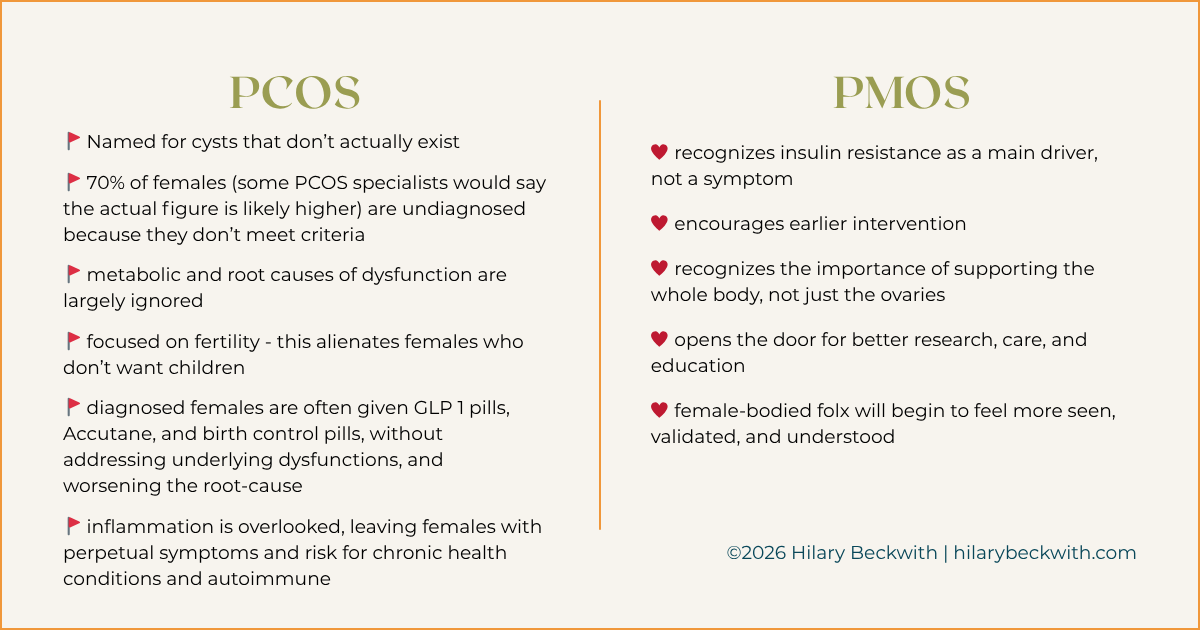
renaming PCOS to PMOS does not mean your doctors instantly know how to support you
Whether we call it PCOS, PMOS, or the acne-bloat-crazy-bananas-plague - PCOS is a complex interplay of dysfunction in metabolic health, hormones, liver, gut, and brain.
The renaming of PCOS to PMOS is a step in the right direction, but the medical community still has a long way to go when it comes to understanding how to treat PMOS effectively. This rename will bring more awareness to the medical community, leading to better research and education for medical providers, but that is YEARS down the road.
After all, it took decades before medical doctors even started to become aware (awareness does not equate to action) that more nutrition education would be helpful to their patients. The minuscule amount currently required for medical licensing is largely focused on biochemistry, not patient care.
And while it would be a dream come true to find that one-stop shop for full-body PCOS and PMOS treatment, it simply does not exist, and probably won’t for some time.
That’s why practitioners like me exist - I am in practice to help female-bodied folx uncover hidden causes of their dysfunction that are keeping them stuck in their PCOS symptoms.
Through a focus on gut health, digestion, inflammation, stress, and blood sugar stability, I have helped my female-bodied clients (myself included) break free from PCOS symptoms such as:
painful and embarrassing adult acne
“PCOS belly” - weight in the belly and hips that came out of nowhere
thinning hair
irregular and unpredictable periods
PMS or PMDD (despite what you might have learned, PMS is a sign of hormone imbalances, and is not normal to experience)
hormone imbalances reflected on labs
fatigue + energy crashes
2am wake-ups
increased body or facial hair (hirsutism)
“hangry” between meals
poor mood - feeling unstable, depressed, or anxious
whole-body PCOS treatment
Most females who seek my help present with some form of hormonal imbalance, signs of prolonged chronic stress, and systemic inflammation. So, PCOS diagnosis or not, the main goal is to assess and pinpoint what the root causes of dysfunction are, so that we can create a care plan that is targeted to their specific needs.
After years of throwing spaghetti at the wall, the women who work with me walk away feeling seen, heard, and revitalized - a stark contrast from the providers’ offices that, in the past, left them feeling dismissed, ignored, and alone.
TARGETED, WHOLE-BODY PCOS TREATMENT THAT GETS RESULTS:
LIFESTYLE + DIETARY ANALYSIS:
I’m not interested in how many calories you eat per day, nor will I ever ask you to step on a scale. However, day-to-day stress levels, food quality, meal timing and atmosphere, sleep, bowel movements, body movements - all of it matters.
Chronic stress disrupts the brain’s communication with endocrine glands. This is because your brain’s priority in stress response is protection - or better yet, survival. Nothing else is important until that threat (stress) is successfully dealt with. And when the stress keeps coming, you stay stuck in survival mode, and this plays havoc on your hormones. The first thing I do is gather information so that I can meet you where you’re at.
ASSESS DIGESTIVE HEALTH:
This is a big one with PCOS. Digestive dysfunction is more than just gassy evenings, heartburn, and constipation. When your body does not produce enough stomach acid, digestive enzymes, or cannot efficiently move food through your intestines and eliminate waste - intestinal tissues become damaged and inflamed, toxic burden builds due to waste that is not eliminated, and your susceptibility to opportunistic bacterial overgrowth, candida, and even parasites, increases significantly.
Your digestive system is wired to kill off harmful pathogens and prevent their proliferation - and the biggest inhibitor of digestion is stress.
FUNCTIONAL LAB TESTING:
For cycling females, getting a one-time blood panel is not enough information to understand the big picture, and quite frankly, if you are a cycling female, it is a huge disservice to use hormone levels on a single blood panel as a starting point. Chances are that provider is simply just ticking off the boxes required by insurance to diagnose you (Click HERE to learn more about how this impacts your access to quality health care).
Working with quality functional labs, we can create a plan that is fine-tuned to your body’s specific needs, as opposed to suppressing symptoms alone. Here are the labs I most commonly recommend with PCOS symptoms:
GI-MAP (Diagnostic Solutions) - measures microbial balance, pathogens, inflammatory markers, and digestive markers.
Organic Acids Test (Mosaic) - measures for yeast and mold, neurotransmitter dysfunction, mitochondrial health, and nutrient deficiencies.
Expanded Female Hormone Panel (eFHP - Diagnostechs) - Spanning across your entire cycle, this test measures FSH, LH, Estrogen, Progesterone, Testosterone, and DHEA, and helps us locate patterns and sources of dysfunction (e.g. is the source of the problem brain-ovary communication, or is it in the gland itself?)
DUTCH Adrenal (Precision Analytics) - Measures daily cortisol rhythms, DHEA-S, and your body’s cortisol clearance and detoxification ability.
DUTCH Complete (Precision Analytics) - Measures multiple reproductive hormones as well as their metabolites and your body’s ability to detoxify each of them. It does not measure FSH or LH but is a powerhouse of information for males and females alike.
You can see that the focus with functional nutrition is not calories, diet, or weight loss - or even the lab values themselves - the focus is function.
Uncovering the root causes of dysfunction that are keeping you stuck in your inflammatory state, your constant bloat and discomfort, your debilitating fatigue, sugar cravings, and overall well-being.
ways to advocate for your own health right now
The PCOS-to-PMOS change only happened recently. It is highly unlikely that you will walk into your OBGYN tomorrow and get whole-body, root-cause support for your PCOS diagnosis. It may take years or even decades for medical providers to start receiving training that will help you the most.
The medical system trains doctors to know what to do when your health fails. It’s not their fault, but “conventional” medicine does very little to help connect your symptoms to your data.
You are among a generation of cycle-breakers, friend. The ripples have to start somewhere - let it be with you!
HERE ARE SOME WAYS TO START ADVOCATING FOR YOUR HEALTH STARTING TODAY:
Stop waiting until self-care “fits”: Now is when your body needs help. And now is when you’re worthy enough to receive it.
Stay curious. Your healthcare providers, including me, are humans just like you. We each have our own set of knowledge, skills, and biases that influence how we show up in the world and with our patients/clients. HEALTHCARE PRACTITIONERS ARE NOT ALWAYS RIGHT. Ask questions and don’t believe everything you hear (including from me!). Ask for evidence and make your own interpretations.
Stop scrolling TikTok. Stop falling for bio-hacks, supplement packs, expensive wearables, and cleanses that were not recommended based on a personalized assessment of your body’s needs.
Talking is free. Leave comments below or email me with your questions. I love connecting with health-curious folx.
was this helpful?
Leave your questions and comments below, and if you are finally ready to start addressing your PCOS symptoms at the root, now is the time!
Click the button below to get started for free.

Food Sensitivity Testing and Parasites | The Missing Piece
Having food allergies does not mean you have parasites, just as having parasites doesn’t necessarily mean you will develop food allergies.
But when working with 1:1 clients, and I see food (or seasonal) allergies that developed later in life, that is information worth digging into.

The Missing Piece in Your Food Sensitivity Test
Food allergy testing and food sensitivity testing have been all the rage in the past few years in the holistic health world. I get more into the differences (and they’re big) between food allergies and food sensitivities in a recent post. But in this article, I want to talk about an important, and often overlooked, hidden cause of food allergies that your practitioner may be overlooking: parasites.
Hi lovelies. I’m Hilary Beckwith, ex-dieter and functional health expert. Women with PCOS, IBS, and autoimmune conditions come to see me with signs of adrenal stress, insulin resistance, and inflammatory conditions, and my job is to find the root causes so we can address their symptoms more effectively and fill in the gaps between their lab values and how their body actually feels. Before you continue, click here to read my Medical Disclaimer.
In this article, you’ll learn:
how your body responds to food allergies
how your body responds to parasites
how to find and address parasites
is your food allergy actually a food sensitivity?
Some use the terms food allergy and food sensitivity interchangeably, and here’s why it’s important to know the difference. They’re two different types of responses by the immune system that require two different types of testing.
If you go to your doc and tell them you think you have food allergies, they’re going to run a food allergy test, which will provide negative results if you actually have a food sensitivity.
Let’s explore the differences in the diagram below:

your body’s response to parasites
The most relevant takeaway from the above table is that food allergies involve IgE antibodies. In fact, most allergies, not just food, involve an IgE response.
What does that have to do with parasites?
Studies have shown that IgE levels increase with parasite presence in humans. Not all parasites - but most.
This is meant to be a protective mechanism against the parasite; however, the increase in IgE levels in the body increases susceptibility to having an allergic reaction to foods. Although more research is needed, the current thought is that proteins from foods that are structurally similar to certain parasites are attaching to IgE antibodies and activating an allergic response.
It’s why when I meet a client who has developed food allergies later in life, and somewhat suddenly, my first suspicion is parasites.
HERE’S HOW IGE ANTIBODIES WORK
IgE antibodies develop as a defense against an allergen - an antigen that causes an allergic response.
These Y-shaped antibodies attach themselves to mast cells - cells that primarily line mucosal tissues, such as lungs, intestines, sinuses, under the skin, etc. - and wait for an allergen to show up.
When said allergen arrives, it attaches to one or more IgE receptor points(the two points at the top of the Y). When two IgE receptors have been activated, this triggers mast cell degranulation - meaning, the cell opens up and releases a surge of toxic, inflammatory substances that damage surrounding cells and molecules, including the allergen.
This is a great video description for all you visual learners.
do you need a parasite cleanse?
Having food allergies does not mean you have parasites, just as having parasites doesn’t necessarily mean you will develop food allergies.
But when working with 1:1 clients, and I see food (or seasonal) allergies that developed later in life, that is information worth digging into.
Parasites are sneaky. They are really good at evading lab testing and the immune system, due to their ability to signal “everything is fine - nothing to see here” to the immune system. In fact, there is ongoing research into the effects of a specific few parasite types that might actually have a protective impact on those with autoimmune conditions.
Personally, I scored very low on the very same screening questionnaire I offer clients, and I lab-tested negative (twice) - yet I still found parasites when doing a cleanse.
We need a clearer picture of overall health to know whether a parasite cleanse is right for you. Here are some things I consider when assessing a client for parasites:
digestive health
inflammation markers on lab testing
immune markers on lab testing
parasite symptoms
potential parasite exposures (swimming in standing water, consuming raw or undercooked meats and fish, allowing pets on furniture, pets licking your face, frequent interactions with children, etc.)
before you rush into a parasite cleanse
Parasite cleanses are a trendy topic right now, and that means there is a huge influx of influencers (and some practitioners) wanting to sell you parasite eradication products you may not need. Many of these influencers and practitioners do not have proper training to assess for and address parasite infections - but I do.
As a Restorative Health Practitioner, I have been trained in parasite eradication and have even experienced success with it myself.
Parasite eradication is not a one-and-done event. Parasite cleanses are a whole-body problem and require:
healing and repair to tissues damaged by parasites
functional support to address the digestive mechanisms that, if working optimally, should prevent you from getting a parasite infection in the first place
a knowledge of the parasite’s life cycle - many parasite cleanses only address mature parasites, not their eggs or larvae
the ability to adjust supplements and methods according to your body’s response to the process
Before you jump into some expensive product line from someone who happens to be really good at talking, consider getting a more functional perspective to help you reduce food allergies, lower inflammation, and repair the mechanisms that are meant to protect you from parasite infections.
A parasite symptom checker is available to clients completing an initial assessment. Click the blue button below to help us get to know each other first.
Want to keep reading? Click HERE to read my parasite story.