


Are Smoothies Good For You?
While all those things may be true of smoothies, if you've been following me for any amount of time, you know that the idea of salads & smoothies as a way to eat healthy (or even the idea of having a "beach body") is pure misinformation.
HOWEVER, I am fully aware that it is really easy to get sucked into anything we hear or read that will make us healthier!
I mean, we've been conditioned to believe that "nothing tastes as good as skinny feels," right?
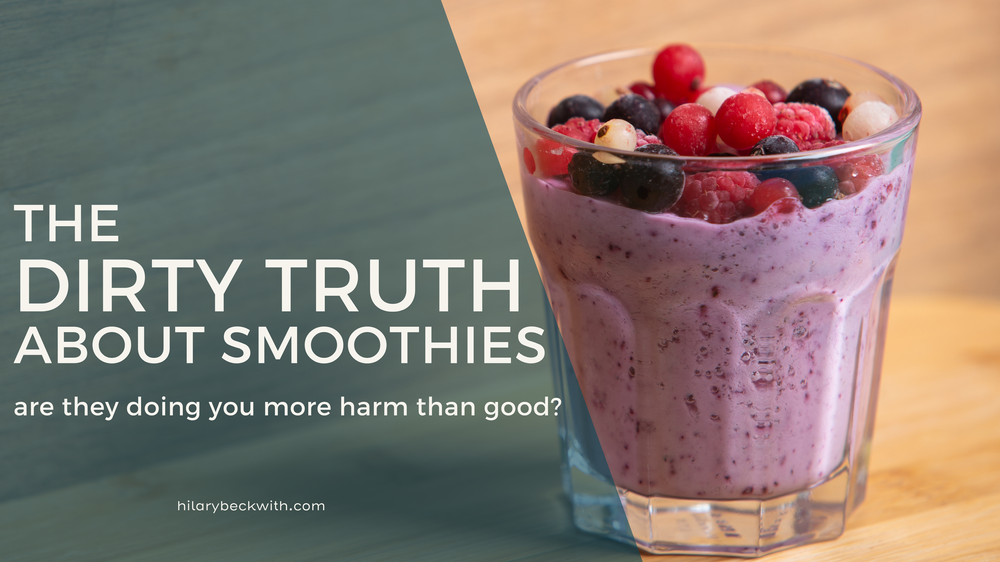
Are smoothies healthy?
Summer tiiime, and the livin's easy…
The sun is finally out to play for a while, and it’s also a time for fresh berries, delicious greens, and the need for a cool treat.
When we think healthy food, our brains often go to foods like salads or smoothies.
Loaded with fruits and veg, these foods are the epitome of modern “health foods”.
But it's tricky to fit salads into our busy schedules, so we go for smoothies instead. We opt for smoothies because they are:
Quick.
Nutritious.
Healthy.
A Sweet Treat.
And Easy to Grab and Go.
While all those things may be true of smoothies, if you've been following me for any amount of time, you know that the idea of salads & smoothies as a way to eat healthy is pure misinformation.
HOWEVER, I am fully aware that it is really easy to get sucked into anything we hear or read that will make us healthier!
I mean, we've been conditioned to believe that "nothing tastes as good as skinny feels," right?
Well, my friend - I am here to rock your world.
I am not suggesting smoothies in and of themselves are unhealthy for you.
Not at all.
But it’s important to look at all the information.
I became a holistic nutrition expert because I want to offer factual information that will help you change the way you view health and advocate for your body. And to do that, you need to have a better understanding of how your body works.
I love to debunk misinformation I hear and offer facts to help you make more educated choices.
So, I'm about to say something you may not have heard before...
SMOOTHIES MAY BE DOING MORE HARM TO YOUR HEALTH, THAN GOOD.
Yup!
It's true, there are health benefits to smoothies, mostly in the realm of concentrated nutrients.
But what if I told you your body can't absorb and use those nutrients very effectively? Would it actually be more nutritional to eat a cheeseburger?
Let's talk about it.
the dirty truth about smoothies
What are the primary reasons you drink smoothies?
high concentration of antioxidants & nutrients
sweet treat
filling without too many calories
convenient
fast
easy to carry
We drink smoothies because we are busy, and we want to eat healthy, and we want a choice that will be easy to consume while we juggle our busy life.
Are we on the same page so far?
Cool.
Now, let's review a little Digestion 101.
In order to digest food, our body must be using its parasympathetic nervous system (rest and digest), meaning, you must be relaxed & not multitasking while eating. Our brains recognize rushing around (even if you’re not feeling "stressed") as a stressor, and respond with the sympathetic nervous system (known as fight or flight), which actually inhibits digestion.
Proper chewing begins the digestive process by releasing enzymes in your saliva to begin the breakdown of food. The type of food you eat will tell your brain which enzymes are needed.
If switched into rest and digest state, once food enters the stomach, hydrochloric acid (AKA stomach acid, or HCl) is released to disinfect the food, and triggers other enzymes to be released or activated.
The now acidic food is neutralized as it begins to enter into your small intestines, which is where nutrients are transported through the wall of the intestines, and into your bloodstream, where they are carried to the liver to be delegated. If digestion is not working properly, this is where foods that are not properly broken down will enter the bloodstream, causing damage to the gut lining, and food sensitivities.
The large intestine is where the majority of water and fats are absorbed into the bloodstream. The fiber that remains (fiber is undigestible by human enzymes but is needed to feed our "good" bacteria) will feed our microbiome, and anything left will be excreted as waste.
why smoothies should not be considered a health food
So, now that you can see the big picture, let's break it down some more.
We know that eating while on-the-go (sympathetic nervous system), inhibits our digestive processes altogether.
…and…
Not properly chewing inhibits your body’s ability to produce adequate enzymes & HCl.
…therefore…
Drinking smoothies while on-the-go (as we typically do) ensures we are not getting the nutrients we intend, and is actually causing damage to our gut health.
So, it's fair to ask the question, are you really improving your health by drinking smoothies?
I'm not saying smoothies are bad for you... Smoothies are not the villain.
But the dirty truth is, if you are not sipping that smoothie while seated at a table with friends or family, or on a park bench, and not scrolling through your phone, AND if you're not "chewing" your smoothie - your smoothies are doing far more harm than good.
So... How do we get past this? Do I have to STOP drinking smoothies in order to eat healthy?
NOT AT ALL.
Smoothies, when properly made and consumed, are a phenomenal source of fiber, antioxidants, minerals, & other nutrients.
how to ensure your smoothies are doing more good than harm:
think small - if you wouldn't eat a bundle of spinach and a pint of blueberries in one sitting, don't put that in your smoothie.
change it up - our body needs a variety of nutrients, many of which are called "cofactors," meaning, it is needed in order to make a system or other nutrient function properly. Change up what you put in your smoothie - choose seasonal foods, and try to rotate them throughout the week.
make it green! - it is easy with smoothies to fill it up with more sugary fruits, like berries and bananas. Opt for more greens than fruits in your smoothies, and don't be shy with the fats and proteins (nuts, seeds, and whole milk plain yogurt are great for this!). The abundance of fiber, fat, and protein will help your blood sugar to stay steady (that "hangry" feeling you get a couple of hours after a smoothie, will DISAPPEAR).
BONUS TIP FOR MAXIMIZING NUTRITION: Change it up! Tempted to always grab that bag of kale or spinach for your smoothies? A variety of foods will improve the variety of nutrients you get from your smoothies, and will prevent food sensitivities from developing.
sit down to drink it (driving does not count!) - as with any meal, it is crucial to switch our body into "rest & digest" mode. Before you take your first sip, sit down at a table, on a park bench, or on your stoop, turn off your computer/phone/TV, and take 5 long, deep breaths.
"chew" your smoothie - Take smaller sips, and allow the smoothie to stay in your mouth for a few seconds. You will notice the volume will increase in your mouth - this is your salivary digestive enzymes being released! Give them space to do their job!
**For those who don't like the feeling of leaving smoothie in their mouth for so long, I recommend adding some seeds or cacao nibs in the last few seconds of blending of the smoothie, chopping them up just enough to get through the straw. This will give you something to chew on with every sip.
my favorite smoothie recipe
Here is one of my favorite go-to smoothie recipes:
1/4 granny smith apple (core and peel intact)
fingertip-sized cut of ginger, peeled
squeeze of lemon juice
handful of dark greens (dandelion, kale, arugula)
handful of wild blueberries
just enough liquid to help it blend (I like to use cow's milk or cashew milk)
raw pumpkin seeds - blend thoroughly to add creaminess to your smoothie, then add a few more in the last few seconds to give you something to chew on)
When I want to add more "umph" I toss in a dollop of whole milk plain yogurt, a hefty spoon of nut butter, or a scoop of quality collagen peptides.
Smoothie blending tips and tricks
Add your chunky bits and liquids first, then greens on top. These bits are easier for most blenders to "grab," then the momentum will allow the greens to blend in nicely.
Start on a lower speed to chop first. Once you have the texture of a nice pico de gallo, increase to a higher speed to smooth it out. This prevents the dreaded **blade is spinning, but food is not catching** scenario (there's gotta be a name for that, right?)
What are the foods you LOVE to put in your smoothies?
Share your smoothie loves in the comments!

NUTRITION SERVICES
MORE RESOURCES


Everything You Need to Know About How to Fast
Fasting has been used for centuries, as a powerful healing tool to cure disease, kill cancer cells, lower cholesterol, reverse diabetes, improve insulin sensitivity... the list goes on!
I love fasting. I think our society would benefit greatly from making fasting a regular part of our lives. And because of my own success with it, I REALLY get lit up when talking about it!
I've been practicing intermittent fasting for a few years now, and have seen tremendous health benefits from it. By practicing intermittent fasting, I've eliminated my hypoglycemia, nearly obliterated my PCOS symptoms, and lost weight.
Intermittent Fasting for Weight Loss
Fasting has been used for centuries, as a powerful healing tool to cure disease, kill cancer cells, lower cholesterol, reverse diabetes, improve insulin sensitivity... the list goes on!
I love fasting. I think our society would benefit greatly from making fasting a regular part of our lives. And because of my own success with it, I REALLY get lit up when talking about it!
I've been practicing intermittent fasting for a few years now, and have seen tremendous health benefits from it. By practicing intermittent fasting, I've eliminated my hypoglycemia, nearly obliterated my PCOS symptoms, and lost weight.
And because fasting has been an important part of my personal healing, the topic has come up quite a bit in my conversations, both personal, and professional.
As it turns out, what I am gathering from these conversations, is there is a lot of confusion as to what "intermittent fasting" is, how it's intended to be used, and what its benefits are. In fact, most people I hear this from aren't really aware that they are confused. They've been misinformed.
And so... I am here to help clear the air.
EDIT: You can read my newer writings about fasting here.
the dirty truth about diets
I'm clearly an advocate for fasting. I have seen immense benefits from fasting, in my own health as well as in others'.
However, it is important to recognize, when beginning ANY new dietary regimen, to first consider your body's unique health needs.
Put differently, eating [vegan/gluten-free/low-fat/keto/paleo/vegetarian] is NEVER what determines whether or not you are "healthy."
What DOES determine whether or not you are "healthy" is assessing your body's unique health needs, and addressing them specifically. One diet is never "healthier" than the other without consideration to bio-individuality.
That said, I would never recommend fasting to anyone who has not been properly assessed, to determine whether it's a safe and viable option for their body.
Let's look at some of the more common confusions about fasting.
WHAT FASTING IS NOT
Fasting is not:
calorie restriction
forgetting to eat
an excuse to eat whatever you want on non-fasting days
a way to atone for dietary sins
WHAT FASTING IS
Fasting is:
intentional
evolutionarily a normal way of life
an effective & safe method of increasing sensitivity to insulin
facilitates the clearing and recycling of damaged cells
easier to stick with than calorie-restrictive diets
WHO IS FASTING FOR?
people prone to insulin resistance (Type-II diabetes, PCOS, hypoglycemia)
people who find it difficult to lose weight
people wanting to optimize cellular health
people prone to cancer
people wanting to maximize lean muscle building
people who are well nourished, and have above-normal BMI
WHO IS FASTING NOT FOR?
those who are pregnant
female-bodied people, during their menstrual cycle
children
people who are underweight, malnourished, or below-normal BMI
people with an eating disorder
fasting terminology
The term that's probably most familiar to you, is Intermittent Fasting (IF).
Since IF resurfaced as a trendy new weight loss diet a few years ago, we were mistakingly referring to Time Restricted Feeding (TRF) as IF.
As commonly happens when a trend gets marketed by misinformed influencers, we have simply just adopted the two as interchangeable (which is fine, everything is fine...).
I'm going to explain the differences between those terms, as well as a few others, to help you understand better when we begin discussing how to fast, and the benefits of different types of fasting.
Time Restricted Feeding (TRF) = Eating all your calories within a small window of time each day. Commonly described as "16/8," or "12/12," meaning, you consume all your calories (as many as you like) within only an 8 hour window, consequently "fasting" the other 16.
Intermittent Fasting (IF) = Sometimes referred to as Alternate-Day Fasting. IF is a no-calorie fast for anywhere from 24-72 hours, and is followed up with a strategic re-feeding regimen. The important piece here is the re-feeding (more on this later).
Think of it like this: the word "intermittent" means to do something at irregular intervals. IF is typically done 1, 2, or 3 days out of the week, each followed by a re-feeding. Whereas a 16/8 TRF is typically regularly done every day (it's consistent, steady).
Extended Fasting (EF) = Fasting that lasts longer than 72 hours is typically referred to as Extended Fasting." Don't panic! There is plenty of research to show that extended fasting does not starve our bodies, does not break down muscle, and has huge benefits, but it is not for everyone. We will get more into this later.
intermittent fasting benefits
When fasting comes up in conversation, I most commonly talk with people who are doing it for weight loss.
I mean, it's extreme calorie restriction, right? Why wouldn't you lose weight?
This, my friends, is the response of a misinformed culture.
In reality, if you are properly re-feeding after a fast, you are not restricting calories. The full benefits of fasting go far deeper than just weight loss.
Fasting benefits:
IMPROVES CELLULAR HEALTH - Cells take on severe damage from our western diet of processed foods. The amount of sugars and starches we eat cause immense free radical activity, damaging the structure of our cells, leading to chronic inflammation and tissue damage. Toxins from air, water, & pesticides cause mitochondrial dysfunction, and can interfere with nutrients getting in and out of cells.
The health of our cells is essential to ensuring the nutrients we take in are able to be used. Healthy cells are necessary for energy production, nerve function, and immune function.
Our bodies have a system for repairing damaged cells (called autophagy), and destroying harmful cells (called apoptosis). These processes happen in times of fasting. When we are constantly snacking, grazing, and especially on highly processed foods, we do not give our body the chance to heal.
Proper fasting will improve your body's ability to heal damaged cells and eliminate harmful cells (cancer).
INCREASES FAT BURNING - Going back to my Sugar Balance post, you might recall that sugar, in the form of glucose, is needed to produce energy. When insulin has shuttled all the glucose it can into your cells for energy production, your body stores excess glucose in the form of glycogen. When glycogen stores are full, the rest gets converted to triglycerides and are stored as fat tissue.
Our bodies can store about 24 hours’ worth of glycogen in the liver, but there is no limit on how much fat that can be stored. In times of low glucose (such as in fasting), our body will use the glycogen to produce the energy it needs. Once those stores are used up, our bodies will convert triglycerides into glucose (or ketones) to be used for energy (known as fat-burning).
Proper fasting, especially for longer than 24 hours, will increase fat burning in your body. When done intermittently, and with proper re-feedings, your body can be "taught" to burn fat more efficiently.
IMPROVES INSULIN SENSITIVITY - As we know, when glucose enters the bloodstream, our body responds by releasing insulin from the pancreas. Insulin's role is to shuttle the glucose into cells. Think of your cells as having a locked door, and insulin is the key to the lock (insulin receptor).
Eating processed foods, starches, grains, sugars, etc., causes glucose levels to spike, causing insulin to be released more rapidly. When we eat like this frequently, insulin is, you guessed it, also released more frequently.
Over time, our cells begin to react to the abundance of insulin by saying, "we've had enough!" and reduce the number of insulin receptors available. This is the start of "insulin resistance."
Fasting reduces the amount of glucose in the blood, thereby reducing insulin response, thereby increasing insulin sensitivity. With proper eating and stress management, symptoms of hypoglycemia ("hangry") disappear.
**It's important to mention here, that most foods, not just sugars, will cause insulin response.
IMPROVES MICROBIOME - If you have ever been told you have leaky gut, Irritable Bowel Syndrome, or digestive issues like bloating, belching, farting, or general abdominal discomfort, it is possible you have a bacterial imbalance in your gut.
Simply put, your body is supposed to have certain types of bacteria, and those bacteria should only be living in your large intestine. When bacteria begins to live and grow in your small intestine, that's when we begin to see issues like the ones I mentioned above.
Our bodies have a mechanism for preventing this from happening, and guess what--it occurs during the absence of food...
It is called the Migrating Motor Complex (MMC), and it is what causes the "growling" when you're hungry. A hormone called motilin triggers a series of events, such as the release of bile and pancreatic enzymes, and smooth muscle contractions, which "sweep" out the small intestine of any bacteria.
When we constantly graze, and especially foods containing starches, sugars, or grains, we not only don't allow the MMC to do its job, but we are also feeding the harmful bacteria that shouldn't be there, allowing them to thrive and cause further imbalance.
Fasting gives way to the MMC, helping to reduce and eliminate unwanted bacteria, improving your digestive health.
INCREASES LEAN MUSCLE MASS - Research has shown that in the absence of insulin, our body has significantly elevated Growth Hormone levels. You've probably heard of GH used by body builders and athletes.
Fasting helps you increase these levels naturally, without the use of potentially harmful supplements. With a strategic fasting + re-feeding plan, fasting will help you build lean muscle, more effectively.
guide to intermittent fasting
Fasting is simple. Fasting is not eating or consuming calories. Its simplicity is, in part, why I think it's much easier to comply with than calorie-restrictive diets, or specific food-restrictive diets.
It's what makes fasting a sustainable & effective approach to health.
Which type of fasting you choose, Time Restricted Feeding, Intermittent, or Extended, depends on what you want out of it, and what your body can safely tolerate.
Time Restricted Feeding: This is essentially a calorie-restrictive diet, with a few added perks.
does: improve insulin sensitivity & MMC function
does not: facilitate autophagy, apoptosis, or fat-burning
Intermittent Fasting:
does: improve insulin sensitivity, MMC, autophagy, fat-burning, & lean muscle
does not (depends): facilitate apoptosis. Apoptosis generally occurs after 48 hours of fasting, so depending on the duration of IF, you may or may not get this benefit.
Extended Fasting:
does: improve insulin sensitivity, MMC, autophagy, fat-burning, lean muscle, & facilitate apoptosis
All of the benefits apply here. Which makes it easy to say, "why don't we all do that?!"
But EF is not for everyone. In fact, all of these fasting techniques should be approached with caution, and gradually progressive, even TRF. If you are new to fasting, always approach fasting in small increments, gradually working your way up.
This is a perfect transition into fasting DOs and DON'Ts.
Fasting DOs
DO... Always consult a qualified health care practitioner prior to changing your eating or supplement regimen.
DO... Always listen to your body. You are not a robot. Waves of hunger are normal during a fast, but feeling any signs of unwell (e.g. lightheaded, queasy, feverish, pain, etc.), are signs you should STOP fasting immediately.
DO... Be intentional about hydration. A lot of our daily hydration comes from certain foods we eat, especially fruits & vegetables. Be intentional about drinking at least half of your body weight, in fluid ounces, of water. Adding Himalayan Sea Salt to your water (just a pinch) will provide necessary electrolytes to hydrate you more effectively. Avoid dehydrating factors, like excess caffeine. It is okay to drink small amounts black coffee, green tea, and herbal tea.
DO... Properly re-feed your body. As we discussed earlier, fasting is not an excuse to eat whatever you want during non-fasting times. In regard to cellular health, especially, fasting is what allows our body to clean up damaged parts of cells, but re-feeding is when the cells are repaired. Be intentional about eating habits that include lots of vegetables, quality whole-food proteins and fats, and only consuming grains in their whole, unprocessed forms. On re-feeding days, consume a bit more food than you typically would. I'm not suggesting you put a buffet out of business, but as an example, if you typically have 2 eggs and half an avocado for breakfast, consider having 3 eggs, and a whole avocado on a re-feeding day.
DO... Prioritize sleep. Sleep is when our body hits healing mechanisms HARD, whether fasting or not. Turning off screens 2 hours prior to bedtime, avoiding sugary foods close to bed time, not drinking caffeine past 10am (yes, that early) - set guidelines in place that ensure you will get quality sleep, especially when fasting.
DO… Follow a normal circadian cycle. Both when fasting and not fasting, plan your activities (including eating) during daylight hours, resting during dark hours. This is the natural rhythm of our bodies and will hugely benefit your body’s ability to digest food and assimilate nutrients, in order to ensure proper cellular healing.
DO... Continue normal routines. This may be challenging as a beginner, but you will find over time, that you have plenty of energy and mental clarity (if not improved) to do your normal workouts, projects, and tasks. Fasting does not mean you need to stop all of these things, although I do advise beginner fasters to stick with light cardio and/or weights, and to work out with a trusted friend until they feel more comfortable.
DO... Stay busy. Staying busy is the easiest way to keep your focus off of food.
DO... Plan your fasts according to your schedule. The loveliest thing about fasting is that YOU make the calls. With food-restrictive, or calorie-restrictive diets, you have to be ON all the time. But fasting allows flexibility, while still giving room for success! Set yourself up for success by switching it up if needed, and give yourself room for grace if you end up backing out of a fast.
Fasting DON'Ts
DON'T... Consume calories. There are a lot of variations of "fasting" out there, and lots of misinformed media posts. When a resource tells you it's okay to consume 500-600 calories during a fast - that is not fasting, friends. That is calorie restricting, and it will not provide the same benefits as fasting.
As Dr. Jason Fung points out in his book The Complete Guide to Fasting, all foods produce an insulin response. When insulin is present in the blood, fat stores cannot be released. When calories are decreased, but insulin levels remain, our body preserves energy by slowing metabolism. But when insulin is absent (as it is with fasting), the body releases fat stores for energy use, rather than slowing metabolism.
If you've worked with me before, you know my whole career is based on eliminating the rigidity of diets and eating to suit your body's specific needs. If calories must be added to your fasting routine, opt for quality, whole-food fats (coconut oil, MCT, grass-fed butter). These cause the lowest insulin response.
DON'T... take any tissue-building supplements (folic acid, protein powders, collagen, etc.). Instead, save them for your re-feeding phase to enhance the cellular "clean-up" that fasting facilitates.
your turn!
You now have some tools in your belt, the air is cleared, and the world is your oyster (someone please tell me what that means!).
Ask yourself what you want out of fasting, then decide which technique is best for your body’s needs.
Have questions about intermittent fasting? Ask them in the comments below.
NUTRITION SERVICES
MORE RESOURCES
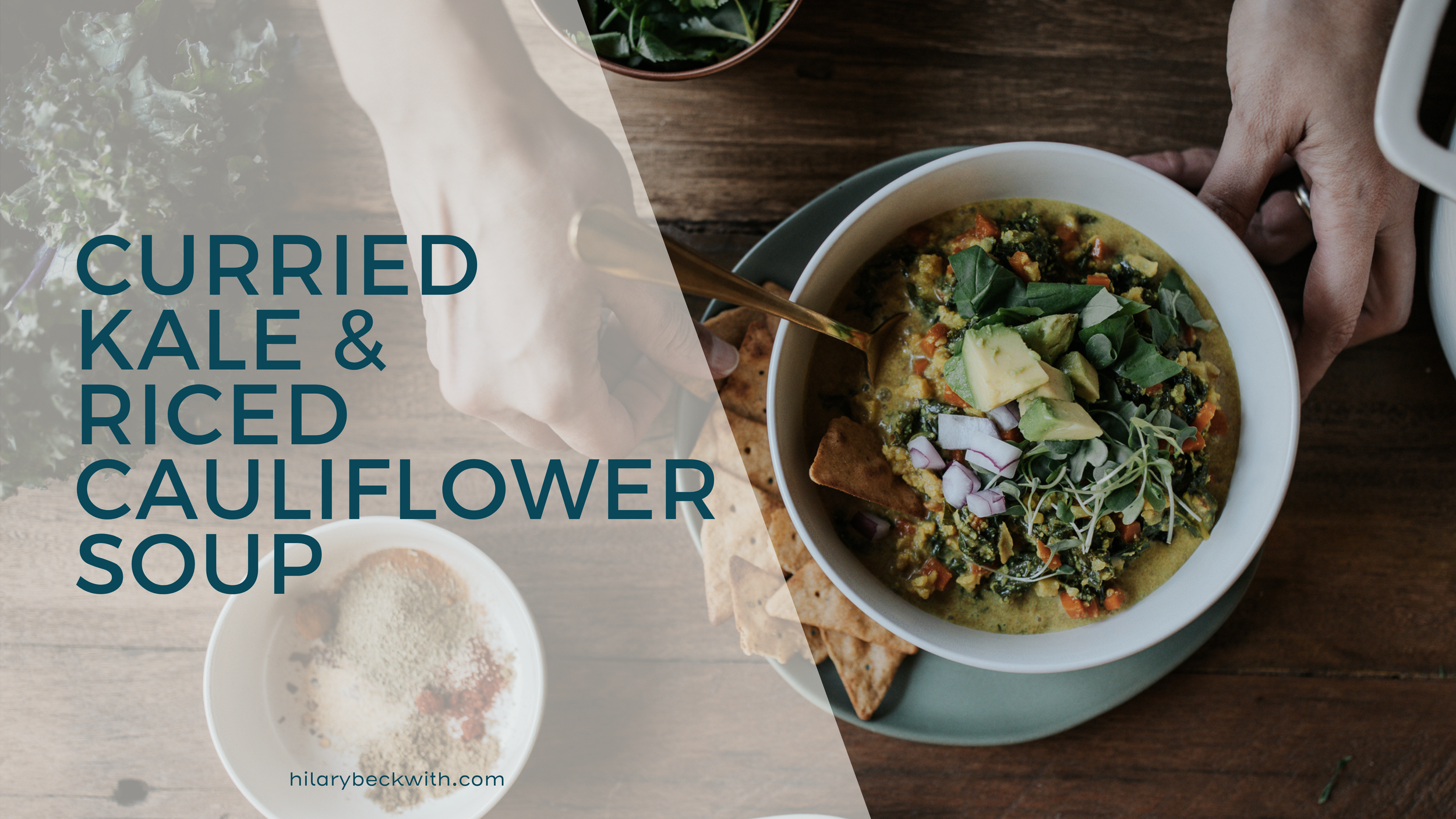
Easy Weeknight Recipe: Healthy Curry, Kale, and cauliflower Soup
This soup is my favorite.
It is soul-warming, nutrient-dense, SO easy, & freezer-friendly.
It is a staple in our home, for exactly those reasons. It can also be easily altered to whole-food-plant-based, if needed.
Make it your own! I love to top it with plain, full fat, grass-fed yogurt, micro greens, avocado, or my personal favorite: GOAT CHEESE (yum!). It would also be delicious with a variety of other vegetables, like parsnips, peas, or some pearl onions.

Easy Healthy Recipe for Weeknight Dinner
THIS SOUP…
This soup is my favorite.
It is soul-warming, nutrient-dense, SO easy, & freezer-friendly.
It is a staple in our home, for exactly those reasons. It can also be easily altered to whole-food-plant-based, if needed.
Make it your own! I love to top it with plain, full fat, grass-fed yogurt, micro greens, avocado, or my personal favorite: GOAT CHEESE (yum!). It would also be delicious with a variety of other vegetables, like parsnips, peas, or some pearl onions.
Curried Kale & Riced Cauliflower Soup
What You Need:
4 CUPS RICED, UNCOOKED CAULIFLOWER*
3 TBSP YELLOW CURRY SEASONING
1 TSP GARLIC POWDER
½ TSP CUMIN
½ TSP PAPRIKA
HIMALAYAN SEA SALT & FRESH GROUND BLACK PEPPER TO TASTE
2-3 TBSP COLD PRESSED AVOCADO OR EXTRA VIRGIN COCONUT OIL
1 SMALL RED ONION, CHOPPED
1 TSP MINCED GARLIC
8 CURLY OR TUSCAN KALE LEAVES, STEMS REMOVED, & LEAVES CHOPPED
2 CUPS CHOPPED CARROTS
4 CUPS BROTH (I LIKE TO USE CHICKEN BONE BROTH)
1-14OZ CAN OF FULL FAT COCONUT MILK (avoid using coconut “beverage”)
½ TSP RED PEPPER FLAKES
* If you can’t find riced cauliflower, or prefer to make your own, it’s very easy. This recipe takes about 1 large head of cauliflower (organic). Remove the leaves, and trim the dry part of the stem, cut into large chunks. Using a large food processor with the shredder attachment, process all of the cauliflower, including stems.
INSTRUCTIONS
Heat a large pot or enameled Dutch oven over medium heat. Once heated, add 2 TBSP of avocado or coconut oil.
Add the riced cauliflower, curry seasoning, garlic powder, cumin, paprika, salt, and black pepper. Sauté until cauliflower just begins to soften.
Add the remaining oil if additional cooking fat is needed, then add the onion and minced garlic, sauté until onion begins to soften.
Increase heat to high, and add the kale, carrots, broth, coconut milk, and chili flakes. Bring to a boil.
Once boiling, reduce heat to medium-low, and let simmer for 20 minutes.
Enjoy with your favorite toppings! Or allow to cool, then freeze in single serving portions for enjoying later.


make this recipe?
Leave a comment to tell me how it went!
NUTRITION SERVICES
MORE RESOURCES

Leaky Gut: Your Chewing Technique May Be the Problem (and how to fix it)
Leaky gut is probably more common than you'd imagine. So if you have been told you have it, you are certainly not alone in that boat.
What is (arguably) most important to understand about leaky gut, is that it is often the beginning of many cyclical conditions, such as Small Intestinal Bacterial Overgrowth (SIBO), food allergies or sensitivities, seasonal allergies, dermatitis, adult acne, eczema, & candida (yeast) overgrowth. If unaddressed, many of these factors can often lead to autoimmune disease.

What causes Leaky Gut Syndrome?
Leaky Gut.
You have heard that term before, (you may have even been told you have it) but what does leaky gut syndrome even mean?!
When I first heard the term, I thought, 'is goo going to start oozing out my belly button?'
News flash: The answer is no.
Leaky gut is probably more common than you'd imagine. So if you have been told you have it, you are certainly not alone in that boat.
What is (arguably) most important to understand about leaky gut syndrome, is that it is often the beginning of many cyclical conditions, such as Small Intestinal Bacterial Overgrowth (SIBO), food allergies or sensitivities, seasonal allergies, dermatitis, adult acne, eczema, & candida (yeast) overgrowth. If unaddressed, many of these factors can often lead to autoimmune disease.
Keeping that in mind, if you've ever been told you have any of those conditions, leaky gut is likely to be at the root of it.
You can hack at the symptoms or condition all you want, but without addressing the root, you will end up back where you started.
What a waste!
leaky gut symptoms
To determine whether you might have leaky gut syndrome, look for symptoms, like:
bloating within 1-2 hours after eating
excess farting or belching
chronic heartburn
seasonal allergies
food sensitivities (these can manifest more subtly, like congestion, phlegmy cough, aches/stiffness, eczema, & chronic inflammation)
chronic constipation or diarrhea (or both!)
malnutrition (this is difficult to gauge without proper assessment)
excess hunger
The good news is, treating leaky gut syndrome is not difficult. It can often be resolved with some simple lifestyle changes and temporary supplementation. But before we get in to that, let's talk about what this all has to do with your CHEWING?
digestion 101
To grasp the relationship between your chewing habits and leaky gut symptoms, you've got to have a basic understanding of digestion.
DIGESTION 101:
Brain: Touching food, smelling it, seeing it - these senses all tell the brain to prepare the body for digestion. So long as you are in a relaxed state, our brain will increase blood flow to digestive organs, and increase the production and release of digestive enzymes and hydrochloric acid (ie. stomach acid, or HCl).
Mouth: The first two enzymes needed for digestion are released in the mouth - salivary amylase (breaks down carbohydrates) and salivary lipase (breaks down fats). The components of your food also tell your body what other digestive juices will be needed. Think of your mouth as a second brain. While you chew, your body is working to produce enough enzymes and HCl to properly break down the types of food you consumed.
Stomach: More mechanical digestion occurs here, in addition to the release of HCl (stimulates pepsin to break down proteins, and disinfects food), this is also where more digestive enzymes are released and further the breakdown process.
Small Intestine: As food enters the SI, bile (emulsifies fats & carries toxins out of the body) and bicarbonate (neutralizes the now acidic food) are released. The SI is where a majority of nutrients are absorbed into the body. Cells that line finger-like protrusions called microvilli transport the nutrients through the SI wall and to the liver where they are filtered. A layer of mucous protects the microvilli from any acidity still left in the food, and provides protective immune response to any pathogens left over. The smooth muscles in the SI also contribute to mechanical digestion.
Large Intestine: Fats and some water are absorbed through the LI. This is also where your "microbiome" lives - bacteria that feed on indigestable foods and produce certain other nutrients, like vitamins A, K, & butyrate. Again, more mechanical digestion occurs here, too.
Colon: what is left after this process moves into the colon and eliminated.
Ok, now that we know how digestion is SUPPOSED to work , it will be easier for you to understand what leaky gut syndrome is. (if you're looking for a more in-depth explanation, download this free guide)
We’re getting closer - stay with me!
what is leaky gut syndrome?
LEAKY GUT
When healthfully intact, the mucous lining and microvilli in the small intestine act as a sort of filter for food particles that are too large to pass through. When the cells and tissue are healthy, they form what are called "tight junctions."
When the cells are unhealthy and the tissue is damaged, these junctions loosen up, creating larger openings. Larger, undigested food particles slip through these larger openings and into your bloodstream. This "leakage" causes a whole slew of problems, in the form of the symptoms I listed earlier in the post.
So, what the heck does that have to do with chewing??
I'm so glad you asked. Let me tell you!
WHEN WE DON’T CHEW PROPERLY:
Our body does not produce enough HCl. Remember, this is what is needed to disinfect foods, and stimulate protein breakdown.
The valve through which food passes from the stomach into the SI, requires that food be a certain acidity before it can enter the SI. If this acidity is not reached, the food just sits there, building pressure and causing tissue damage with what acidity there is (also a common cause of heartburn but that's for another post!)
As the pressure builds, the valve is opened by force. The acidity is not strong enough to stimulate bicarbonate release to neutralize what acid is present, so the acidic food, not disinfected, & not digested in the beginning stages, now passes into the SI.
The existing acidity causes damage to the mucous lining and microvilli.
The undigested foods and potential pathogens enter the bloodstream where our immune system reacts, causing systemic inflammation, and creating antibodies against the now "foreign" food particles (food sensitivities).
Bacteria and pathogens not properly disinfected by HCl will also enter the SI and the bloodstream (and as we know, bacteria multiply and feed on the nutrients intended for the rest of your body!)
HOW TO TREAT LEAKY GUT SYMPTOMS
Proper assessment is needed to understand the severity and sub-sequential consequences of leaky gut, to treat them effectively.
However, there are a few simple things you can begin doing right now that will still be helpful!
Sit down to eat: Multitasking while eating is a form of stress for our body. It stimulates our "fight or flight" response (yes, even scrolling Facebook can do this). Practice mindful eating by sitting down to eat, turning off all screens, and simply enjoying your meal.
CHEW!: I mean, that was the entire purpose of this post, right? As part of a mindful eating practice, take small bites and chew your food until it becomes liquid. Depending on the food you are eating, this could be 15-35 times. If you have the urge to 'wash down' your food, you have not chewed enough.
Avoid beverages with meals: Washing down your food will actually DILUTE your HCl and can contribute to all that dysfunction we discussed earlier.
Get your family involved: Want your kids to have healthy digestion, too? Think of how many of these poor eating habits we prooobably picked up from childhood. When you start involving them in the shopping, the cooking, the preparing, and then sitting down to a table in conversation together, you are promoting healthy eating habits. (And I bet your relationship will improve, too!). Avoid eating in the car, with TV's on, or phone-scrolling.
Supplementation: It is important to consult your healthcare provider before adding any supplementation to your routine. However, there are certain nutrients that are known to support healthy digestion and gut lining (which can be purchased here):
l-glutamine - supports healthy mucosal linings of the digestive tract
zinc - needed for HCl production
digestive enzymes/bitters - bitter foods support the release of enzymes and HCl.
vitamin B6 - supports HCl production and is needed for the healing of the mucosal lining.
vitamin A - supports healing of tissue lining
probiotics (strain types matter!) - supports proper elimination of waste, and eradication of excess "bad" bacteria
learn something new?
How has leaky gut syndrome affected your life? What has been helping you get through it? Share your thoughts in the comments below.
NUTRITION SERVICES
MORE RESOURCES
Health Effects of Stress, and the Best Way to Relieve Stress
Some of us live deep in the throes of stress (and maybe even thrive on it).
Others, like myself, prefer to avoid it at any cost.
When talking about stress and stress relief, your mind prooobably goes to things like:
relationship tension
traffic
work deadlines
kids’ schedules
family drama
what’s for dinner?!
How to Manage Stress Levels
S-T-R-E-S-S
The motherloving bane of our existence.
Some of us live deep in the throes of stress (and maybe even thrive on it).
Others, like myself, prefer to avoid it at any cost.
When talking about stress and stress relief, your mind prooobably goes to things like:
relationship tension
traffic
work deadlines
kids’ schedules
family drama
what’s for dinner?!
And yes, those are all legit forms of stress (I do not have to tell you that!).
But what do our brain also views as stress?:
low blood sugar
gut microbiome imbalances (bacteria imbalances in your digestive tract)
food sensitivities
hormone imbalances
exposure to toxins
eating while multitasking (yep!)
harmful health effects of stress
Impairs memory and cognition (decision-making, learning, attention, judgment)
Reduces the activity of immune cells
increases heart rate, and constricts blood vessels, leading to increased blood pressure
Stimulates digestive complications, such as:
the slowing of the contents of the stomach into the intestines (gastric emptying - feels like excess fullness), can lead to ulcers
increasing the movement of the large intestine (diarrhea, sudden urge to poo)
inhibiting the release of protective mucous in the GI tract, and increases permeability of the cells, leading to food sensitivities & leaky gut
Causes major imbalances in many endocrine (hormonal) functions in the body, including adrenal glands, thyroid, pancreas, kidneys, pituitary, and so forth
so, what?
I am not the first person to tell you that lifestyle changes, like eating a more healthful range of foods, reducing the number of commitments you say ‘yes’ to, or taking more time to breathe and meditate, are probably the most effective way to supporting your stress levels. (In fact, I wrote a whole guide to help you balance your blood sugar!)
But you have heard that all before. Those changes, while highly effective, can be difficult to implement well without understanding your bio-individual needs, too. Getting proper assessment can go a long way to reducing internal stressors, like food sensitivities and leaky gut.
For those of you who feel like it might be too big a change to REMOVE stressors, I want to take you through some less conventional methods of stress relief.
7 ways to reduce stress
Stop being nice. While it’s true that kindness can actually lead to a healthier sense of well-being, when it is not in your personality to be bubbly and kind, it can be detrimental to your well-being. “Being nice because you’re afraid of not being nice” is how I like to put it. If it’s not who you are, it’s only going to impair your ability to express your self in full authenticity and honesty. Stop doing it. (here is one more reference in case you need more insight)
Give yourself 5 minutes of silence. No screen, no humans, no pets, no responsibilities - give yourself 5 minutes to sit by yourself. Do this once a day, or even better, do this 5 times a day.
Scream. During my research for this post, I could not find much in the way of scientific evidence for the benefits of screaming. There is a famous theory posed by Dr. Arthur Janov called Primal Therapy, that involved “primal screaming” as a way of releasing emotion.
I, and I’m sure many of you, can speak from experience, that a resounding “SHIT!” when stubbing your toe, somehow feels cathartic. Psychotherapist Gin Love Thompson puts it this way, “The physical vibratory sensations alert the nervous system and subconscious that this discharge is a conscious choice of absolution.”
Similarly, yoga teaches the lion’s breath, which is an audible exhalation. Again, I could not find scientific research, but many of us can attest to how we feel after doing it. I say it’s worth doing!
A word of caution - Screaming or yelling can hurt people around you. If you decide to implement screaming as a form of stress relief, do so in a well insulated room, alone. Another option is to scream into a pillow.
Masturbate. Orgasm stimulates opioid receptors in the brain, and increases levels of oxytocin. It improves sleep and lowers blood pressure, too. Whether self-stimulated, or with a partner, orgasm is the pure gold when it comes to stress relief.
Diaphragmatic Breathing (huh??) (aka: abdominal breathing). A 2017 study showed that salivary cortisol (stress hormone) was significantly reduced in subjects immediately after they practiced abdominal breathing. Plus it’s great for your core muscles, so your chiropractor will be happy.
Instructions for Diaphragmatic Breathing: Your diaphragm is a core muscle that is used to push air and carbon dioxide out of your lungs. While seated, place your hand gently on your belly. Breathe in deeply through your nose, expanding your belly (you should feel/see your hand move out with your belly). If your belly does not expand, you are breathing too high, and not using your diaphragm. It may take some practice. Keep trying.
Exhale through your mouth, flexing your abdominal muscles to “push” the air out.
A great practice for this technique is to breathe in for a count of 4, breathe out for a count of 6.
Schedule a day with no plans. Turn off all work emails and calls and give yourself permission to only do things you love (or do nothing!). Start the day by writing on a piece of paper, whiteboard, or your forehead (whatever it takes!): “Today I give myself permission to do ______.”
Take it from me - I have worked 2 jobs ever since I was 15. When I was in my 20s, my husband and I made a decision to take one day every week to not work. Sound crazy? I thought it was… We had our concerns (like, um, BILLS). But, when we started taking one day off every week, it changed our lives. We found were more productive during other 6 days of the week, felt more rested, and money never became an issue.
Ahem… taking a “day off” to clean your house, DOES NOT COUNT.
Laughing Chain. This is the ultimate… My older sister taught me this when I was a kid, and I will never forget it. grab your friends, your kids, your partner, whoever wants to join in. Lay on the floor or the ground, face up. Have another person lay perpendicular to you, with their head resting on your belly. The next person rests their head on the second person’s belly, and so on. START LAUGHING. Even if it is forced. Give your best belly laugh, and let the magic happen… (I want to hear comments from those of you who try this…)
Need more help remembering? SAVE THIS IMAGE. Make it your phone background, pin it to Pinterest, share it to Instagram - whatever it takes to keep you inspired to take charge of your health.

was this helpful?
Need some extra support in managing stress? I developed a masterclass to teach you everything you need to know about how cortisol impacts hormone balance, sleep, blood sugar, and thyroid.
NUTRITION SERVICES
MORE RESOURCES