

PCOS/PMOS Weight Loss and Cortisol Detox | Functional Health Expert in Seattle
Cortisol is commonly known as a stress hormone. But many people I encounter don’t know that cortisol also impacts everything from sex hormone balance, to metabolism, to sleep, to blood sugar regulation.
If you are female-bodied and you struggle with any type of hormone imbalance, as with PCOS or perimenopause, this article is for you - whether you have trouble sleeping or not. And the first thing you should know about the cortisol-sex hormone relationship is that both are made in the same pathway, but your body prioritizes the production of cortisol over sex hormones.
Do You Need a “Cortisol Detox”?
Cortisol is commonly known as a stress hormone. But many people I encounter don’t know that cortisol also impacts everything from sex hormone balance, to metabolism, to sleep, to blood sugar regulation.
If you are female-bodied and you struggle with any type of hormone imbalance, as with PCOS/PMOS or perimenopause, this article is for you - whether you have trouble sleeping or not. And the first thing you should know about the cortisol-sex hormone relationship is that both are made in the same pathway, but your body prioritizes the production of cortisol over sex hormones.
But does that mean you need a cortisol detox?
Hi darlings. I’m Hilary Beckwith, ex-dieter and functional health expert. Women with PCOS/PMOS or who are in perimenopause come to see me with signs of adrenal stress, insulin resistance, and inflammatory conditions, and my job is to find the root causes so we can address their symptoms more effectively and fill in the gaps between their lab values and how their body actually feels. Before you continue, click here to read my Medical Disclaimer.
In this article, you’ll learn:
the purpose of cortisol
how chronic cortisol output can negatively impact sex hormone balance, blood sugar levels, and sleep
what is a “cortisol detox”?
practical tips for improving cortisol levels
what is cortisol?
It’s true that cortisol is a stress hormone. It is released by the adrenal glands in response to the activation of your sympathetic nervous system (fight or flight) to help prepare your body to fight or flee danger.
How does cortisol prepare your body to fight or flee danger? Cortisol is classified as a glucocorticoid, meaning it triggers the release of stored forms of glucose (molecular form of sugar) in the liver and fat tissues into your bloodstream, which is then shuttled into cells with the help of insulin to create energy.
Put differently, cortisol increases blood sugar levels to give your body energy to fight or flee danger.

chronic cortisol impacts sleep, hormone balance, and blood sugar levels
Before you go searching Dr. TikTok for cortisol detox tips and cortisol reduction supplements, let’s walk through the basics.
Apart from stressful situations, cortisol is only released at one other time - first thing in the morning. Cortisol is what triggers an awakening response and tells your body it’s time to get up and get moving.
And, although the act of waking up is not a stressful situation, cortisol still plays the same role in that moment - it increases blood sugar levels to be metabolized into fuel for your body.
Aside from stress response, cortisol has a natural rhythm throughout the day that plays a major role in your sleep schedule (known as circadian rhythm), hormone balance, and blood sugar levels.
Below is a diagram showing what a diurnal cortisol rhythm looks like in a healthy individual:

You can see a person with optimal cortisol levels has a spike shortly after waking, with the lowest point being at the end of the day when it’s naturally time to sleep.
If you struggle to get out of bed in the mornings or struggle to fall or stay asleep at night, your cortisol is likely being activated for one reason or another. We’ll talk more about that later in the post.
One of the biggest and most controllable factors that impacts cortisol levels throughout the day is diet. I’m not talking about calories - I’m talking about food quality and macronutrient balance.
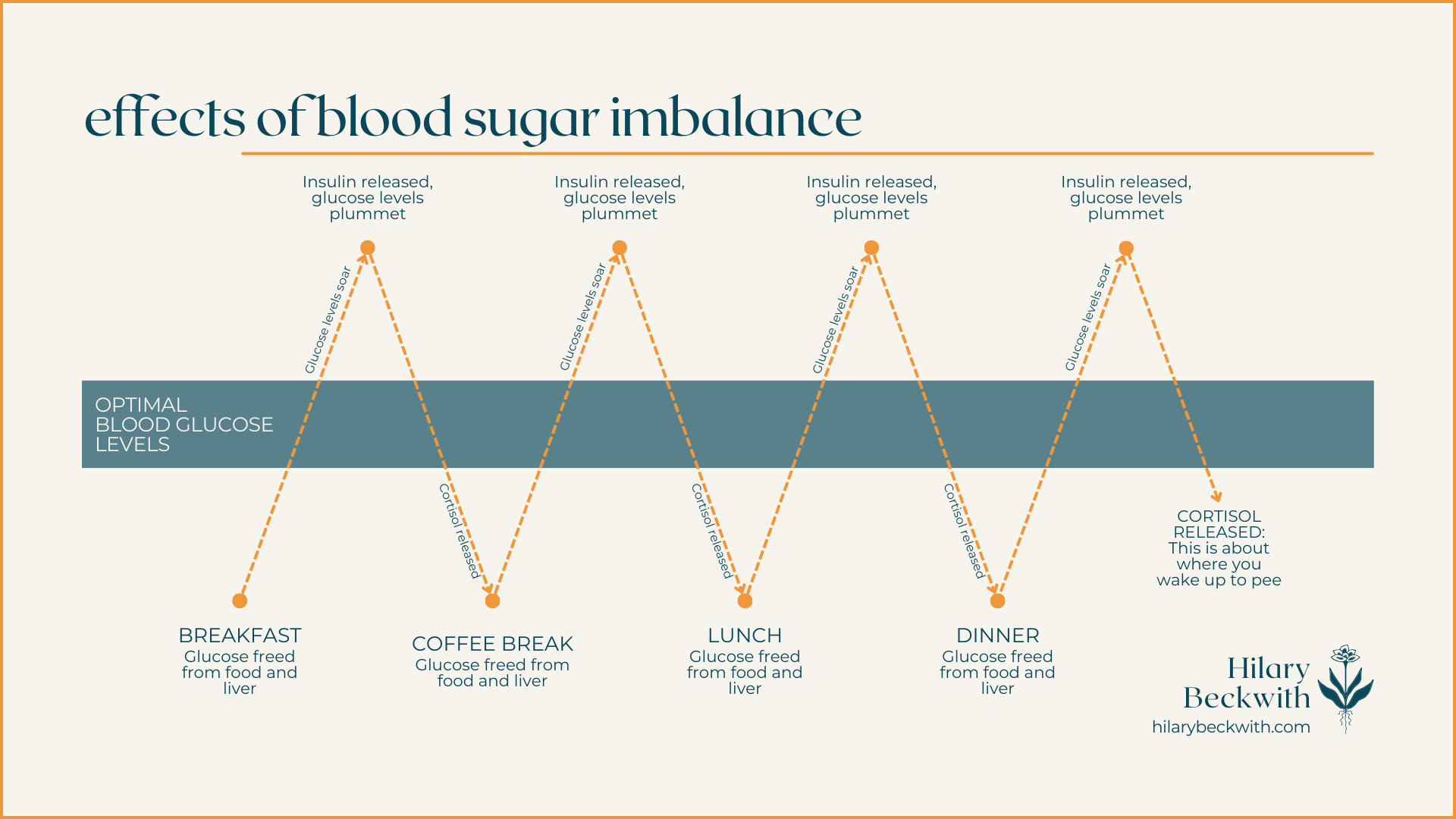
If you are the person who relies on coffee first thing to get you going, and then snack or graze all day long until you finally eat a real meal at dinner time - take a look at the diagram below:
what does this have to do with hormone balance?
Like most hormones, your body doesn’t just make cortisol out of nothing. It has to use resources like nutrients and enzymes. Cortisol is produced through an enzyme pathway from a precursor hormone called pregnenolone (there will not be a quiz).
Pregnenolone, derived from cholesterol, is also used in the same enzyme pathway within the adrenal glands to produce estrogen, progesterone, and testosterone.
You might be wondering - But aren’t sex hormones produced by the ovaries in females?
The answer is yes - but also in the adrenal glands.
As we age, the ovaries produce less and less estrogen and progesterone, but our bodies still require those hormones to maintain tissue growth, bone health, and brain health. When the ovaries stop producing sex hormones, the adrenal glands pick up the slack.
This is why it is essential to women’s health that we educate ourselves on the impact of stress on hormone balance - and why I do the work I do. Does that mean you need to shop for cortisol reduction supplements or find the best cortisol detox tips?
Let’s explore it a bit.
HERE’S WHERE THINGS CAN GO WRONG:
Because they use the same production pathway, pregnenolone can convert into sex hormones OR cortisol - butnot both. And while the fight or flight system is activated, your body will prioritize the production of cortisol over sex hormones.
If your fight or flight system is chronically activated - whether it’s due to blood sugar imbalances, external stressors, emotional stressors, or pathogenic infection - you are going to struggle with insomnia and hormone imbalances like PMOS (formerly known as PCOS).
But there is hope.
what is a cortisol detox?
As a practitioner who specializes in adrenal health and PCOS/PMOS, I can tell you that a cortisol detox is just a trendy term that wellness influencers use to talk about lifestyle shifts and dietary supports for cortisol reduction and stress.
In other words - there is no such thing as a cortisol detox.
I’m about to share with you my secrets to amazing, restful sleep, steady energy that lasts all day, and predictable periods. But why should you listen to me over influencer reels or ChatGPT?
I AM A HEALTHCARE PRACTITIONER, NOT AN INFLUENCER.
First and foremost, I am educated and trained to help clients address hormone imbalances like PCOS/PMOS and perimenopause symptoms, gut health, sleep issues, and insulin resistance by uncovering root causes of dysfunction that are specific to your body’s unique health needs.
What I’m about to share is not meant to be a temporary biohack or some magical fix to make all your stress go away.
I’m about to share meaningful lifestyle shifts you can make that are grounded in science and address your hormone imbalances at the root cause.
You don’t need a cortisol detox or some one-size-fits-all cortisol reduction supplement pack - you need real lifestyle support. And I can help.
5 holistic tips to reduce cortisol levels long-term
As we discussed earlier, cortisol output disrupts sex hormone production and is especially problematic for women and females with PCOS/PMOS symptoms, perimenopause symptoms, and other hormone imbalances.
Chronic cortisol output can also lead to insulin resistance issues, blood sugar imbalances, sugar cravings, and insomnia. In fact, the reason you wake up at 2:00am has nothing to do with your bladder - it’s cortisol.
Practicing these techniques on a consistent basis will improve sleep quality, improve insulin sensitivity and blood sugar levels, and improve hormone balance. For more in-depth and personalized support for your adrenal and hormone health, check out this masterclass.
As with any foundational root-cause work, results will not happen overnight. It takes time to really begin to notice a change in your energy levels, restfulness, and hormone balance. Be patient and kind to yourself, and reach out to me if you have any questions.
5 holistic tips to reduce cortisol
GET 10+ MINUTES OF DAYLIGHT ON YOUR FACE WITHIN 1 HOUR OF WAKING: I’m not suggesting you look directly into the sun (please don’t). When your face and eyes are exposed to light, information about the type of light gets picked up by the retina and is relayed to the suprachiasmatic nuclei (SCN), which then modulates serotonin and melatonin production, respectively, depending on the type of light you are exposed to. This simple action impacts everything downstream throughout your day. Don’t skip it.
EAT MORE SATIATING MEALS: The diagram above (titled, effects of blood sugar imbalance) shows the effects of diet on blood sugar regulation, and as you recall from earlier in the post, cortisol is released in times of low blood sugar. Eating more satiating meals, balanced with good quality protein, fat, and fibrous vegetables, prevents those dips in blood sugar and keeps you feeling steadily energetic all day. Use this guide to help you build more satiating meals.
SCHEDULE WORKOUTS BEFORE LUNCH: Remember the diagram above, titled optimal cortisol levels throughout the day? An important part of supporting healthy cortisol rhythms is to prioritize higher cortisol activities in the morning, and lower cortisol activities in the afternoon/evening. Exercise is known as a good stressor, also called eustress. However, as we’ve learned - stress is stress. Exercise stimulates cortisol output. When you exercise in the evenings, you stimulate cortisol right when cortisol levels should be coming down. Save your calmer activities like meditation, light yoga, or walking, for the afternoon and evening.
PRACTICE NOT SNACKING BETWEEN MEALS: Let’s be clear - if your body is telling you it needs to eat, eat. Always listen to your body. Remember, it will take time to see symptoms dissipate. But if you are habitually a snacker or grazer, you may have insulin resistance issues and thus, chronic cortisol output. Additionally, habitual snacking may be a sign of sugar cravings caused by pathogenic infections like candida or SIBO. Click here to read more about these pathogens. Eating more satiating meals will help you feel fuller for longer periods, reducing the need for snacking.
PRACTICE COMPLETING THE STRESS RESPONSE CYCLE: Do this 2-3 times per day, and especially immediately following a particularly stressful episode, such as a heated conversation with your partner, a stressful commute, or a nearly-missed work deadline. Why should you do this? When your fight-or-flight system is activated, stress hormones like cortisol and adrenaline are released, shifting resources away from digestion and repair and toward survival. Your nervous system can’t tell the difference between a real threat and modern stress, so it reacts to both the same way. Completing the stress response cycle only takes a few minutes and signals to your brain that the danger has passed and it’s safe to stand down. Here’s how to complete the stress response cycle:
Choose a full-body movement that feels safe to do for 3-5 minutes, such as:
jumping jacks
nitric oxide dump
air-punching/kickboxing
brisk walk while doing windmill arms
dance party
Once your movement is finished, take 10 long, deep breaths, in through your nose, and out through your mouth before continuing with your next tasks.
want to learn more about how cortisol impacts sleep, hormone balance, and blood sugar levels?



Natural Insomnia Treatment Without Sleep Gummies
I’ve worked in healthcare for a long time, and a common pattern I have seen over the years is, that not only do the adults I work with generally not sleep enough, but they don’t see it as a problem.
This is alarming, considering sleep is an essential function for detoxification and tissue healing, but also influences hormone balance, weight loss, and blood sugar levels.
Reaching for those sleep gummies is a solid effort in getting much-needed sleep, but it will not solve the underlying issues. We need to take a holistic look at insomnia treatments.

Ditch the sleep calculator and sleep gummies, for good
As a holistic health practitioner, I am here to tell you sleep is non-negotiable when it comes to weight loss, hormone health, and inflammation.
But it’s not always so easy to just go to sleep when you’re supposed to. Sleep health and insomnia treatment requires a multi-pronged approach that involves addressing diet, adrenal health, hormones, and light exposure.
Hi friends. I’m Hilary Beckwith, ex-dieter and holistic nutrition expert. Clients come to see me with signs of adrenal stress and inflammatory conditions, and my job is to find the root causes so we can address their symptoms more effectively, and fill in the gaps between what their doctor is saying, and what their body is saying.
I’ve worked in healthcare for a long time, and a common pattern I have seen over the years is, that not only do the adults I work with generally not sleep enough, but they don’t see it as a problem.
This is alarming, considering sleep is an essential function for detoxification and tissue healing, but also influences hormone balance, weight loss, and blood sugar levels.
Reaching for those sleep gummies is a solid effort in getting much-needed sleep, but it will not solve the underlying issues. We need to take a holistic look at insomnia treatments.
In this article, you’ll learn:
why sleep is important for health
what factors affect sleep (besides caffeine)
ways to get better sleep without using sleep gummies or sleep calculators
why do you need sleep?
It’s not news to you that sleep is essential to optimal health.
So then why do you so cavalierly call yourself a “night owl” or wear your busyness like a badge of honor?
When considering insomnia treatment, it’s important to understand why sleep is so important.
HERE ARE SOME THINGS THAT HAPPEN WHEN YOU SLEEP:
tissue repair - factors that repair tissues, whether you have a sprained ankle, a pulled muscle, or something more subtle, like lesions in your intestines due to inflammation, happen while you sleep.
liver detoxification - research shows that liver detoxification and involved factors, operate on a circadian rhythm, and are more active at night time while in a rested state [1]
clearance of toxins and waste from the brain - more research on humans is needed to get a clearer picture on how this works, but scientists are finding clear indications that the human brain removes harmful, but normal, metabolites and waste that occur as part of normal brain function, while we are sleeping. This takes place through a system called the glymphatic (glial-lymphatic) system, as it acts similarly to the lymphatic system [2]. Scientists suspect lack of sleep may play a significant role in the development of neurodegenerative diseases such as Alzheimers and Parkinsons.
memory formation - in the same vein as preventing neurodegenerative conditions I just mentioned, sleep is also when long-term memories are formed. If you are someone who deals with memory issues or brain fog symptoms, consider your sleep!
what affects sleep?
Sleep gummies can be helpful in a pinch, and sleep calculators can help you know the quality of sleep your body is getting. Both can be useful when exploring holistic insomnia treatments.
But what is affecting your sleep at the root cause?
Finding and supporting the root-cause of sleep issues is the only way to get truly long-term results. This is true for anything in the health world, and is exactly the work I do with clients. I’m here to help you figure out WHY you are having insomnia symptoms in the first place.
Is adrenal fatigue at the root of your PCOS symptoms, insomnia, and anxiety?
take the quiz
Arguably, the biggest factor in insomnia symptoms is rooted in cortisol - a hormone produced by the adrenal glands in response to external stressors, internal stressors (low blood sugar, unaddressed gut pathogens or other infections, tissue inflammation, unaddressed emotional trauma, etc.), and as a natural component of the sleep-wake cycle, known as circadian rhythm (see diagram above).
One important thing to remember here is that cortisol is released as part of the cascade of events that occurs when your fight or flight response is activated. And your fight or flight response will be activated by things you may not consider to be “stress”.
Let’s talk about what your brain views as stress.
HERE’S WHAT AFFECTS CORTISOL LEVELS:
low blood sugar
unaddressed emotional or physical trauma
chronic infections, such as candida overgrowth, bacterial overgrowth, undiagnosed parasites, or mold toxicity
exercise
daylight exposure
busyness, with little priority for rest
lack of self-reflection - lack of self-reflection through journaling, therapy, or other modalities, can lead to rumination - a cyclical form of processing that often has no resolve but instead perpetuates stress or anxiety
people-pleasing behaviors (yep!)
Not all of these cortisol stimulators are bad things, but it’s important to consider how frequently (and what time of day) they are utilized.
In some cases, removing the stressor is best, such as healing from emotional trauma, or eradicating gut pathogens. But in other cases, such as with exercise and daylight exposure, understanding how to time your cortisol stimulators in a way that supports healthy cortisol rhythms throughout the day, is a long-term solution to your sleep woes.
But that won’t happen overnight. It requires time and consistency to see results.
5 ways to improve sleep
get at least 10 minutes of daylight exposure within 2 hours of waking
take a morning walk
drink your morning tea by a well-lit window (here in the PNW it’s not always easy to be outside)
grounding in your front garden
prioritize workouts before lunch
look back at the cortisol diagram - hitting the gym after work is a surefire way of pumping up cortisol at a time when cortisol should be at its lowest, and I would bet good money that is a big factor in your insomnia symptoms
prioritize animal protein and greens, especially as your morning meal
managing blood sugar is a big part of supporting healthy sleep-wake rhythm. Animal protein and greens, in balance with healthy fats and a very small amount of unrefined carbs, is the dietary change that supports my clients most.
want help knowing which foods to eat? THIS WILL HELP
get professional support for your mental health
you’ve read all the self-help books, and follow all the wellness influencers - it’s time to put your tools into action with expert support.
whether it’s talk therapy, EMDR, somatic work, breathwork, journaling, or otherwise, please find an expert who has been trained to help you learn mental health tools and navigate communication and healing
get your gut checked by a professional
I’m not talking about magical breath testers or CGMs - Find a practitioner who is trained to assess your gut health, and can help you eradicate underlying infections that are harming your health and causing your body stress. (I CAN HELP!)
want to dig deeper?
The REBALANCE Masterclass gives you the education and practical tools you need to reset your metabolism, feel more rested when you wake up, and gain control of your hormones.
was this helpful?
Please share your thoughts and questions in the comments below!
NUTRITION SERVICES
ADDITIONAL RESOURCES
BLOG REFERENCES
McCommis, K. S., & Butler, A. A. (2021). The Importance of Keeping Time in the Liver. Endocrinology, 162(2), bqaa230. https://doi.org/10.1210/endocr/bqaa230
Bohr, T., Hjorth, P. G., Holst, S. C., Hrabetova, S., Kivinemi, V., Lilius, T., Lundgaard, I., Mardal, K.-A., Martens, E. A., Mori, Y., Nagerl, U. V., Nicholson, C., Tannenbaum, A., Thomas, J. H., Tithof, J., Benveniste, H., Iliff, J. J., Kelley, D. H., & Nedergaard, M. (2022, August 20). The glymphatic system: Current Understanding and Modeling. iScience. https://www.sciencedirect.com/science/article/pii/S2589004222012597

Stress Management is a Natural Appetite Suppressant
There’s more to it than meditation and breathing - did you know that your stress response system interferes with hormone balance, blood sugar levels, metabolism, and sleep?

The truth about stress management and long-term health
It’s no secret that stellar stress management techniques are essential to holistic wellness.
But have any of your healthcare providers ever explained why or how?
There’s more to it than meditation, breathing, and bubble baths - did you know that your stress response system interferes with hormone balance, blood sugar levels, metabolism, and sleep?
Hi friends. I’m Hilary Beckwith, ex-dieter and holistic nutrition expert. Clients come to see me with signs of adrenal stress and inflammatory conditions, and my job is to find the root causes so we can address their symptoms more effectively, and fill in the gaps between what their doctor is saying, and what their body is saying.
I’m about to walk you through the ins and outs of how your stress response works, and how that impacts what you see on your annual bloodwork (and why you wake up at 2:00 am - it’s not because you have to pee!).
In this article, you’ll learn:
how your body responds to stress
internal and external causes of stress
how stress is connected to female reproductive hormones, sleep quality, and blood sugar levels
what you can do to improve stress management, and ditch the sleep gummies, appetite suppressants, metabolism rate calculators, and blood sugar monitors
how your body responds to stress
Stress is a normal part of the human existence, and is modulated by the Autonomic Nervous System. This automated system has evolved to protect us, to keep us alive. Survival of the fittest!
The amount and type of stress you incurred throughout your life plays a big part in how well your body responds to stress.
Evolution has not been able to keep up with the types (and amounts) of stress we encounter in our modern world, and because of that, you are wired to respond to every stressor as though it is a tiger.
Let me explain.
Is adrenal fatigue at the root of your insomnia and PCOS symptoms?
take the quiz
Your body responds to stress by way of the Autonomic Nervous System, meaning, it responds automatically in response to a feedback system. That feedback system is modulated by the HPA axis (or hypothalamus, pituitary, adrenal axis) [1].
HERE’S HOW IT WORKS:
stressor or danger is sensed, and fight or flight response (a part of the Autonomic Nervous System) activates, signaling a cascade of events
the hypothalamus releases Corticotropin Releasing Hormone (CRH)
the increase in CRH signals the pituitary gland to produce AdrenoCorticoTropic Hormone (ACTH)
ACTH travels to the adrenal glands, signaling them to release stress hormones such as cortisol, adrenaline, and noradrenaline
these hormones begin the processes of energy metabolism (to fight or flee the stressor), and increase blood flow to large muscle groups, heart, and lungs
When the stressor is dealt with, the fight or flight response is turned OFF, and the body returns to rest and digest mode, another part of the Autonomic Nervous System.

here’s where things go wrong
Stress management becomes more difficult and necessary when the HPA axis has been overworked. This happens when stressors are left unaddressed and the threat causes a continuous stimulation of the fight or flight response.
HERE’S THE MISSING PIECE:
Stressors are not exclusively external, such as traffic, relationships, or work deadlines.
Your brain views internal stressors as just as much of a threat to your survival. According to your brain, every argument you have with your partner, every time you run late for a meeting, every unaddressed emotional trauma, and every gut pathogen, is a tiger.
Back in the nomadic days of human existence, stress management more commonly entailed external stressors, such as:
predators (tigers, lions, bears, snakes, etc.)
lack of shelter
exposure to extreme heat or cold
avalanche, rockslide, or mudslide
injury
poison from food sources
hunger
Consider, also, that these stressors likely did not present themselves multiple times a day, either, as modern stressors do.
Examples of modern stressors that activate your fight or flight response:
poor blood sugar regulation
toxins in processed foods, air, water
unaddressed emotional trauma
caregiving
negative self-talk
people-pleasing behaviors
unaddressed infections or gut pathogens (candida, mold, parasites, bacteria)
cell damage from free radicals
busyness with little regard for rest. (burnout)
poor or untimely exposure to light
exercising in the evening or night time, or overexercising
toxic burden on the liver, due to medications, recreational drugs, hormone imbalance, constipation, excess glucose, or poor liver health
how chronic stress affects your health
Hormone imbalance symptoms, weight gain, insomnia symptoms, and stress headaches are signs you should not ignore. These are all common signs of poor stress management, and can be helped without medications, sleep gummies, or appetite suppressants.
Take another look at the HPA axis. Components of this feedback system are also components of other important feedback systems, including the HPT (hypothalamus, pituitary, thyroid) axis, and the HPG (hypothalamus, pituitary, gonadal) axis.
If the HPA axis is chronically activated, this will interfere with thyroid health and hormone balance, impacting inflammation levels, the immune system, affecting sleep quality, blood sugar levels, and so much more [2,3,4,5].
To dedicate enough space to discuss each of these components and their correlation with chronic stress would require many more blog posts. I have developed this online course to help you dig into it deeper.

ways to improve your stress management skills
As a fellow human living in the twenty-first century, you probably know that stress management is not as simple as flipping a switch. But you do have more control than you might think.
The difficult truth is it comes down to what you value. Stress management often requires the difficult self-reflective question:
Do your actions align with what you value?
You have control over:
who you spend your time with
when and what you eat
whether or not you choose to say ‘no’ or communicate boundaries
whether or not you choose to seek mental health support
Signs of prolonged chronic stress often include:
suppressed immune system (never get sick)
overactive immune system (always get sick)
waking up tired, no matter how much you sleep
energy drop in the afternoon
“hangry” when meals are delayed
catch your second wind in the evening or at night (“night owl”)
signs of hormone imbalance (irregular periods, PMS, mood fluctuations)
feeling troubled on the inside, but calm on the outside
weigh gain around the middle
5 WAYS TO BUILD STRESS MANAGEMENT SKILLS FOR LONG-TERM HEALTH:
practice saying ‘no’: you don’t owe anyone an explanation
start a journal: writing is a proven effective way to process emotions and thoughts. Keeping it in your head leads to rumination, whereas writing is a path to an end. Need help getting started? Try this.
balance your macronutrients: focusing more on quality protein and green vegetables will support blood sugar levels, and reduce susceptibility to candida, bacteria, and parasite infections. I developed this PDF guide to help you get started.
get help: I cannot recommend therapy enough, but finding the right therapist can be challenging. With the right fit, therapy can be the scariest and most beautiful things you can do for yourself. Here’s a great resource for finding a therapist.
pick a day to really rest - and follow through!: it’s easy to get caught up in what “rest” looks like, but I think it’s different for every person. My recommendation? Engage in joy. Pick an activity, typically it’s going to be something you claim to “never have time for”, and dedicate time to doing it, with no multi-tasking.
instead of watching your favorite show while working on finances - just watch your favorite show
instead of doing a craft project while listening to an intense self-help book - just enjoy your craft project
get the picture?
want to dig deeper?
The REBALANCE Masterclass gives you the education and practical tools you need to reset your metabolism, feel more rested when you wake up, and gain control of your hormones.
was this helpful?
Please share your thoughts and questions in the comments below!
NUTRITION SERVICES
ADDITIONAL RESOURCES
BLOG REFERENCES
Slominski A. (2009). On the role of the corticotropin-releasing hormone signalling system in the aetiology of inflammatory skin disorders. The British journal of dermatology, 160(2), 229–232. https://doi.org/10.1111/j.1365-2133.2008.08958.
Segerstrom, S. C., & Miller, G. E. (2004). Psychological stress and the human immune system: a meta-analytic study of 30 years of inquiry. Psychological bulletin, 130(4), 601–630. https://doi.org/10.1037/0033-2909.130.4.601
Ranabir, S., & Reetu, K. (2011). Stress and hormones. Indian journal of endocrinology and metabolism, 15(1), 18–22. https://doi.org/10.4103/2230-8210.77573
Kahn, Barbara B., and Jeffrey S. Flier. “Obesity and Insulin Resistance.” The Journal of Clinical Investigation, American Society for Clinical Investigation, 15 Aug. 2000, www.jci.org/articles/view/10842.
Hannibal, Kara E., and Mark D. Bishop. “Chronic Stress, Cortisol Dysfunction, and Pain: A Psychoneuroendocrine Rationale for Stress Management in Pain Rehabilitation.” OUP Academic, Oxford University Press, 1 Dec. 2014, academic.oup.com/ptj/article/94/12/1816/2741907?login=false.

Common Hormone Balancing Mistakes | Hormone Imbalance | Hormone Balance Supplements
Hormone imbalance is when there is either too much or too little of any hormone. While addressing the effects of the hormone imbalances might help with your symptoms, as a holistic practitioner, my goal is to figure out why there is a hormone imbalance and help you address the hormone imbalance at the root cause.
The following are some common mistakes I see in individuals working to address hormone imbalance, specifically in relation to female sex hormones.

What is hormone imbalance?
Your body is run by hormones, which are chemical substances that are transported throughout the body and act as messengers to stimulate certain actions from cells or tissues.
Hormones regulate many body functions, including:
hunger
fullness
digestion and motility
glucose metabolism (blood sugar balance)
mood
period cycles, menstruation
muscle building
bone density
stress response
thirst
sleep-wake cycle
sexual function
You can see from that list just how important hormones are, and your body works hard to keep them in balance.
Hormone imbalance is when there is either too much or too little of any hormone. While addressing the effects of the hormone imbalances might help with your symptoms, as a holistic practitioner, my goal is to figure out why there is a hormone imbalance and help you address the hormone imbalance at the root cause.
The following are some common mistakes I see in individuals working to address hormone imbalance, specifically in relation to female sex hormones.
Whether you’re working to regulate your period cycle, get rid of PCOS belly, reduce PMS symptoms, dealing with PCOS (now, more accurately named PMOS - Polyendocrine Metabolic Ovarian Syndrome) symptoms (Polycystic Ovarian Syndrome), trying to get pregnant, or approaching menopause, it’s important to work from the ground up.
common mistakes with addressing hormone imbalance
7 of the most common mistakes I see people make when addressing hormone imbalance are:
Not addressing root cause - There are many ways to address hormone imbalance with hormone supplements, medications, or modalities to address symptoms of hormone imbalance like PCOS belly and irregular periods. And these all have their place in some cases, but the biggest mistake I see is not looking for and addressing the reason(s) why your hormones are imbalanced to begin with.
Not prioritizing rest and sleep - A busy lifestyle complete with a lack of boundaries and inability to say ‘no’ will keep your Sympathetic Nervous System activated (fight or flight). When this happens, your brain is actively working to prepare your body to flee a tiger, not regulate ovulation. Other examples of chronic stressors include:
chronic over-exercising
poor blood sugar regulation
people-pleasing behaviors
eating on-the-run
no downtime, or having to “earn” downtime
Ignoring the impact of dietary and environmental toxins - Your body is doing everything it can to deal with what is thrown at it. Many modern products that have been designed to offer us ease and convenience, are loaded with endocrine disrupters and substances that are considered toxic to your body and contribute heavily to hormone imbalance symptoms like PCOS belly, weight gain, and irregular periods. Skincare products, household cleaners, air fresheners, plastics in packaged food and cookware, even low-quality supplements.
Not addressing liver health, gut health, drainage, and bowel movements - Piggybacking on the last topic, your liver is responsible for preparing toxins for elimination from the body. Excess hormones are considered a toxin to the body, if not eliminated. If your liver is congested due to a diet rich in processed foods or is burdened by toxic overload, it will not be able to keep up, and those toxins will be reabsorbed into the body.
Not eating enough (and not addressing digestion) - Skipping meals is a stress to your body and nervous system. But also poor digestive health means you are not able to break down foods and utilize their nutrients, even if you are eating the most nutrient-dense diet.
Not addressing blood sugar - Blood sugar management is not just about how much sugar you consume. It involves eating satiating meals, eating a balance of quality-sourced animal proteins, green leafy vegetables, healthy fats, and whole grains, and minimizing processed foods.
Not getting enough whole-food fiber - I’m not talking about foods engineered to have more fiber content on the nutrition label. I’m talking about fibrous vegetables, fruits, and grains in their whole, unprocessed forms. Fiber binds to bile (from the liver) and toxins and escorts them out of the body (elimination). Fiber is an important part of the detoxification process and is essential to addressing hormone imbalance.

what’s your story?
What’s your experience with PCOS belly, hormone balance, and anything that goes with it? Did you learn anything new from this post or have any questions?
Share your thoughts in the comments below!
And if you want some help figuring out the best course of treatment for your hormone imbalance symptoms and PCOS belly, I can help you figure it out.
NUTRITION SERVICES
ADDITIONAL RESOURCES
Tips for Improving Sleep | Stop Searching Sleep Memes
Keeping circadian rhythm regulated in check is essential to optimal health, and can have damaging effects if not taken into control. In fact, one paper I’ll reference in this post goes as far as to say that, “Circadian Dysregulation Is Both Symptomatic and Causative of Metabolic Disease”.
Aside from not feeling like a real person, let’s talk about how else you’re impacted when you can’t sleep.

Can’t sleep?
It starts with a “f*****ck” at the sound of the alarm clock.
You feel like you’ve barely slept a wink. You all but throw your alarm across the room, and you lay back in bed and utter the infamous words, “Just a few more minutes”.
A few minutes turns into an hour, and before you know it, you’re late!
You jump out of bed, panicked, adrenaline surging through your veins to get out the door.
You grab a coffee and a granola bar on your commute, and you get to work just in time for your first meeting, still shaky from the rush (and maybe also the traffic you just fought through).
Friend…
I see you…
And I want to tell you…
This is not healthy…
But I can help…
Let’s talk about how to fix it.
The most amusing and unsettling thing about writing this post was that I learned that far more people are searching for the words, can’t sleep meme than they are searching for any kind of support to improve their sleep.
This is upsetting.
Culturally, we’ve accepted poor sleep, feeling run down, burnt out, and exhausted, as a normal part of being. We’ve accepted it as the nature of being a mother, a career person, a night owl, or just the way we’re wired.
It’s time to stop accepting it and start asking questions:
WHY is your body not sleeping during the night hours? HOW is it impacting other parts of your health? And WHAT do we do about it?
I’ve got you.
why sleep is important
The obvious answer is it makes you feel rested! It’s harder to do things tired.
You don’t think straight, you make more mistakes, and it’s harder to pay attention to what you need because you’re just trying to survive the day. You don’t have the energy to play with your kids or go on fun adventures with friends.
When you can’t sleep, you turn into the can’t sleep meme!

To define things up front, when I refer to sleep cycles and the like in this post, I’m referring to circadian rhythm, a natural 24-hour cycle in humans impacted by diet, light, stress, and sleep.
Keeping circadian rhythm regulated in check is essential to optimal health, and can have damaging effects if not taken into control. In fact, one paper I’ll reference in this post goes as far as to say that, “Circadian Dysregulation Is Both Symptomatic and Causative of Metabolic Disease”(2).
Aside from not feeling like a real person, let’s talk about how else you’re impacted when you can’t sleep.
WHAT HAPPENS WHILE YOU SLEEP:
DETOXIFICATION - Your body uses many forms of detoxification throughout the day, including sweat, urine, and feces, but your body uses two main detox pathways while you sleep.
glymphatic system (1) - The brain does not contain lymphatic (no ‘g’) vessels like the rest of your body does. Instead, it contains a similar system formed from astroglial cells that work to deliver nutrients to the brain and central nervous system, as well as carry metabolic waste away from the brain and central nervous system.
Like most other cells and tissues in the body, the brain and central nervous system require nutrients like amino acids, carbohydrates, and fatty acids, in order to perform. Additionally, all that hard work that the brain and central nervous system are doing all day, produces metabolites, waste that needs to be eliminated. Waste that remains in the brain and is not quickly eliminated, becomes toxic. Sleeping drastically enhances the glymphatic system, enabling the body to begin eliminating toxins from the brain.
liver detoxification - your liver is working hard all day. It’s responsible for many different tasks (READ MORE ABOUT THE LIVER HERE), but arguably a significant responsibility of the liver is to prepare toxins for elimination, using pathways such as glucuronidation, sulfation, and methylation. And much of that happens, again when you are resting, for most at around 1-3:00 am.
TISSUE REPAIR - Tissue that is damaged or stressed will repair itself during times of rest. This includes tissues that have been intentionally stressed or challenged during workouts.
MEMORY - It is thought that sleep is when memory is consolidated (3). The information you’ve obtained is essentially sorted through and solidified into long-term memories.
supporting circadian rhythm
There are many ways to support circadian rhythm, and they all boil down to supporting adrenal health.
Most people know the adrenal glands in relation to stress regulation, and that’s true.

Remember that the adrenal glands are also involved in:
sex hormone production
fluid balance and hydration
immune system regulation
thyroid health
blood sugar balance
energy production
SLEEP!!!
WHAT ARE ADRENAL GLANDS?
Most people have two adrenal glands, each resting on top of the kidneys. They operate primarily based on information from a feedback loop called the HPA axis (Hypothalamus Pituitary Adrenal axis).
Adrenal glands produce a number of different hormones, but the one we are going to focus on in regard to circadian rhythm, is cortisol.
WHAT IS CORTISOL?
Cortisol is a glucocorticoid, meaning it is a steroid hormone involved in the metabolism of glucose. More simply put, Cortisol is a hormone made from cholesterol that kickstarts the process of turning sugars (glucose) into energy.
WHAT DOES CORTISOL HAVE TO DO WITH CIRCADIAN RHYTHM?
Cortisol is released in times of stress, but also first thing in the morning as part of what’s known as the Cortisol Wakening Response (CAR).
Remember, cortisol is needed to start the process of energy production, so we need it to jump-start us in the morning, and slow way down by night time.
If you’re here because you can’t sleep, this diagram below will give you a visual of how cortisol should work.
Many lifestyles are not conducive to this type of cortisol rhythm throughout the day. And that impacts your physical health.
Doing what you can to support healthy cortisol release is essential to preventing chronic disease and autoimmune disorders.
But more importantly, and why you are here, is it impacts SLEEP!
THINGS THAT STIMULATE CORTISOL RELEASE:
low blood sugar levels and poor blood sugar management (READ MORE ABOUT BLOOD SUGAR HERE)
workouts
relationship stress
work stress
traffic
busyness
skipping meals
caffeine
emotional stress
unaddressed pathogenic infections (candida, parasites, SIBO)
Most of these are things within your control! You may not always be able to cut out stressful things in your life, but in many cases, you can control when they impact you (and thus, when cortisol is released).
If you got here by searching for that can’t sleep meme, this is something worth considering.
7 tips and tools for improving sleep
Let’s be clear, these are not tools for immediate symptom relief (ie. sleep aids, sleep medications, meditations, supplements, etc.).
These are holistic tools to improve circadian rhythm and sleep for the long haul!
This list is not exhaustive! There is loads more that can be done from an individualized perspective. Getting assessed by a qualified functional practitioner will allow for more personalized dietary recommendations, supplements, and other modalities that would support great sleep.

We’re here to address the root cause of your sleep woes:
PRIORITIZE WORKOUTS BEFORE LUNCH - The closer to waking time, the better. Remember, exercise increases cortisol levels. Hitting the gym after your 9-5 is part of what’s destroying your sleep quality.
GET 10 MINUTES OF SUNLIGHT WITHIN 1 HOUR OF WAKING - Especially in your face (ditch the sunglasses for this one). Your retina contains sensors for UV rays, and when sunlight hits them first thing in the morning, it’s a great way to communicate to your body, “It’s morning! Let’s go!”
PRIORITIZE BREAKFAST, WITH A FOCUS ON FIBER AND PROTEIN - Fiber, especially that from green, leafy vegetables, and protein are crucial to fueling your body, keeping you fuller for longer periods of time (notice how you’re famished just 1-2 hours after that coffee and apple?). This focus on breakfast will improve digestion and insulin sensitivity, contributing to improving adrenal health over time.
AVOID COFFEE ON AN EMPTY STOMACH - Our focus is on adrenal health, so I’m not going to dive into how this destroys your digestive health (READ MORE ABOUT THAT HERE). But caffeine on an empty stomach will spike your blood sugar levels when it’s not paired with something to slow it down. That’s a great way to jump-start the energy roller coaster, rather than keeping it steady throughout the day.
ALLOW YOUR EYES TO SEE THE SUNSET - This won’t always be possible, and if you live in a region where the sun sets at an unreasonable hour, this may not always play out well. That’s okay! The purpose is to tell your brain, it’s getting close to sleeping time.
HUNGRY BEFORE BED? PRIORITIZE PROTEIN, FAT, AND FIBER - If you are the person who wakes up around 1:00-2:00 am to pee, I have news for you - it’s not your bladder that’s waking you up. It’s your blood sugar crashing (MORE INFO ON THAT HERE). Giving your body fuel that will satisfy your blood sugar needs, but keep them steady throughout the night, will prevent your adrenals from reacting in a stress response mid-sleep.
CREATE A BEDTIME ROUTINE (and stick to it!) - Make a list of things you do just before bed, and be consistent with it. Here are some ideas of things to consider adding to your bedtime routine:
consider a time you can consistently commit to getting to bed
brush hair/teeth
wash face/skincare routine
put your phone to bed (away from your own bed if possible)
read (choose something easy, not stimulating)
journal - focus on gratitude or affirmations, and try to avoid highly emotional journaling
warm bath
magnesium or GABA supplement to help you relax and calm your racing thoughts
light stretching
was this helpful?
If you had any “ah-HA!” moments while reading this article, chances are your adrenal glands need some help.
NUTRITION SERVICES
MORE RESOURCES
BLOG REFERENCES
Jessen, N. A., Munk, A. S., Lundgaard, I., & Nedergaard, M. (2015). The Glymphatic System: A Beginner's Guide. Neurochemical research, 40(12), 2583–2599. https://doi.org/10.1007/s11064-015-1581-6
McCommis, K. S., & Butler, A. A. (2021). The Importance of Keeping Time in the Liver. Endocrinology, 162(2), bqaa230. https://doi.org/10.1210/endocr/bqaa230
Rasch, B., & Born, J. (2013). About sleep's role in memory. Physiological reviews, 93(2), 681–766. https://doi.org/10.1152/physrev.00032.2012