

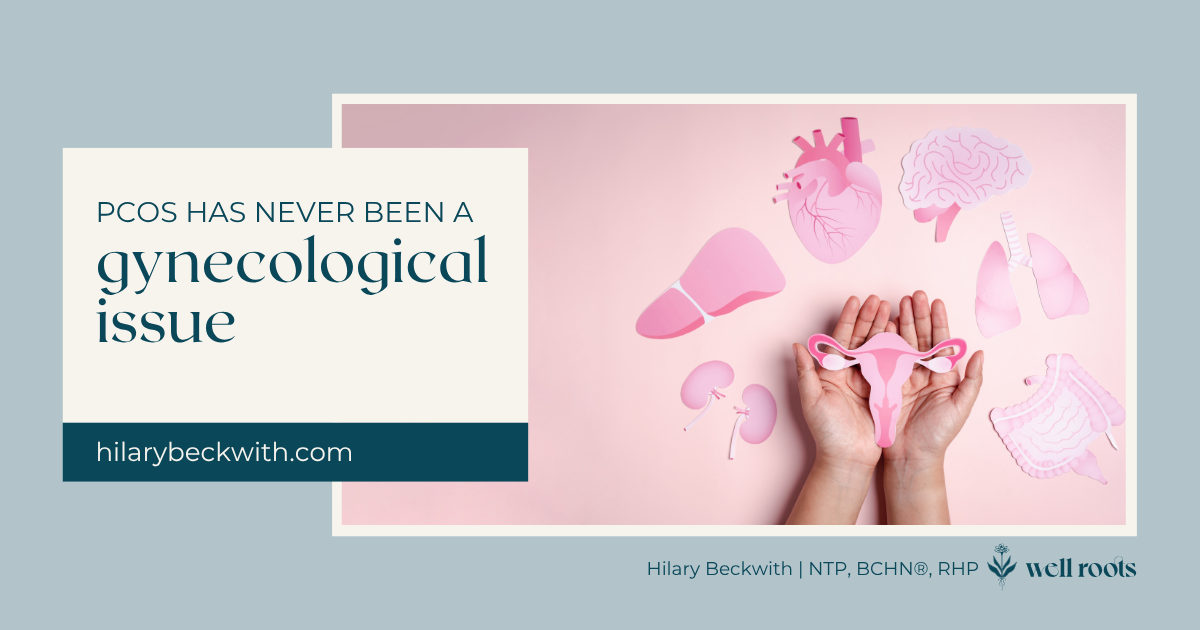
PCOS to PMOS | Here’s What You Need to Know
In this post I will go over everything from what PCOS + PMOS mean, to PCOS symptoms, to effective and holistic PCOS treatment. But the thing I want you to hold onto right now is that this new metabolic perspective on PCOS is not new information. And more importantly, the rename from PCOS to PMOS does not mean your medical providers instantly know how to address the root causes of your PCOS symptoms.
I’ve been helping females with PCOS symptoms by addressing their gut health, metabolic health, and endocrine health, for as long as I’ve been in practice - including my own PCOS!
I’ve Been Saying it for Years…
Your PCOS diagnosis has been rightfully renamed to PMOS - a win for female-bodied folx everywhere!
In this post I will go over everything from what PCOS + PMOS mean, to PCOS symptoms, to effective and holistic PCOS treatment. But the thing I want you to hold onto right now is that this new metabolic perspective on PCOS is not new information. And more importantly, the rename from PCOS to PMOS does not mean your medical providers instantly know how to address the root causes of your PCOS symptoms.
I’ve been helping females with PCOS symptoms by addressing their gut health, metabolic health, and endocrine health, for as long as I’ve been in practice - including my own PCOS!
Hello, my muffin tops. I’m Hilary Beckwith, ex-dieter and functional health expert. Women with PCOS/PMOS, IBS, and autoimmune conditions come to see me with signs of adrenal stress, insulin resistance, and inflammatory conditions, and my job is to find the root causes so we can address their symptoms more effectively and fill in the gaps between their lab values and how their body actually feels. Before you continue, click here to read my Medical Disclaimer.
In this article, you’ll learn:
Differences between PCOS diagnosis and PMOS
Why the rename is so important
PCOS treatment with functional nutrition
Ways you can start advocating for your health in more meaningful ways
the name PCOS has always been a problem
And this is a huge disservice to female-bodied folx everywhere. When I got my PCOS diagnosis nearly 20 years ago, I was told, “you will probably become diabetic” and that I would not be able to get pregnant without expensive medical intervention. That was the only guidance I received from my gynecologist.
I didn’t know then how to advocate for my health, ask questions, or seek out a second opinion, or even holistic support. But I know now, and that’s why my ongoing mission is to educate and empower a new generation of women to do the same by holding their practitioners accountable, asking questions, and getting heard, no matter what it takes.
The first step is to educate yourself.
WHAT DOES PCOS STAND FOR?
PCOS stands for PolyCystic Ovarian Syndrome. Getting a PCOS diagnosis primarily requires a female to meet at least two of these measures:
elevated androgen levels
irregular or absent ovulation
an ultrasound confirming multiple “cysts” on the ovaries
more recently, low egg count was added to this list
You can see, these criteria largely point to a gynecological focus - here’s why that’s a problem:
Elevated androgens and sex hormone imbalances don’t just happen. In general, are often caused by a disruption in the HPA axis (brain and adrenal glands), blood sugar instability (also tied to HPA axis), prolonged chronic stress (oh hey, that’s HPA axis, too!), and liver functionality.
Ovulation issues stem from these same hormonal imbalances, caused largely by - yep! - HPA axis dysfunction and blood sugar instability or insulin resistance. While it’s true that the ovaries themselves can contribute to the problem, the root cause is often in communication between the brain and ovaries, not the ovaries themselves. Chronic stress, insulin resistance, and liver health can all be supported to improve ovarian function.
PCOS ovaries are not covered in “cysts”: The classic visual of PCOS is this picture of an ovary covered in what looks like a string of pearls - these are not cysts - they are follicles that were not able to release an egg into the fallopian tube, and thus became stuck. Your ovaries can develop cysts, but what is seen in PCOS is not cysts.
What’s more, the cause of these stunted follicles is commonly caused by an increase in androgens (testosterone, DHEA) produced by the ovaries in response to elevated insulin levels, caused by insulin resistance - again, not a gynecological issue.
Egg Count: The quality of eggs is vastly more important than the number of eggs. Think about it - does it do you any good to have a drawer full of dead batteries, if only 2-3 of them have any juice left?
WHAT DOES PMOS STAND FOR?
PMOS stands for Polyendocrine Metabolic Ovarian Syndrome. Polyendocrine, meaning it involves many factors in the endocrine system, including metabolic, or blood-sugar-regulating endocrine glands such as the adrenal glands and pancreas.
Take a close look at the diagram below to see the differences between a PCOS diagnosis and PMOS.
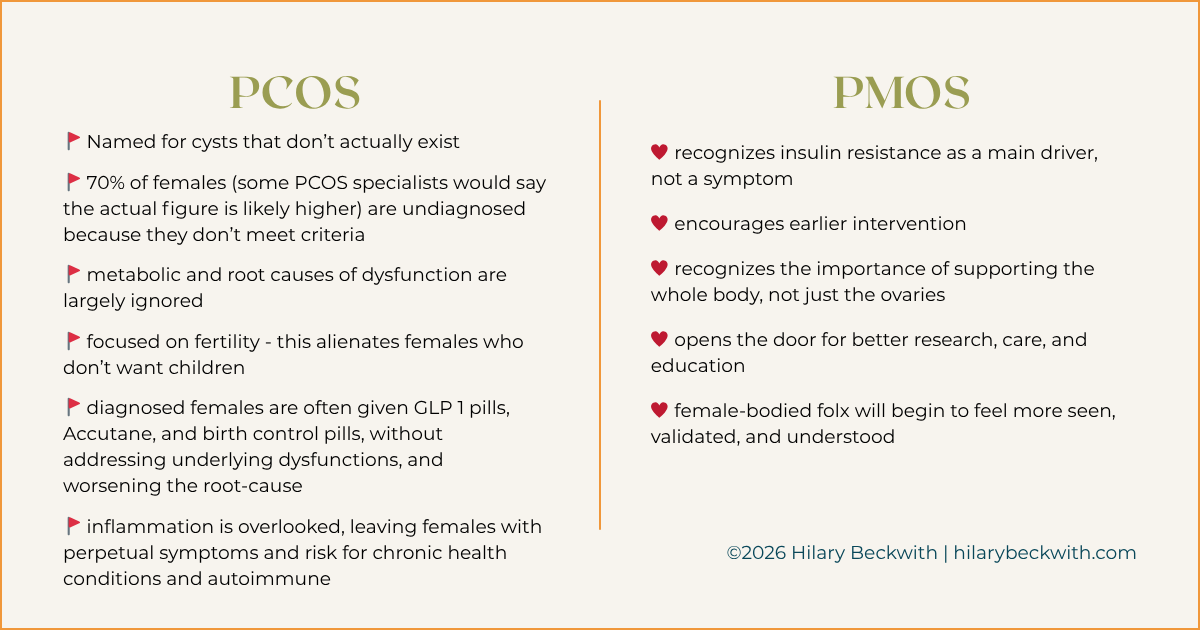
renaming PCOS to PMOS does not mean your doctors instantly know how to support you
Whether we call it PCOS, PMOS, or the acne-bloat-crazy-bananas-plague - PCOS is a complex interplay of dysfunction in metabolic health, hormones, liver, gut, and brain.
The renaming of PCOS to PMOS is a step in the right direction, but the medical community still has a long way to go when it comes to understanding how to treat PMOS effectively. This rename will bring more awareness to the medical community, leading to better research and education for medical providers, but that is YEARS down the road.
After all, it took decades before medical doctors even started to become aware (awareness does not equate to action) that more nutrition education would be helpful to their patients. The minuscule amount currently required for medical licensing is largely focused on biochemistry, not patient care.
And while it would be a dream come true to find that one-stop shop for full-body PCOS and PMOS treatment, it simply does not exist, and probably won’t for some time.
That’s why practitioners like me exist - I am in practice to help female-bodied folx uncover hidden causes of their dysfunction that are keeping them stuck in their PCOS symptoms.
Through a focus on gut health, digestion, inflammation, stress, and blood sugar stability, I have helped my female-bodied clients (myself included) break free from PCOS symptoms such as:
painful and embarrassing adult acne
“PCOS belly” - weight in the belly and hips that came out of nowhere
thinning hair
irregular and unpredictable periods
PMS or PMDD (despite what you might have learned, PMS is a sign of hormone imbalances, and is not normal to experience)
hormone imbalances reflected on labs
fatigue + energy crashes
2am wake-ups
increased body or facial hair (hirsutism)
“hangry” between meals
poor mood - feeling unstable, depressed, or anxious
whole-body PCOS treatment
Most females who seek my help present with some form of hormonal imbalance, signs of prolonged chronic stress, and systemic inflammation. So, PCOS diagnosis or not, the main goal is to assess and pinpoint what the root causes of dysfunction are, so that we can create a care plan that is targeted to their specific needs.
After years of throwing spaghetti at the wall, the women who work with me walk away feeling seen, heard, and revitalized - a stark contrast from the providers’ offices that, in the past, left them feeling dismissed, ignored, and alone.
TARGETED, WHOLE-BODY PCOS TREATMENT THAT GETS RESULTS:
LIFESTYLE + DIETARY ANALYSIS:
I’m not interested in how many calories you eat per day, nor will I ever ask you to step on a scale. However, day-to-day stress levels, food quality, meal timing and atmosphere, sleep, bowel movements, body movements - all of it matters.
Chronic stress disrupts the brain’s communication with endocrine glands. This is because your brain’s priority in stress response is protection - or better yet, survival. Nothing else is important until that threat (stress) is successfully dealt with. And when the stress keeps coming, you stay stuck in survival mode, and this plays havoc on your hormones. The first thing I do is gather information so that I can meet you where you’re at.
ASSESS DIGESTIVE HEALTH:
This is a big one with PCOS. Digestive dysfunction is more than just gassy evenings, heartburn, and constipation. When your body does not produce enough stomach acid, digestive enzymes, or cannot efficiently move food through your intestines and eliminate waste - intestinal tissues become damaged and inflamed, toxic burden builds due to waste that is not eliminated, and your susceptibility to opportunistic bacterial overgrowth, candida, and even parasites, increases significantly.
Your digestive system is wired to kill off harmful pathogens and prevent their proliferation - and the biggest inhibitor of digestion is stress.
FUNCTIONAL LAB TESTING:
For cycling females, getting a one-time blood panel is not enough information to understand the big picture, and quite frankly, if you are a cycling female, it is a huge disservice to use hormone levels on a single blood panel as a starting point. Chances are that provider is simply just ticking off the boxes required by insurance to diagnose you (Click HERE to learn more about how this impacts your access to quality health care).
Working with quality functional labs, we can create a plan that is fine-tuned to your body’s specific needs, as opposed to suppressing symptoms alone. Here are the labs I most commonly recommend with PCOS symptoms:
GI-MAP (Diagnostic Solutions) - measures microbial balance, pathogens, inflammatory markers, and digestive markers.
Organic Acids Test (Mosaic) - measures for yeast and mold, neurotransmitter dysfunction, mitochondrial health, and nutrient deficiencies.
Expanded Female Hormone Panel (eFHP - Diagnostechs) - Spanning across your entire cycle, this test measures FSH, LH, Estrogen, Progesterone, Testosterone, and DHEA, and helps us locate patterns and sources of dysfunction (e.g. is the source of the problem brain-ovary communication, or is it in the gland itself?)
DUTCH Adrenal (Precision Analytics) - Measures daily cortisol rhythms, DHEA-S, and your body’s cortisol clearance and detoxification ability.
DUTCH Complete (Precision Analytics) - Measures multiple reproductive hormones as well as their metabolites and your body’s ability to detoxify each of them. It does not measure FSH or LH but is a powerhouse of information for males and females alike.
You can see that the focus with functional nutrition is not calories, diet, or weight loss - or even the lab values themselves - the focus is function.
Uncovering the root causes of dysfunction that are keeping you stuck in your inflammatory state, your constant bloat and discomfort, your debilitating fatigue, sugar cravings, and overall well-being.
ways to advocate for your own health right now
The PCOS-to-PMOS change only happened recently. It is highly unlikely that you will walk into your OBGYN tomorrow and get whole-body, root-cause support for your PCOS diagnosis. It may take years or even decades for medical providers to start receiving training that will help you the most.
The medical system trains doctors to know what to do when your health fails. It’s not their fault, but “conventional” medicine does very little to help connect your symptoms to your data.
You are among a generation of cycle-breakers, friend. The ripples have to start somewhere - let it be with you!
HERE ARE SOME WAYS TO START ADVOCATING FOR YOUR HEALTH STARTING TODAY:
Stop waiting until self-care “fits”: Now is when your body needs help. And now is when you’re worthy enough to receive it.
Stay curious. Your healthcare providers, including me, are humans just like you. We each have our own set of knowledge, skills, and biases that influence how we show up in the world and with our patients/clients. HEALTHCARE PRACTITIONERS ARE NOT ALWAYS RIGHT. Ask questions and don’t believe everything you hear (including from me!). Ask for evidence and make your own interpretations.
Stop scrolling TikTok. Stop falling for bio-hacks, supplement packs, expensive wearables, and cleanses that were not recommended based on a personalized assessment of your body’s needs.
Talking is free. Leave comments below or email me with your questions. I love connecting with health-curious folx.
was this helpful?
Leave your questions and comments below, and if you are finally ready to start addressing your PCOS symptoms at the root, now is the time!
Click the button below to get started for free.




Food Sensitivity Testing and Parasites | The Missing Piece
Having food allergies does not mean you have parasites, just as having parasites doesn’t necessarily mean you will develop food allergies.
But when working with 1:1 clients, and I see food (or seasonal) allergies that developed later in life, that is information worth digging into.

The Missing Piece in Your Food Sensitivity Test
Food allergy testing and food sensitivity testing have been all the rage in the past few years in the holistic health world. I get more into the differences (and they’re big) between food allergies and food sensitivities in a recent post. But in this article, I want to talk about an important, and often overlooked, hidden cause of food allergies that your practitioner may be overlooking: parasites.
Hi lovelies. I’m Hilary Beckwith, ex-dieter and functional health expert. Women with PCOS, IBS, and autoimmune conditions come to see me with signs of adrenal stress, insulin resistance, and inflammatory conditions, and my job is to find the root causes so we can address their symptoms more effectively and fill in the gaps between their lab values and how their body actually feels. Before you continue, click here to read my Medical Disclaimer.
In this article, you’ll learn:
how your body responds to food allergies
how your body responds to parasites
how to find and address parasites
is your food allergy actually a food sensitivity?
Some use the terms food allergy and food sensitivity interchangeably, and here’s why it’s important to know the difference. They’re two different types of responses by the immune system that require two different types of testing.
If you go to your doc and tell them you think you have food allergies, they’re going to run a food allergy test, which will provide negative results if you actually have a food sensitivity.
Let’s explore the differences in the diagram below:

your body’s response to parasites
The most relevant takeaway from the above table is that food allergies involve IgE antibodies. In fact, most allergies, not just food, involve an IgE response.
What does that have to do with parasites?
Studies have shown that IgE levels increase with parasite presence in humans. Not all parasites - but most.
This is meant to be a protective mechanism against the parasite; however, the increase in IgE levels in the body increases susceptibility to having an allergic reaction to foods. Although more research is needed, the current thought is that proteins from foods that are structurally similar to certain parasites are attaching to IgE antibodies and activating an allergic response.
It’s why when I meet a client who has developed food allergies later in life, and somewhat suddenly, my first suspicion is parasites.
HERE’S HOW IGE ANTIBODIES WORK
IgE antibodies develop as a defense against an allergen - an antigen that causes an allergic response.
These Y-shaped antibodies attach themselves to mast cells - cells that primarily line mucosal tissues, such as lungs, intestines, sinuses, under the skin, etc. - and wait for an allergen to show up.
When said allergen arrives, it attaches to one or more IgE receptor points(the two points at the top of the Y). When two IgE receptors have been activated, this triggers mast cell degranulation - meaning, the cell opens up and releases a surge of toxic, inflammatory substances that damage surrounding cells and molecules, including the allergen.
This is a great video description for all you visual learners.
do you need a parasite cleanse?
Having food allergies does not mean you have parasites, just as having parasites doesn’t necessarily mean you will develop food allergies.
But when working with 1:1 clients, and I see food (or seasonal) allergies that developed later in life, that is information worth digging into.
Parasites are sneaky. They are really good at evading lab testing and the immune system, due to their ability to signal “everything is fine - nothing to see here” to the immune system. In fact, there is ongoing research into the effects of a specific few parasite types that might actually have a protective impact on those with autoimmune conditions.
Personally, I scored very low on the very same screening questionnaire I offer clients, and I lab-tested negative (twice) - yet I still found parasites when doing a cleanse.
We need a clearer picture of overall health to know whether a parasite cleanse is right for you. Here are some things I consider when assessing a client for parasites:
digestive health
inflammation markers on lab testing
immune markers on lab testing
parasite symptoms
potential parasite exposures (swimming in standing water, consuming raw or undercooked meats and fish, allowing pets on furniture, pets licking your face, frequent interactions with children, etc.)
before you rush into a parasite cleanse
Parasite cleanses are a trendy topic right now, and that means there is a huge influx of influencers (and some practitioners) wanting to sell you parasite eradication products you may not need. Many of these influencers and practitioners do not have proper training to assess for and address parasite infections - but I do.
As a Restorative Health Practitioner, I have been trained in parasite eradication and have even experienced success with it myself.
Parasite eradication is not a one-and-done event. Parasite cleanses are a whole-body problem and require:
healing and repair to tissues damaged by parasites
functional support to address the digestive mechanisms that, if working optimally, should prevent you from getting a parasite infection in the first place
a knowledge of the parasite’s life cycle - many parasite cleanses only address mature parasites, not their eggs or larvae
the ability to adjust supplements and methods according to your body’s response to the process
Before you jump into some expensive product line from someone who happens to be really good at talking, consider getting a more functional perspective to help you reduce food allergies, lower inflammation, and repair the mechanisms that are meant to protect you from parasite infections.
A parasite symptom checker is available to clients completing an initial assessment. Click the blue button below to help us get to know each other first.
Want to keep reading? Click HERE to read my parasite story.
Interstitial Cystitis Nutrition Support | The Link Between Interstitial Cystitis and Candida
Interstitial Cystitis sometimes gets misdiagnosed as chronic UTIs, and when all the antibiotics and cranberry juice does'n’t seem to cut it (or maybe only provides short-term relief), you’re left feeling confused and [still] in pain.
I’m going to dive into interstitial cystitis treatment later in the post - but first we’re going to talk about candida.
Your Interstitial Cystitis Symptoms May Be Linked to a Candida Overgrowth
Life with interstitial cystitis is painful to say the least. It’s not just the pain that comes with urination, or between pee breaks…
It’s the pain of intentionally not drinking enough water in an effort to minimize pee breaks
It’s the frustration of doctors telling you there is no known cause or solution
It’s saying no to friends’ invites because you’re too uncomfortable or won’t have easy access to a toilet
It’s losing sleep, night after night, at the mercy of your irritated bladder
I see you, my little muffin top. And I have some new information for you that will help.
You do not have to live with this condition forever. I can help you get sweet relief from your interstitial cystitis symptoms.
Hi kittens. I’m Hilary Beckwith, ex-dieter and functional health expert. Women with PCOS or who are in perimenopause come to see me with signs of adrenal stress, insulin resistance, and inflammatory conditions, and my job is to find the root causes so we can address their symptoms more effectively and fill in the gaps between their lab values and how their body actually feels. Before you continue, click here to read my Medical Disclaimer.
In this article, you’ll learn:
interstitial cystitis symptoms
candida overgrowth symptoms
why candida overgrowth treatment may improve your interstitial cystitis symptoms
how to treat interstitial cystitis and candida overgrowth, naturally and effectively
interstitial cystitis symptoms
IYKYK, right?
If you’ve been told you have interstitial cystitis (IC), you’ve probably also been told there is no known cause or substantial treatment.
And if you don’t know what IC is, or are trying to get some answers behind your own symptoms, here are some common symptoms of IC:
painful urination, with relief after peeing
chronic pelvic pain between the vagina and anus (between the scrotum and anus for male-bodied)
frequent, persistent, and urgent need to pee
pain during sex
IC sometimes gets misdiagnosed as chronic UTIs, and when all the antibiotics and cranberry juice doesn’t seem to cut it (or maybe only provides short-term relief), you’re left feeling confused and [still] in pain.
I’m going to dive into interstitial cystitis treatment later in the post - but first we’re going to talk about candida.
candida overgrowth symptoms
Candida is a type of yeast that exists in small amounts in most humans, but can become very problematic when it is given an environment to proliferate and thrive, leading to chronic health conditions such as autoimmune disease, chronic fatigue syndrome, fibromyalgia, and chronic digestive symptoms that are often misdiagnosed.
Click here to read more about conditions commonly associated with candida overgrowth.
For the sake of this post’s topic, here is a list of common candida overgrowth symptoms:
brain fog
bloating
constipation
frequent hunger
sugar or carb cravings
poor stress management
eczema
acne
depression or anxiety symptoms
blood sugar management issues (irritability, headache, or shaky when hungry)
chronic nail fungus on fingernails or toenails
chronic vaginal yeast infection symptoms
chronic thrush, or yeast infection symptoms in the mouth
difficulty losing weight
weight gain around the belly and hips
signs of insulin resistance
addressing candida overgrowth may also improve interstitial cystitis symptoms
Many practitioners say there is no known cause for IC, and that interstitial cystitis treatment isn’t substantial - in other words, if you have IC, sucks to be you, right? But research suggests they may be looking in the wrong places.
I specialize in working with female-bodied adults with inflammatory conditions - this means I work to uncover hidden causes of inflammation in their bodies so that we can improve inflammatory symptoms, like cystic acne, autoimmune disease, fibromyalgia, persistent and chronic pain, IBS symptoms, and yes, interstitial cystitis.
Interstitial cystitis is an inflammatory condition - it occurs when the tissues inside the bladder become inflamed.
THE STRESS BUCKET ANALOGY
Think of your body like a bucket. Every single stressor - every injury, every emotional or physical trauma, every infection, every work deadline, every heated interaction with a partner - is a drop in the bucket.
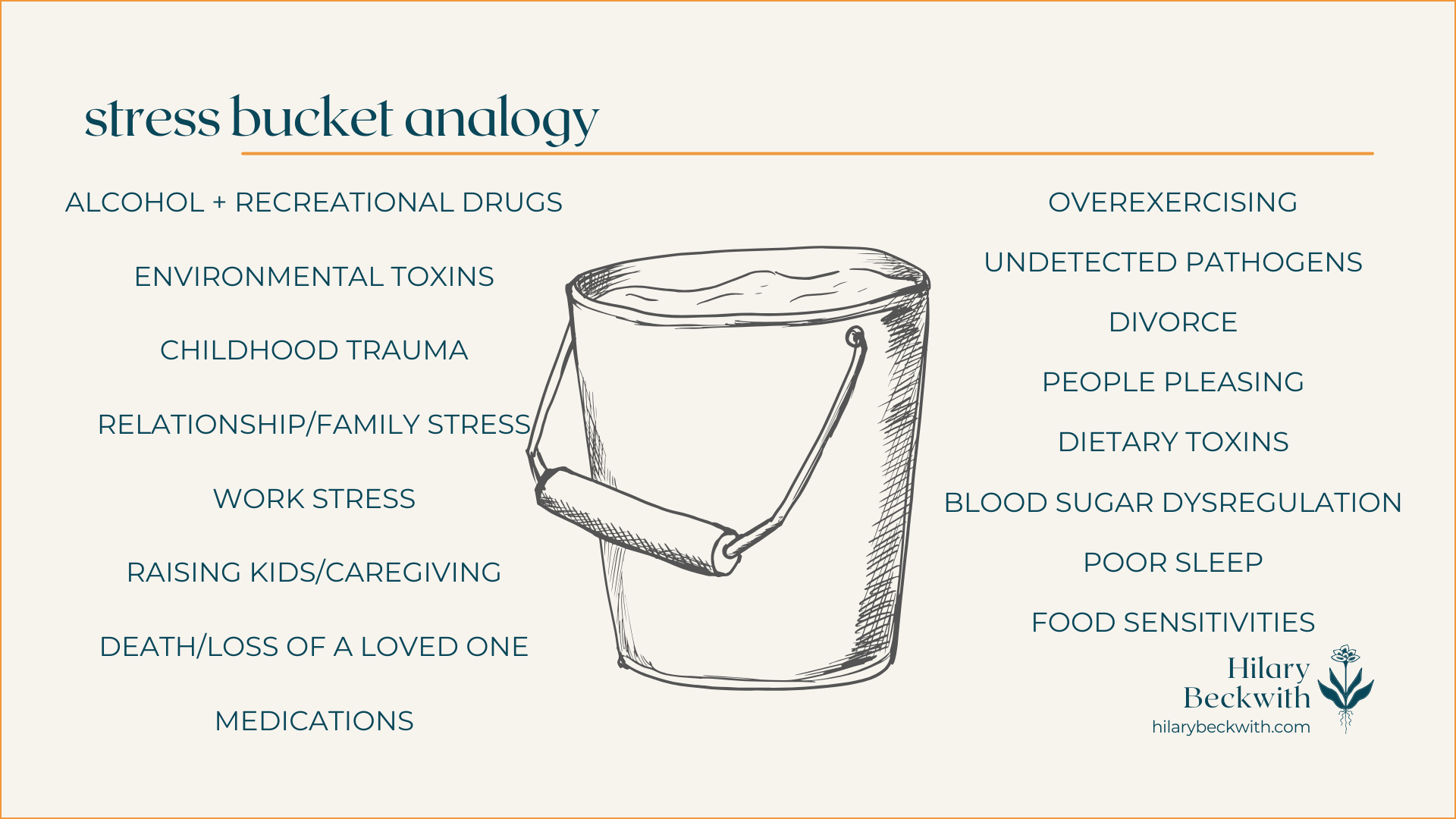
Every drop fills the bucket. Some drops get removed when we take care of our detox systems, and we address infections, when we get optimal rest, when we get professional mental health support.
But once the drops fill the bucket to the brim - it has no where to go but out of the bucket - it’s everywhere!
Here’s the thing, love - Your body is doing its best to deal with everything that’s been thrown at it. But at some point, it’s going to be too much, and that’s when we start to see these bigger reactions and symptoms. That’s your bucket overflowing.
We can help it by reducing the amount of drops in your bucket - put differently, by finding and addressing hidden causes of stress and inflammation.
WHY PINPOINT CANDIDA?
For one, research is starting to show that sufferers of IC often also have higher levels of fungus and yeast, including candida albicans, in addition to other imbalances in their microbiome.
Candida overgrowth can be an especially potent cause of inflammation and stress on the body because it has a unique ability to actually root into tissues and leech off your body’s nutrients, very similar to a parasite.
The candida infection itself is a source of inflammation in that it will stimulate an inflammatory response as your body works to fight it. Additionally, the tissue damage caused by its rooting adds to the inflammation and makes candida difficult to eradicate.
Interestingly, the Mayo Clinic actually states that having a chronic inflammatory condition makes one more likely to experience interstitial cystitis symptoms - seeing the connection here?
interstitial cystitis treatment naturally
There is no direct treatment for interstitial cystitis. In fact, the Mayo Clinic suggests a combination of physical therapy, antidepressants, antihistamines, and anti-inflammatory medications.
All or any of these things may help with symptoms, but they won’t get to the root cause of the inflammation. That’s what I’m here for.
Interstitial Cystitis treatment naturally and holistically requires a look at hidden sources of inflammation. Hidden sources of inflammation may include candida overgrowth, bacterial overgrowth, parasite infection, mold or mold toxicity.
Finding those sources of inflammation requires a detailed health assessment and functional lab testing by a qualified practitioner. Looking at your health history, symptoms, eating habits, nervous system, sleep, and stress levels is all part of the big picture. Getting functional lab testing to confirm or rule out sources is equally important and helps us to create a more personalized plan to address sources of inflammation.
I can help.
My private coaching program includes functional lab testing and an initial comprehensive assessment to help us get to the bottom of your interstitial cystitis symptoms, so you can stop letting pain make your decisions for you.
I also offer functional lab testing without being enrolled in a coaching program.

PCOS/PMOS Weight Loss and Cortisol Detox | Functional Health Expert in Seattle
Cortisol is commonly known as a stress hormone. But many people I encounter don’t know that cortisol also impacts everything from sex hormone balance, to metabolism, to sleep, to blood sugar regulation.
If you are female-bodied and you struggle with any type of hormone imbalance, as with PCOS or perimenopause, this article is for you - whether you have trouble sleeping or not. And the first thing you should know about the cortisol-sex hormone relationship is that both are made in the same pathway, but your body prioritizes the production of cortisol over sex hormones.
Do You Need a “Cortisol Detox”?
Cortisol is commonly known as a stress hormone. But many people I encounter don’t know that cortisol also impacts everything from sex hormone balance, to metabolism, to sleep, to blood sugar regulation.
If you are female-bodied and you struggle with any type of hormone imbalance, as with PCOS/PMOS or perimenopause, this article is for you - whether you have trouble sleeping or not. And the first thing you should know about the cortisol-sex hormone relationship is that both are made in the same pathway, but your body prioritizes the production of cortisol over sex hormones.
But does that mean you need a cortisol detox?
Hi darlings. I’m Hilary Beckwith, ex-dieter and functional health expert. Women with PCOS/PMOS or who are in perimenopause come to see me with signs of adrenal stress, insulin resistance, and inflammatory conditions, and my job is to find the root causes so we can address their symptoms more effectively and fill in the gaps between their lab values and how their body actually feels. Before you continue, click here to read my Medical Disclaimer.
In this article, you’ll learn:
the purpose of cortisol
how chronic cortisol output can negatively impact sex hormone balance, blood sugar levels, and sleep
what is a “cortisol detox”?
practical tips for improving cortisol levels
what is cortisol?
It’s true that cortisol is a stress hormone. It is released by the adrenal glands in response to the activation of your sympathetic nervous system (fight or flight) to help prepare your body to fight or flee danger.
How does cortisol prepare your body to fight or flee danger? Cortisol is classified as a glucocorticoid, meaning it triggers the release of stored forms of glucose (molecular form of sugar) in the liver and fat tissues into your bloodstream, which is then shuttled into cells with the help of insulin to create energy.
Put differently, cortisol increases blood sugar levels to give your body energy to fight or flee danger.

chronic cortisol impacts sleep, hormone balance, and blood sugar levels
Before you go searching Dr. TikTok for cortisol detox tips and cortisol reduction supplements, let’s walk through the basics.
Apart from stressful situations, cortisol is only released at one other time - first thing in the morning. Cortisol is what triggers an awakening response and tells your body it’s time to get up and get moving.
And, although the act of waking up is not a stressful situation, cortisol still plays the same role in that moment - it increases blood sugar levels to be metabolized into fuel for your body.
Aside from stress response, cortisol has a natural rhythm throughout the day that plays a major role in your sleep schedule (known as circadian rhythm), hormone balance, and blood sugar levels.
Below is a diagram showing what a diurnal cortisol rhythm looks like in a healthy individual:

You can see a person with optimal cortisol levels has a spike shortly after waking, with the lowest point being at the end of the day when it’s naturally time to sleep.
If you struggle to get out of bed in the mornings or struggle to fall or stay asleep at night, your cortisol is likely being activated for one reason or another. We’ll talk more about that later in the post.
One of the biggest and most controllable factors that impacts cortisol levels throughout the day is diet. I’m not talking about calories - I’m talking about food quality and macronutrient balance.
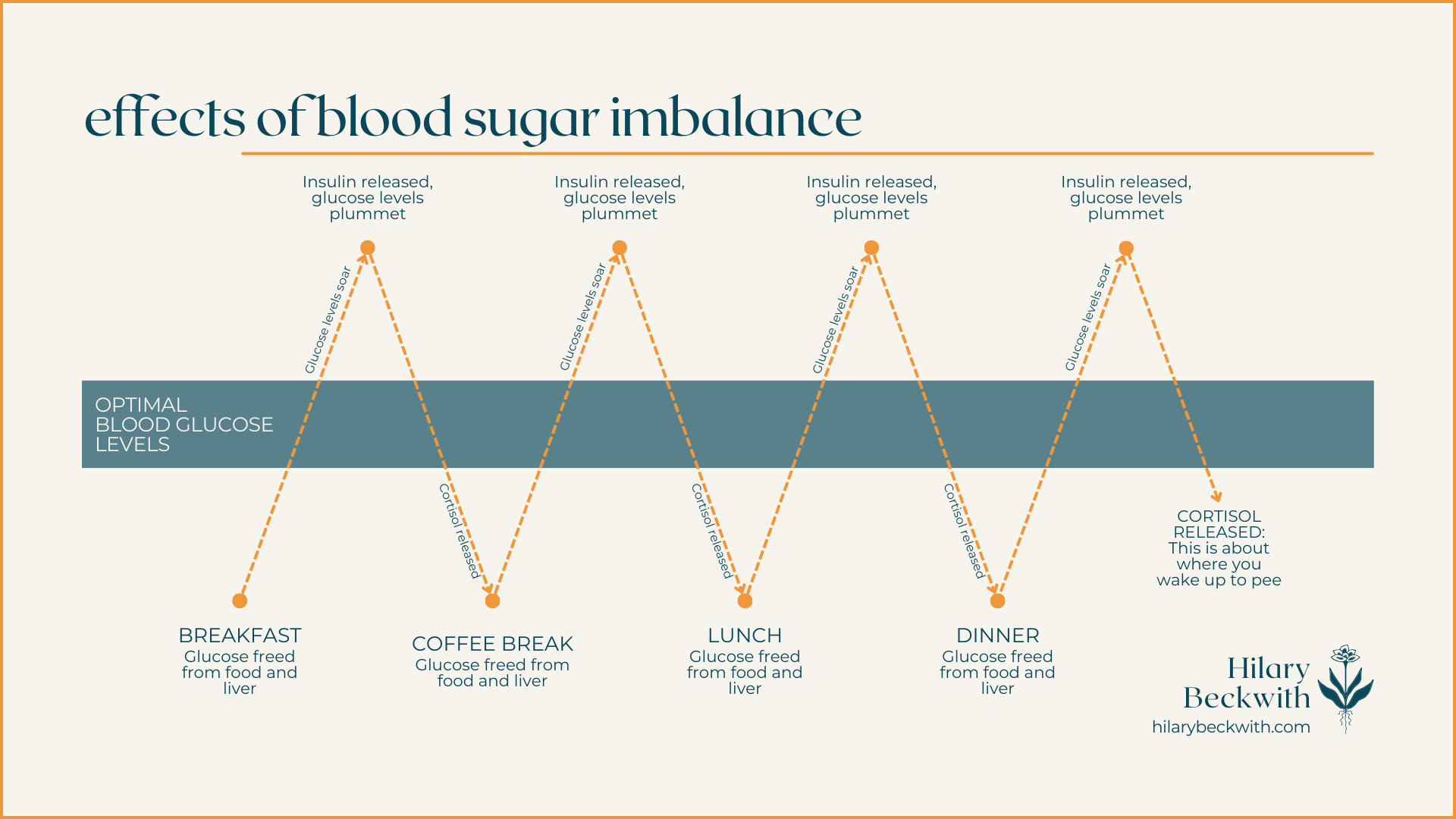
If you are the person who relies on coffee first thing to get you going, and then snack or graze all day long until you finally eat a real meal at dinner time - take a look at the diagram below:
what does this have to do with hormone balance?
Like most hormones, your body doesn’t just make cortisol out of nothing. It has to use resources like nutrients and enzymes. Cortisol is produced through an enzyme pathway from a precursor hormone called pregnenolone (there will not be a quiz).
Pregnenolone, derived from cholesterol, is also used in the same enzyme pathway within the adrenal glands to produce estrogen, progesterone, and testosterone.
You might be wondering - But aren’t sex hormones produced by the ovaries in females?
The answer is yes - but also in the adrenal glands.
As we age, the ovaries produce less and less estrogen and progesterone, but our bodies still require those hormones to maintain tissue growth, bone health, and brain health. When the ovaries stop producing sex hormones, the adrenal glands pick up the slack.
This is why it is essential to women’s health that we educate ourselves on the impact of stress on hormone balance - and why I do the work I do. Does that mean you need to shop for cortisol reduction supplements or find the best cortisol detox tips?
Let’s explore it a bit.
HERE’S WHERE THINGS CAN GO WRONG:
Because they use the same production pathway, pregnenolone can convert into sex hormones OR cortisol - butnot both. And while the fight or flight system is activated, your body will prioritize the production of cortisol over sex hormones.
If your fight or flight system is chronically activated - whether it’s due to blood sugar imbalances, external stressors, emotional stressors, or pathogenic infection - you are going to struggle with insomnia and hormone imbalances like PMOS (formerly known as PCOS).
But there is hope.
what is a cortisol detox?
As a practitioner who specializes in adrenal health and PCOS/PMOS, I can tell you that a cortisol detox is just a trendy term that wellness influencers use to talk about lifestyle shifts and dietary supports for cortisol reduction and stress.
In other words - there is no such thing as a cortisol detox.
I’m about to share with you my secrets to amazing, restful sleep, steady energy that lasts all day, and predictable periods. But why should you listen to me over influencer reels or ChatGPT?
I AM A HEALTHCARE PRACTITIONER, NOT AN INFLUENCER.
First and foremost, I am educated and trained to help clients address hormone imbalances like PCOS/PMOS and perimenopause symptoms, gut health, sleep issues, and insulin resistance by uncovering root causes of dysfunction that are specific to your body’s unique health needs.
What I’m about to share is not meant to be a temporary biohack or some magical fix to make all your stress go away.
I’m about to share meaningful lifestyle shifts you can make that are grounded in science and address your hormone imbalances at the root cause.
You don’t need a cortisol detox or some one-size-fits-all cortisol reduction supplement pack - you need real lifestyle support. And I can help.
5 holistic tips to reduce cortisol levels long-term
As we discussed earlier, cortisol output disrupts sex hormone production and is especially problematic for women and females with PCOS/PMOS symptoms, perimenopause symptoms, and other hormone imbalances.
Chronic cortisol output can also lead to insulin resistance issues, blood sugar imbalances, sugar cravings, and insomnia. In fact, the reason you wake up at 2:00am has nothing to do with your bladder - it’s cortisol.
Practicing these techniques on a consistent basis will improve sleep quality, improve insulin sensitivity and blood sugar levels, and improve hormone balance. For more in-depth and personalized support for your adrenal and hormone health, check out this masterclass.
As with any foundational root-cause work, results will not happen overnight. It takes time to really begin to notice a change in your energy levels, restfulness, and hormone balance. Be patient and kind to yourself, and reach out to me if you have any questions.
5 holistic tips to reduce cortisol
GET 10+ MINUTES OF DAYLIGHT ON YOUR FACE WITHIN 1 HOUR OF WAKING: I’m not suggesting you look directly into the sun (please don’t). When your face and eyes are exposed to light, information about the type of light gets picked up by the retina and is relayed to the suprachiasmatic nuclei (SCN), which then modulates serotonin and melatonin production, respectively, depending on the type of light you are exposed to. This simple action impacts everything downstream throughout your day. Don’t skip it.
EAT MORE SATIATING MEALS: The diagram above (titled, effects of blood sugar imbalance) shows the effects of diet on blood sugar regulation, and as you recall from earlier in the post, cortisol is released in times of low blood sugar. Eating more satiating meals, balanced with good quality protein, fat, and fibrous vegetables, prevents those dips in blood sugar and keeps you feeling steadily energetic all day. Use this guide to help you build more satiating meals.
SCHEDULE WORKOUTS BEFORE LUNCH: Remember the diagram above, titled optimal cortisol levels throughout the day? An important part of supporting healthy cortisol rhythms is to prioritize higher cortisol activities in the morning, and lower cortisol activities in the afternoon/evening. Exercise is known as a good stressor, also called eustress. However, as we’ve learned - stress is stress. Exercise stimulates cortisol output. When you exercise in the evenings, you stimulate cortisol right when cortisol levels should be coming down. Save your calmer activities like meditation, light yoga, or walking, for the afternoon and evening.
PRACTICE NOT SNACKING BETWEEN MEALS: Let’s be clear - if your body is telling you it needs to eat, eat. Always listen to your body. Remember, it will take time to see symptoms dissipate. But if you are habitually a snacker or grazer, you may have insulin resistance issues and thus, chronic cortisol output. Additionally, habitual snacking may be a sign of sugar cravings caused by pathogenic infections like candida or SIBO. Click here to read more about these pathogens. Eating more satiating meals will help you feel fuller for longer periods, reducing the need for snacking.
PRACTICE COMPLETING THE STRESS RESPONSE CYCLE: Do this 2-3 times per day, and especially immediately following a particularly stressful episode, such as a heated conversation with your partner, a stressful commute, or a nearly-missed work deadline. Why should you do this? When your fight-or-flight system is activated, stress hormones like cortisol and adrenaline are released, shifting resources away from digestion and repair and toward survival. Your nervous system can’t tell the difference between a real threat and modern stress, so it reacts to both the same way. Completing the stress response cycle only takes a few minutes and signals to your brain that the danger has passed and it’s safe to stand down. Here’s how to complete the stress response cycle:
Choose a full-body movement that feels safe to do for 3-5 minutes, such as:
jumping jacks
nitric oxide dump
air-punching/kickboxing
brisk walk while doing windmill arms
dance party
Once your movement is finished, take 10 long, deep breaths, in through your nose, and out through your mouth before continuing with your next tasks.
want to learn more about how cortisol impacts sleep, hormone balance, and blood sugar levels?
Effects of Coffee on an Empty Stomach - Caffeine in Coffee and Blood Sugar Levels
Every body is different, having unique biochemical makeup and experiences that influence all aspects of health. Nutritional and lifestyle changes should never be considered without an individualized assessment by a qualified practitioner.
The focus here is to help you determine whether or not it is okay to drink coffee on an empty stomach. We’ve seen already how the caffeine in coffee has an impact on blood sugar levels - let’s find out how that might affect you if consuming coffee without any food in your stomach.

Is it okay to drink coffee on an empty stomach?
The short answer is, I wouldn’t.
But my body is different from yours.
There’s a lot of hype from fitness influencers on this subject, and I’m here to provide the research and give you a holistic practitioner’s point of view, so you can make an educated decision based on your own body’s symptoms and history.
Hi friends. I’m Hilary Beckwith, ex-dieter and holistic nutrition expert. Clients come to see me with signs of adrenal stress and inflammatory conditions, and my job is to find the root causes so we can address their symptoms more effectively, and fill in the gaps between what their doctor is saying, and what their body is saying.
Because the clients I see are navigating symptoms of adrenal insufficiency and issues with blood sugar levels, to those individuals, I typically recommend not drinking coffee on an empty stomach.
In this article, you’ll learn:
benefits of drinking coffee
risks of drinking coffee (or caffeine)
who should not be drinking coffee on an empty stomach
Follow my email feed to stay up-to-date on new articles like this one. Click here to subscribe.
Looking for information more focused on how caffeine affects the body? CLICK HERE.
benefits of drinking coffee
Not everyone will agree, but the first benefit I think of is taste. I love the dark, rich, nutty taste of a good cup of coffee.
Opinions aside, below are some benefits of coffee found in research. In some cases, the benefits are specific to coffee or caffeine in coffee, and sometimes both. I’ve been careful to note the differences in this list.
EVIDENCE-BASED BENEFITS OF DRINKING COFFEE:
the caffeine in coffee is an antioxidant, but only in very high doses (1)
coffee (even decaf) reduces risk of gallstones (2)
coffee increases salivary amylase secretion - Amylase is an enzyme responsible for breaking down sugars and carbohydrates, and when coffee is ingested, the polysaccharides contained in the coffee tell your brain to secrete amylase.
coffee (even decaf) increases hydrochloric acid (HCl, known as stomach acid) temporarily, although caffeinated coffee much more so - this can aid in digestion, but can also be a risk
coffee (even decaf) increases bile flow - aids in the digestion of fats and elimination of toxins
coffee (even decaf) increases pancreatic juices - these are enzymes that aid in the digestion of food
coffee can support microbiome in the gut - this can be a benefit to some, but not to others. Coffee consists of polysaccharides, undigestible fibers that, when fermented in the large intestine, support the growth of “good” bacteria, and thus produce short-chain fatty acids that support the mucosal barrier of the large intestine. Polysaccharides may present more of a risk if fermented in the small intestine, or when there is a higher “bad” bacteria to “good” bacteria ratio.

risks of drinking coffee
EVIDENCE-BASED RISKS OF DRINKING COFFEE:
coffee (even decaf) increases hydrochloric acid (HCl, known as stomach acid) for 30-60 minutes after ingesting (2). The increase in HCl can aggravate ulcers, but does not cause them (5). This aggravation can lead to discomfort, pain, increased inflammation due to the irritation of the stomach tissue, and worsening of the ulcer(s).
coffee alters microbiome in the gut - As I mentioned earlier, the polysaccharides in coffee, which are a type of fiber, can help support good bacteria in the gut. This can be good for some, but harmful to others.
Gut bacteria, specifically bacteroidetes, firmicutes, and prevotella, are supposed to live in the large intestine. Ther they ferment the undigestible polysaccharides, and produce short-chain fatty acids that help protect the lining of the digestive tract, acting as part of your immune system. For someone with bacterial imbalances, or bacteria populating in the small intestine (upper digestive), this could be a problem. In some cases, coffee was shown to enhance the growth of a certain clostridia species, which can be very harmful to health.
caffeine increases cortisol levels (3) - Cortisol is a hormone produced by the adrenal glands, known as a glucocorticoid, meaning, it stimulates the pulling of stored glucose from tissues and metabolizing them into cellular energy known as ATP, or Adenosine Triphosphate.
Why is this a risk? This process is part of your body’s stress response, and activates the Sympathetic Nervous System (fight or flight), while also utilizing the HPA axis (Hypothalamus Pituitary Adrenal). If you are someone who drinks coffee often, or throughout the day, this will negatively impact your adrenal health, blood sugar levels, and sleep. CLICK HERE TO LEARN MORE ABOUT ADRENAL HEALTH AND CORTISOL
coffee damage to gastric mucosa (4) - This is interesting because research shows no association between coffee or caffeine in coffee, with the development of ulcers (5). However, there is evidence that coffee causes damage to tissue lining the stomach, as well as increases intestinal permeability (you may have heard this called leaky gut), both of which would seem to contribute to ulcers.
who should not be drinking coffee on an empty stomach?
A few things to consider when reading this section:
This article is meant to provide education and resources to help you make more educated decisions about your own health. It is meant to be used for information purposes only, and not to be construed as health advice, medical advice, treatment, or prescription.
Every body is different, having unique biochemical makeup and experiences that influence all aspects of health. Nutritional and lifestyle changes should never be considered without an individualized assessment by a qualified practitioner.
The focus here is to help you determine whether or not it is okay to drink coffee on an empty stomach. We’ve seen already how the caffeine in coffee has an impact on blood sugar levels - let’s find out how that might affect you if consuming coffee without any food in your stomach.

WHO SHOULD NOT BE DRINKING COFFEE ON AN EMPTY STOMACH
BLOOD SUGAR SYMPTOMS - If you have symptoms of poor blood sugar levels, such as feeling jittery after coffee, getting “hangry” between meals (shaky, loss of focus, headache, irritable), craving sugar, carbs, or salt, or feeling better after you eat. These are symptoms, that, on their own may indicate adrenal insufficiency, and drinking coffee on an empty stomach may worsen the problem.
caffeine in coffee (and other sources) stimulates cortisol release, and in essence, a stress response from your body, activating your Sympathetic Nervous System and HPA axis, as we discussed earlier. CLICK HERE TO LEARN MORE ABOUT ADRENAL HEALTH AND MANAGING BLOOD SUGAR LEVELS.
DIGESTIVE SYMPTOMS - If you have symptoms of poor digestion, such as bloat after meals, excess fullness, chronic constipation or diarrhea (or alternating), heartburn, or cramping in lower abdomen.
These are all common symptoms of poor digestion, typically leading to (or may be a result of) a bacterial imbalance or other pathogenic infection. The research we looked at earlier in this article suggests that since caffeine in coffee irritates the mucosal lining in your colon, stimulates stomach acid production, and increases motility in the colon (makes you run to the bathroom), drinking coffee on an empty stomach may worsen these symptoms.
ANXIETY OR OTHER MOOD VARIANCES - Anxiety can be caused by a number of things, including lack of protein/amino acids, chemical imbalance, chronic stress, and trauma. One thing we do know is that caffeine in coffee stimulates the fight or flight response. We also know that pairing caffeine with foods focused on quality protein, fats, and fiber, can help slow this process. Drinking coffee on an empty stomach may have the opposite effect, and may exacerbate anxiety symptoms.
SLEEP ISSUES - You might argue that people with sleep issues may want to cut out caffeine in coffee altogether. Some have a genetic factor that changes the way they process caffeine, no matter what time of day they consume it, or whether or not they pair it with food. However…
Sleep issues can often be indicative of blood sugar issues as we discussed earlier. Fun Fact: Waking up around 2:00 am to pee is usually due to a drop in blood sugar levels (and a spike in cortisol), NOT because your bladder is full. READ MORE ABOUT IT HERE.
If you are someone who has trouble with sleep, consider how the caffeine in coffee may be impacting your adrenal health and blood sugar levels.
what can you do instead?
PAIR YOUR COFFEE WITH QUALITY, WHOLE FOODS - Wait to consume your coffee until you have a good solid meal balanced with quality proteins, fats, and fibers.
TRY OTHER STIMULATING ACTIVITIES, FIRST - Instead of dragging yourself sleepily to the coffee pot each morning to “get going”, drag yourself sleepily out for a brisk walk first thing, getting sunlight on your face to let your adrenal glands know it’s time to wake up. Or drag yourself sleepily to a yoga class your Pelaton, or other activity that boosts cortisol levels first thing in the morning.
SWITCH TO DECAF - I know, I know. I hear myself, too. As a coffee lover, myself, this feels like a big ask, but it may be just the right thing for your body that enables you to still enjoy coffee without the impact of caffeine in coffee.
GET FOUNDATIONAL SUPPORT - If you are someone who deals with the digestive symptoms mentioned above, trouble managing blood sugar levels, trouble with sleep or anxiety, I have developed a number of resources that will help:
Reclaim Your Health program - A 3-month private coaching program to help pinpoint the root causes of your symptoms, and work to make foundational changes to repair and heal the underlying issues.
REBALANCE - a 4-week online course that specifically targets adrenal health, sleep, blood sugar, and hormone balance.
GET TESTED - Are cortisol levels an issue for you? There is a simple saliva test that will help you know how your cortisol levels look throughout the day, so you can understand the potential causes of blood sugar, sleep, and anxiety symptoms. Includes a free follow-up call with Hilary to review the results. CLICK HERE TO PURCHASE.
was this helpful?
Please share your thoughts and questions in the comments below!
NUTRITION SERVICES
ADDITIONAL RESOURCES
BLOG REFERENCES
Iriondo-DeHond, A., Uranga, J. A., Del Castillo, M. D., & Abalo, R. (2020). Effects of Coffee and Its Components on the Gastrointestinal Tract and the Brain-Gut Axis. Nutrients, 13(1), 88. https://doi.org/10.3390/nu13010088
Nehlig, A. (2022, January 17). Effects of coffee on the gastro-intestinal tract: A narrative review and literature update. MDPI. https://www.mdpi.com/2072-6643/14/2/399
Lovallo, W. R., Farag, N. H., Vincent, A. S., Thomas, T. L., & Wilson, M. F. (2006, May 2). Cortisol responses to mental stress, exercise, and meals following caffeine intake in men and women. Pharmacology Biochemistry and Behavior. https://www.sciencedirect.com/science/article/abs/pii/S0091305706000645
Iriondo-DeHond, A., Uranga, J. A., Del Castillo, M. D., & Abalo, R. (2020). Effects of Coffee and Its Components on the Gastrointestinal Tract and the Brain-Gut Axis. Nutrients, 13(1), 88. https://doi.org/10.3390/nu13010088
Shimamoto, T., Yamamichi, N., Kodashima, S., Takahashi, Y., Fujishiro, M., Oka, M., Mitsushima, T., & Koike, K. (2013). No association of coffee consumption with gastric ulcer, duodenal ulcer, reflux esophagitis, and non-erosive reflux disease: a cross-sectional study of 8,013 healthy subjects in Japan. PloS one, 8(6), e65996. https://doi.org/10.1371/journal.pone.0065996